
How To Single-Handedly Solve Most Of Your Problems As A Teacher
A teacher is anybody with a responsibility to impart knowledge.

Teaching is a profession like no other. Kind of like practicing a dance rehearsal for weeks on end, only for a 5 minute showdown. Only, you must be able to make the viewers learn the dance moves by the end of your dance too.
As a teacher, it is our primary job to be well-read on the subject we’re teaching, prepare and plan what we’re going to deliver in weeks in advance, keep the class interactive and fun, hold all our 10–30 students’ / children’s attention, be ready to answer a bazillion questions that could be thrown at us, and make sure they learnt what was taught.
phew.
Luckily, there is one simple thing you can do to ensure you achieve 90% of your goals.
You must - and I cannot stress this enough- ask questions.
I’m sure many scientific and intellectual people have put their brains into it, but I’m just going to tell you why I think it works, from personal experience as an English teacher to over 15 students.
1. It Builds Relationship.
The 21st Century is all about building relationships. Companies that don’t know you are building relationships with you from miles away without you even consciously approving. Why can’t a teacher form one with her students?
It works every time. You know why? Because the only thing humans love more than attention is talking. (Even the introverts.) It’s so deeply ingrained in our system that we don’t filter or categorize the questions asked to us. When people ask us questions, we feel like they care about what we have to say. and when we think someone cares about our opinion, we automatically start to like them.
The questions don’t even have to be about their innermost feelings or their family. Just ask them to complete a mathematical equation with a standard answer, and it will make them feel validated and happy for the rest of the day. (Given that they know the answer)
2. Your Classroom Automatically Becomes Interactive
Do you interact with your students? and by interact, I don’t mean throwing a random question their way because they weren’t paying attention. That’s not interaction, that’s you patronizing them. Think of it this way. Do you know what each of your students’ weaknesses are when it comes to your subject? can you pin-point exactly where the student needs attention but is too afraid to ask for help?

3. Students Will Pay Attention Throughout The Class
This is guaranteed. Because if I know you’re going to ask me questions once your monologue is done, you best believe I will be taking down notes. Maybe not because I care, but my reputation will be at stake if I can’t answer.
Even if you’re teaching a student one-on-one, they are 100% more likely to hang at your every word if they know the questions will follow after. People don’t like to feel stupid or fall in their own eyes as much as they don’t like to come off as dumb in front of others.
4. You Will Learn Too.
No matter how well-read and experienced a teacher may be, they are always learning in a classroom. learning is exponential. There is no full stop.
When you ask questions to keep the class interactive, it will makes sure you are on your toes too, invariably helping you learn more about your own subject.
Give your students freedom to ask you questions without the fear of being judged. How? Just don’t ever tell your students this line: “Don’t ask me silly questions.” Seriously? why do teachers say this? Most students will self-judge their question to be silly and end up not asking. Can we encourage a little craziness, please?
5. It Encourages Students To Think Out-of-the-Box
The more you ask questions, the more the students will think. The more they think, the more they will learn. Simple.
Classroom teaching can get so mundane and textbook-oriented that students often fail to think out of the box, and end up gobbling up information just to puke everything in the exam and forget it all in a week. If you want the topics you’re teaching them to stick, please get their thinking-trains running. Get crazy, get wild. Ask unthinkable questions. And then think of a solution.
A quick example: I had “Logistics & Supply Chain Management” as a subject in college, and was asked to present a simple supply chain of a retail store to my class as part of an assignment. And that’s what I did.
it is:
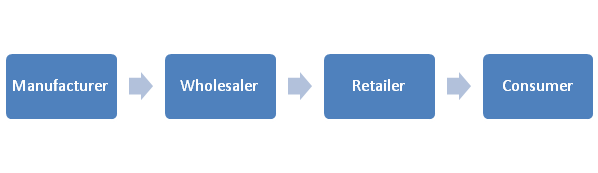
When I was done, my professor asked me this: “Okay, this is great. But what do you think the supply chain would be for replenishable goods? Say, a florist who delivers flowers internationally?
Boy, did that get me thinking. Because of course, flowers can’t be transported in trucks internationally. Moreover, they will wilt and are prone to damage if they are transported in ships. How does that work??
And then she opened the question to the class. We all went wild with our imaginations, laughed at each other’s answers, and learnt something new.
I still think so fondly of that teacher. Because she pushed me to think. Because she asked me questions.
And with that, I encourage you to ask questions. It doesn’t matter if you have one student or if your student is your son. When you play the role of a teacher, justify that role to it’s maximum potential.


