avatarPiper Steele

Free AI web copilot to create summaries, insights and extended knowledge, download it at here

5548

Abstract

th, food scientists simply build on what we are wired to crave.</p><p id="a8dc">From <a href="https://www.webmd.com/diet/features/13-ways-to-fight-sugar-cravings#1">WebMD</a>:</p><p id="958f"><i>…Americans do overconsume, averaging about 22 teaspoons of added sugars per day, according to the American <a href="https://www.webmd.com/heart/picture-of-the-heart">Heart</a> Association, which recommends limiting added sugars to about 6 teaspoons per day for women and 9 for men.</i></p><p id="4b06">There is sugar in damned near everything, if it’s processed, along with additional salts and other crap you and I can’t pronounce. So it was easy to pack it on as some of us had to turn to packaged foods when getting to the grocer, or at least doing it safely, got harder.</p><p id="f572">Under Covid, many if not most of us packed on pounds, feeding ourselves “comfort foods,” many if not most of which included added sugars, if not were pure sugar, as in candies and chocolate bars. I know I did.</p><figure id="9904"><img src="https://cdn-images-1.readmedium.com/v2/resize:fit:800/0*2Yle9ir1P2JupdYN"><figcaption>Photo by <a href="https://unsplash.com/@heatherbarnes?utm_source=medium&amp;utm_medium=referral">Heather Barnes</a> on <a href="https://unsplash.com?utm_source=medium&amp;utm_medium=referral">Unsplash</a></figcaption></figure><p id="713b">For me, however, it was more about pure stress. It’s hard to make a huge cross-country move. That’s one of life’s biggest stressors. Add to that a trip to the hospital with a kidney infection and stones, then a nasty car accident, well. It’s been quite the year and it ain’t done yet. Hardly.</p><p id="2bc7">The extreme stressors of those events were just part of the overall circumstance set.</p><p id="a524">I had to completely overhaul my diet at 67, given that I have Interstitial Cystitis and kidney stones. IC is, to my mind, a catch-all phrase that means <i>we have no clue but we’ll give it a name to sound official.</i></p><p id="3708">I know what IC is like in practice. Bad enough so that when handed a long list of Do Not Eats, I was happy to comply.</p><p id="4e89">Now handed a much, much longer additional list to prevent a recurrence of oxalate kidney stones, I was also told in no uncertain terms that salt, and my beloved sugar, were off the table. Worse, NO MORE CHOCOLATE.</p><p id="7147">Even worse, NO MORE CHOCOLATE ALMONDS. As in <b>ever</b>.</p><p id="685d">Well. <i>Shit</i>.</p><p id="3ad0">While in some ways this is a blessing, I will confess that the forced divorce from one of Life’s Great Joys- milk chocolate almonds-was hard.</p><figure id="4e2b"><img src="https://cdn-images-1.readmedium.com/v2/resize:fit:800/0*lngsYribIcdTKR5w"><figcaption>Photo by <a href="https://unsplash.com/@grimnoire?utm_source=medium&amp;utm_medium=referral">emy</a> on <a href="https://unsplash.com?utm_source=medium&amp;utm_medium=referral">Unsplash</a></figcaption></figure><p id="8e44">Unlike a friend, who, when faced with the same list I got, he intoned with great gravity, that he would “eat what I want and deal with the stones,” I like being alive. Those stones nearly killed me. Imagine eating what you want, but living with a potentially deadly Sword of Damocles over your head.</p><p id="8231">I can’t speak for anyone else, but kidney stones equal suffering. At least for me they do, and for anyone else I’ve ever spoken with who has experienced them. To that, and again I can only speak for myself, stuffing my favorite foods down my gullet out of the need to put my gustatory delights ahead of both my personal safety and that of others seems stupid at best, and foolish at worst.</p><p id="9c1c">The reason, at least in my case, that such decisions have the potential to hurt others, there’s this: I flipped my car because of a kidney stone in July. It was only stupid damned luck I didn’t land on top of a car full of kids, or cause oncoming traffic to swerve and kill off those occupants. You see my point.</p><p id="fb17">Our self-serving selfishness can indeed affect others in ways that we most certainly don’t intend. If, however, you and I learn that our desires can hurt others, and I am just teasing out food here, then it seems incumbent upon us to <i>back the fuck off.</i></p><p id="12f6">If what you and I ingest makes us unhealthy, causes us disease and other issues, then it’s most certainly not just about us. It’s very much about those who count on us, love us and want us to stick around a bit longer.</p><p id="cd30">But that’s just me.</p><p id="7086">In a country full of folks who can’t be bothered to wear masks because it protects OTHER people, why on earth should I expect those same folks to make better choices about their health for the same reasons?</p><p id="bc02">But I digress.</p><figure id="eb2f"><img src="https://cdn-images-1.readmedium.com/v2/resize:fit:800/0*G9hwJ4RPM6v3rvvE"><figcaption>Photo by <a href="https://unsplash.com/@ahungryblonde_?utm_source=medium&amp;utm_medium=referral">Sara Dubler</a> on <a href="https://unsplash.com?utm_source=medium&amp;utm_medium=referral">Unsplash</a></figcaption></figure><p id="4089">In my favorite <a href="https://www.amazon.com/Heart-Buddhas-Teaching-Transforming-Liberation/dp/0767903692">book </a>by Vietnamese Buddhist monk Thich Nhat Hanh, he points out that you and I, when and if we are able to identify the source of our suffering, in this case for me both IC and kidney stones, we can choose not to ingest those things which cause us suffering. While in the largest sense this

Options

would be just as applicable to ingesting doom material, hate speech and the like, let’s just keep this to sugar, my beloved nemesis.</p><p id="f7b9">I was given long and difficult lists to redirect my eating habits to prevent stones. But also those nasty IC flareups which mean long nights on the toilet with no relief in sight and the unhappy prospect of having to wear Certain Undergarments. Look. For me it was easy. I have no interest in making myself suffer physically any more than necessary.</p><p id="5603">What that meant was that those foods were off the menu. Yeah, and forever this time. No more <i>next time</i>, or <i>just a little. Just one</i>. Because for me and my compulsive nature, Just One is an invitation to the Whole Damned Bag.</p><p id="e78b">I am as bad as a reformed alcoholic invited into a bar. Just a sip, that’s all.</p><p id="8e80">Not on your life, especially if it really does mean your life.</p><p id="fcfc">Since July, I’ve not had any of the foods on the May Not Have List.</p><p id="6458">Several things have happened. Not only has my weight, which had risen some 23 pounds, dropped back down (at first to sheer stress, and now it’s maintenance). The other gift, which has been echoed by fellow Medium writers, is that the tongue gets retrained naturally to enjoy what Nature has always offered us as natural candy: berries, bananas, apples, the sweet treats without the damaging <a href="https://www.medicalnewstoday.com/articles/323818">fructose</a>. Honey in my hot milk, for I had to give up tea and coffee because of the oxalates and tannins, is sweet enough.</p><p id="8033">A big handful of green grapes is about as sweet as I can handle. Those are my big, big treats. A Honey Crisp apple is nearly a meal unto itself. I have found immense joy in scarfing down a six ounce package of huge blackberries, and I never leave the house without two big apples in the console when I need consolation.</p><p id="a3e6">Why apples? There are all kinds of reasons that the old saw of an apple a day really is based on solid science:</p><div id="c1b4" class="link-block"> <a href="https://www.besthealthmag.ca/best-eats/nutrition/health-benefits-apples/"> <div> <div> <h2>13 Surprising Health Benefits of Apples That'll Have You Eating One (or More) a Day</h2> <div><h3>Sometimes the simplest foods are the best foods for us. You don't have to be a nutritionist to realize that apples are…</h3></div> <div><p>www.besthealthmag.ca</p></div> </div> <div> <div style="background-image: url(https://miro.readmedium.com/v2/resize:fit:320/0*nwBspeSWAwx2gW2Q)"></div> </div> </div> </a> </div><p id="30e6">If you can eat apples, have at it. As with all issues dietary, know what you can and can’t have.</p><p id="ba78">You may do that research and STILL eat shit. At that point, when the body rebels and we get sick, or get stones, or expire early, there really is just one person to blame.</p><p id="95c5">One Medium buddy had to do much the same thing with her body. She told me I could retrain my sweet tooth, and she’s right. While I will still use sweetener (certain kinds, not all), I have noticed that in the largest sense, giving up sugar has given me back two things: the body I had, which is much happier where I am now; better health from taking out those substances that make me feel heavy and logey; and better long-term health by removing substances that my particular body doesn’t like.</p><figure id="4e78"><img src="https://cdn-images-1.readmedium.com/v2/resize:fit:800/0*mIPHlZYL_YbLhX2a"><figcaption>Photo by <a href="https://unsplash.com/@elldot_?utm_source=medium&amp;utm_medium=referral">Leon Ell'</a> on <a href="https://unsplash.com?utm_source=medium&amp;utm_medium=referral">Unsplash</a></figcaption></figure><p id="6eb0">That last is likely true for all of us. I’ve written elsewhere that as we age, our dietary needs change. For some it’s just fewer calories. For others, for whatever reason, as we shift into life’s later gears, nutritional needs shift with us. Not paying attention can cost us dearly. Learning what we need, and still not paying attention, is just plain stupid, if not spiteful behavior towards the only instrument we have through which to experience life on Earth.</p><p id="24b9">Retraining my sweet tooth this year wasn’t strictly about getting my pre-breakup, pre-Covid body back. It wasn’t just about stating my gustatory freedom from the bad juju the breakup left behind. It was as much a statement of a genuine commitment to vibrant health as anything. While yes, you’re damned right I miss my chocolate almonds (which at one point my <i>Illumination </i>buddy <a href="undefined">Charles Roast</a> offered to send me express mail, bless his six-pack-protected good heart), I am done with them.</p><p id="873d"><b>That’s a statement of freedom.</b> From bad food, bad diseases, bad side effects. And the freedom to eat what Nature intended as our sweets, some of which (citrus, pineapple) I’ve also had to give up. But what’s left is plenty.</p><figure id="3621"><img src="https://cdn-images-1.readmedium.com/v2/resize:fit:800/0*b94AMNsik10wYjYD"><figcaption>Photo by <a href="https://unsplash.com/@clemono?utm_source=medium&amp;utm_medium=referral">Clem Onojeghuo</a> on <a href="https://unsplash.com?utm_source=medium&amp;utm_medium=referral">Unsplash</a></figcaption></figure></article></body>

How to Show Your Partner Appreciation

The simple formula that can transform your relationship.
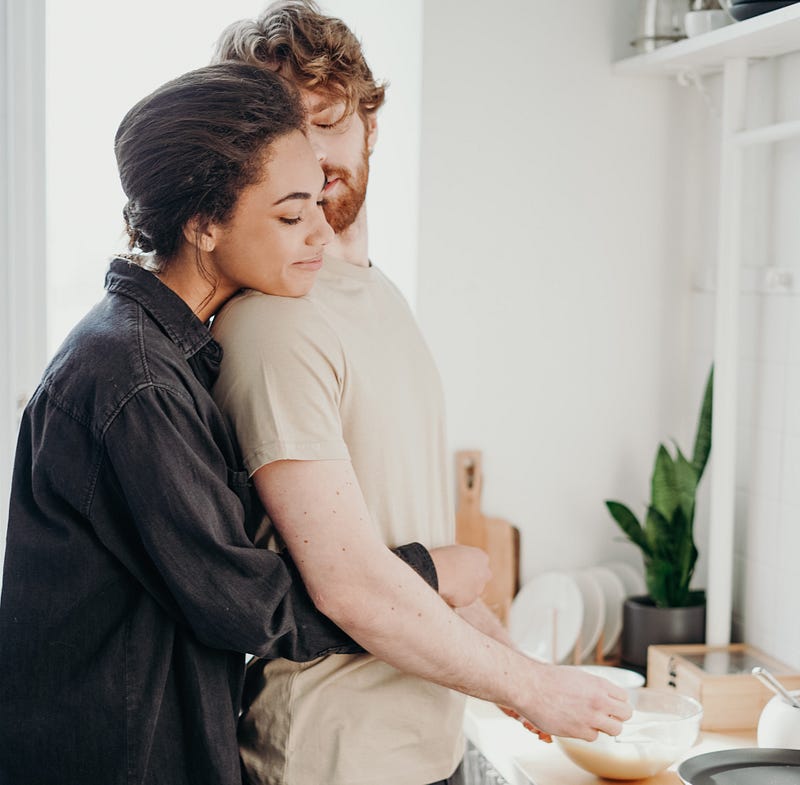
Photo by cottonbro from Pexels

The therapist’s office was a soothing blue — pale blue walls, slate blue sofa, blue-gray carpeting. She started each session the same way: “Tell your partner what you appreciate about him/her.”

I sighed. I was sick of this. This appreciation portion of the session felt like a pop psychology warm-up exercise — one we could easily do at home without spending $180 an hour to have a witness to the event.

The thing is we didn’t.

We rarely expressed appreciation to each other. And when we did, it was often met with a sarcastic grunt, as if we knew the sentiment wasn’t genuine.

I learned a lot from those couples therapy sessions, but none of it was what I expected. Mostly, I learned that what I thought was important really wasn’t and what I discounted was crucial.

Take the appreciation exercise. I’d struggle to stay focused on it in order to get to what I thought was the meat of the session: venting about my husband’s shortcomings. It was only later — many years later — that I realized the appreciation exercise was the point of therapy.

After all, when you appreciate someone, you are focusing on a positive aspect of the person’s character. You are not only magnifying the skill, behavior or trait you appreciate, but you’re also strengthening your feelings about the person who possesses it.

The science of appreciation

Research backs this up.

Dr. Amie Gordon, a social psychologist from University of California at Berkeley, has conducted several studies on the impact of gratitude on couples. She found that gratitude not only enhances intimacy between partners, but also cements the relationship.

“Moments of gratitude help people recognize the value in their partners — and a valuable partner is worth holding onto” she writes. “We found this to be true in a number of studies — i.e., when people feel more appreciative than usual of their partners, they also report more feelings of commitment.”

Indeed, the more grateful couples were, the more likely they were to still be together after nine months, Gordon found.

Mastering the art of showing appreciation

So how do you foster gratitude in your relationship?

It isn’t just a matter of saying “thank you.” Appreciation is best when it is specific to the individual.

What feels good to one person may not do the trick for another. Receiving appreciation is an individual thing. So you have to experiment and see what works for you and your partner.

Here are some easy ways to do that.

Learn your partner’s love language and give a “gift” that matches it.

My top love language is acts of service. When my partner does something for me, even if it’s just taking out the trash, I feel loved. I have told him this. He looked at me strangely at first, but then took the attitude of “whatever works is good with me.”

Here’s the thing: He now volunteers to take out the trash.

He asks how he can help me when I am distressed.

He tells me he wants to do something to make my life better. And I instantly feel better when he does so. It’s the greatest gift he can give me, and it works beautifully because it’s exactly what I want to receive and what he’s happy to give.

Compliment your partner in public — in front of friends, family, colleagues.

I learned this lesson many years ago when I was a speechwriter for a lobbyist. She was famous for acknowledging her staff in front of the president of our organization. And everyone loved her for it.

It’s a powerful technique, because you’re not just acknowledging the person’s strengths, you’re doing so in front of people they value.

The details make a difference, though. The more specific the compliment, the better. Saying someone is a “whiz with words” is nice. Saying they wrote a speech that garnered a standing ovation takes the compliment to a whole new level.

Equally as important: Be genuine. What you say must be true, and it must be something your partner values.

Complimenting your partner’s taste in T-shirts is fine, but if your partner doesn’t care about how they dress, your compliment won’t have much impact. It’s much better to find a way to connect the compliment to something that matters to your partner.

For example, my fiancé is a logical, methodical decision-maker who relies on science, facts and research to direct his life. If he makes a spreadsheet for our budget and thoughtfully adds a line item for my Sephora purchases, I appreciate it. It makes me feel relaxed because I know it means I can spend $50 on sunscreen without feeling embarrassed about it.

In this example, if I tell him, “I love the way you’re so thorough with our budget. It actually makes me feel calmer about spending money,” it has a big impact because: A) it’s true, and B) it’s something he values about himself.

Ask your partner what makes them feel loved, then provide that.

When someone brings me a cup of coffee the way I like it, I feel loved.

When someone does the dishes for me, I feel loved.

When I get a compliment for work I’ve done, I feel loved.

These things aren’t rocket science. It’s likely your partner has similarly simple things that light them up. Find out what they are and provide them.

Don’t rinse and repeat.

You’ve heard the idea that love is a verb, an expression, an action. It isn’t an event you engage in once and simply repeat when necessary. Nowhere is that more true than in expressing appreciation.

Simply repeating the same act of gratitude over and over again isn’t enough to truly show your partner you appreciate them. You have to go the extra mile and come up with novel ways to communicate your admiration and respect. Yes, that requires a little more “work” on your part. But it’s an effort that will pay off tenfold.

Dr. Gordon did a study that proves it. She brought couples into the lab and had them discuss important relationship issues. She found that “participants who were more grateful for their partners were observed as being more caring and attentive listeners during these discussions — a key for promoting intimacy in relationships.”

Gordon concluded that appreciation is not only important for maintaining intimacy, but it also promotes a cycle of positivity. “Recognizing you have a valuable partner and acting accordingly can help your partner feel more valued,” she said.

Like this story and want more? Sign up for my newsletter now!

You may also like:

Relationships
Love
Advice
Self Improvement
Marriage
Recommended from ReadMedium