
How to Shore the Fragments of Our Better Selves
5 tips to save civilization and remember our humanity
One of the many benefits of youth is the belief that you will live forever.
And why would you not feel this way? After all, you’re young, presumably in excellent health, and feeling like the world is your oyster.
The world may have its troubles, but the young tend to be less exercised about threats of drought, disease, war, and armageddon. Yes, they may take up social and environmental causes, but they’re also focused on finding love and satisfying careers.
Those nearing the winter of their lives are different.
They often feel the world’s threats more deeply. Advancing age, poor health, and fixed incomes make them more vulnerable.
Everything gets harder for older adults. Muscles ache, mental acuity suffers, and sometimes a sense of irrelevancy and dread sets in.
New technology and cultural shifts feel foreign. The news is frightening.
One clicks for the older movies, plays the classic music, and longs for the past (even with its warts). Because they are familiar.
For the aging, it sometimes feels like the world is fragmenting.
The drug of dreams against the pain of living
The late, celebrated poet T. S. Eliot knew a thing or two about the changing landscapes and vicissitudes of life.
As a child he suffered from congenital double inguinal hernias, thus denying him access to the athletic preoccupations of his peers. In his isolation he discovered literature.
The author Robert Sencourt, in his memoir of Eliot, wrote that young T. S.“would often curl up in the window-seat behind an enormous book, setting the drug of dreams against the pain of living.”
Through friends in Cambridge, Massachusetts, Eliot met and fell in love with a woman named Emily Hale in 1912. They corresponded for many years but sadly never came together.
Eliot’s first wife, Vivien, suffered from both physical and emotional disorders, and eventually was institutionalized. During the years of Eliot’s unhappy marriage, he was neurotic.
An essay in the New York Times notes:
In 1921 T. S. Eliot teetered on the brink of a mental collapse. For two years he had been struggling at night to finish a long poem while working by day in the foreign transactions department of Lloyds Bank. His neurologist — as they were then called in Britain — told Tom to get three months’ sick leave and then travel to Lausanne to see a leading psychiatrist. He did. His escape from London freed him from negotiating exchange rates and his unhappy marriage. While in Switzerland, he was able to complete his poem “The Waste Land.”
Written in the aftermath of the first World War, Eliot’s long poem The Wasteland explores the disorganization and collapse of society. Eliot may have written the poem in the throes of mental anguish, but it captures the real fear of a declining world.
Then as now, the threat of a fragmenting world seems more and more urgent.
The degradation of human dignity
It seems I’m always battling technology.
One day my television works fine, and the next it won’t work. I juggle between two remotes, switching from one HDMI to another.
Nothing.
So I summon my 24-year-old son, who is completing his degree in computer science. He has a go.
Nothing.
Eventually, in exasperation, we disable the entire cable unit and then fire it up again. Much like the capricious nature of a rebooted computer, suddenly the TV cable is working again.
I have similar stories about my Sony camera, with its dense menus and endless complexity.
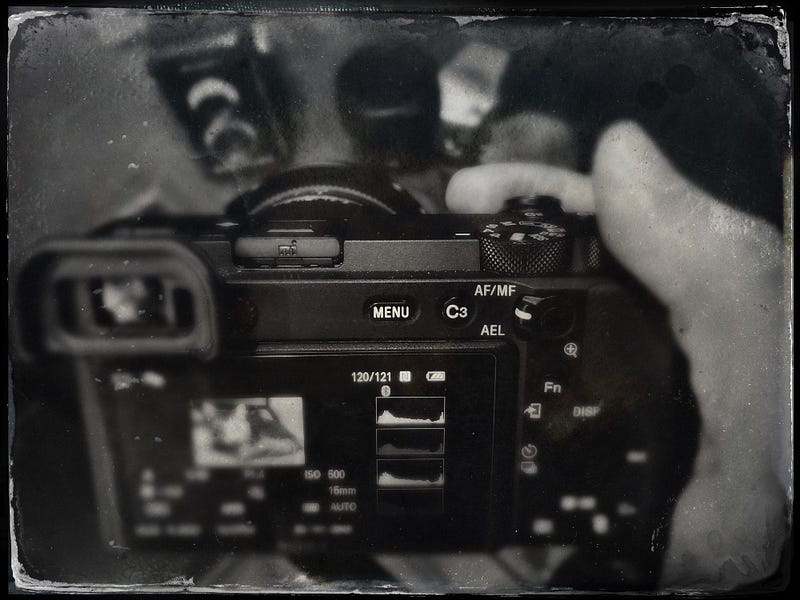
For this reason, I find solace in simple things. Analog devices like fountain pens and typewriters. They feel so much more friendly and reliable than digital technology.
I look around, and everyone today has their face aglow in front of a digital device. People seem increasingly disconnected.
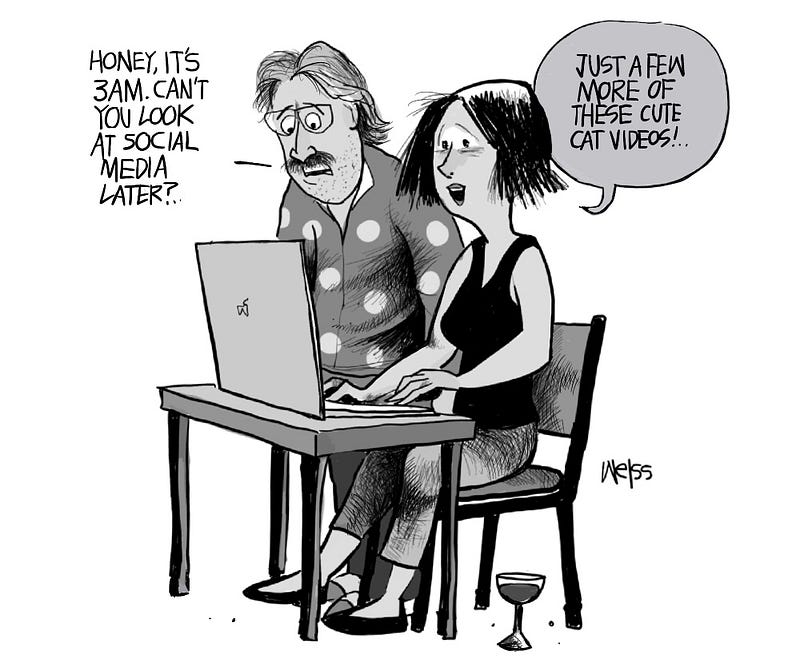
The very technology we thought would free us seems to have enslaved our attention in a digital hellscape of clickbait, social media piffle, and divisive banter.
Maybe T. S. Eliot’s The Wasteland was on to something. An essay about The Wasteland from Boston University notes:
“One major theme that Eliot treats in detail is the role of technology and industrialization in the downfall of Western civilization. Unlike earlier modern poets such as Walt Whitman, Eliot uses The Waste Land to draw connections between the mechanization and technological advancement in everyday life and the degradation of human dignity.”
The degradation of human dignity is something I think about a lot.
These fragments I have shored against my ruins
Look no further than the depressing news.
The war in Ukraine. Lost lives to the pandemic. Droughts, floods, fires, and climate change. Mass shootings. Rampant homelessness and addiction. Inflation and increasing crime. Chinese saber-rattling. Declining academic standards and performance. The erosion of manners, ethics, and adherence to the Golden Rule.
From social media’s mass anesthetization of society to the mounting challenges confronting the world today, it’s no wonder a lot of Boomers and Generation Xers feel a growing sort of Wastelandian fragmentation.
Maybe even the young are starting to feel it, too?
There’s a line in Eliot’s The Wasteland that always stood out to me:
These fragments I have shored against my ruins.
According to Interestingliterature.com:
“Fragmentation is both a theme and a formal feature of The Waste Land. The fragmentary nature of certain passages from Eliot’s 434-line poem mirrors the social, psychological, and spiritual fragmentation of Europe after the First World War.”
There seems to be a lot of fragmentation going on today.
So what do we do? How do we turn things around? How do we reassure the elderly and inspire the young?
Interestingliterature.com notes that “the speaker is attempting to offset his own ruin by supporting the ‘fragments’ that remain, preserving them against further decay” and also “The fragments are the fragments of European civilisation, repeated and quoted in Eliot’s poem in an attempt to shore them up and preserve them.”
How about the fragments of today’s civilization?
If we are to survive, then we need to start shoring some fragments of our better selves against the ruins that seem to be closing in on us.
That means moving past divisive politics, cancel culture, and demonization of everyone you disagree with. It means treating others as you would like to be treated. It means using technology to better yourself and others, instead of being used by technology. It means respecting the environment, and focusing on how we can ensure a better future for all.
It means remembering our humanity so that the world doesn’t become a wasteland.
Originally published at JohnPWeiss.com.
Before you go
I’m John P. Weiss. I draw cartoons, shoot classic black and white photos, and write elegant essays about life. For more, check out The Saturday Letters.