
How to See What You Really Want
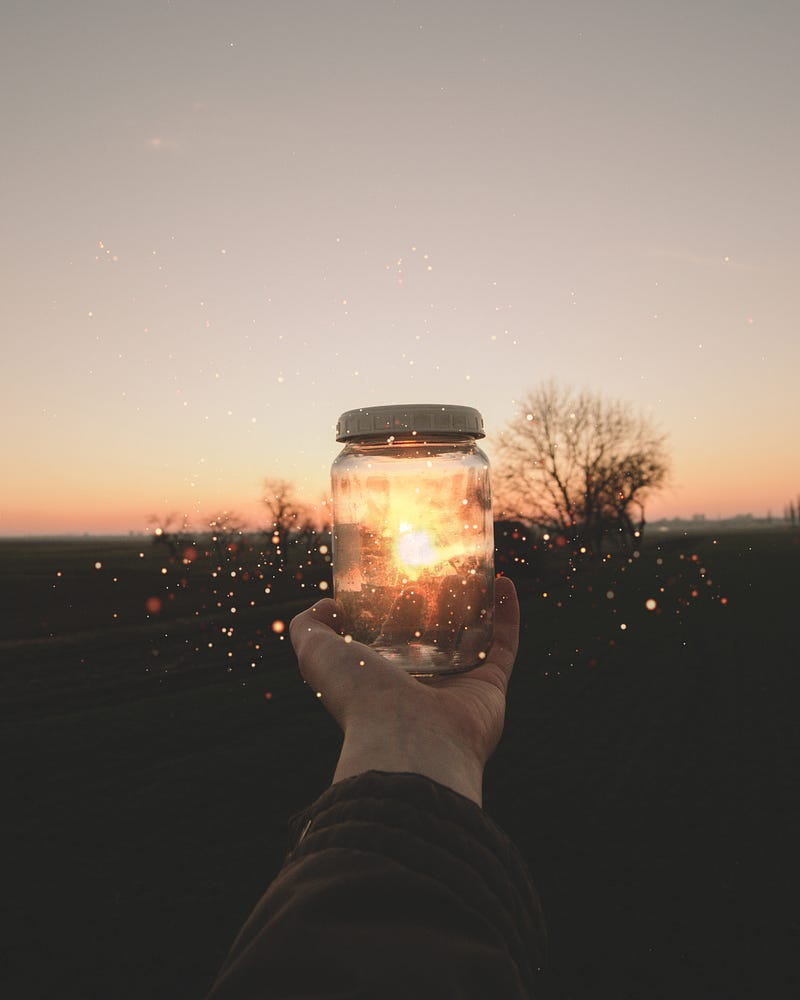
We all seem to have things to do that stand in the way of the things we want.
But we often don’t give up some of the projects we “hate.” It may be because they are necessary parts of the bigger dreams and goals that we want to achieve.
So what is it that we really want?
Award-winning authors, seminar leaders, radio show hosts, and my favorite writers on living in the moment, Ariel & Shya Kane, give the following hint:
If you want to know what you really want, look at what you’ve got. — Ariel and Shya Kane, Being Here…Too: Short Stories of Modern Day Enlightenment
And this one too:
You know what you want by how you act. — Ariel and Shya Kane, How to Have A Match Made in Heaven: A Transformational Approach to Dating, Relating, and Marriage
We often judge the circumstances we are in and the lives we live as not good enough. However, many of us, when offered the possibility of being in another situation, would still choose what we’ve got, one of the reasons probably being that we know what our circumstances are, whereas the unknown can be scary.
We also forget that we made choices that brought us to where we are. And many of those choices were good. In fact, they were perfect for the moments we made them in, even if we might not like them as much in retrospect.
Our fear that we are doing something wrong, and our resistance to that fear, distort our view of the fact that if we do something and don’t stop, then chances are it is something we want to do, even if publicly we might claim otherwise.
Here is what the Kanes have to say on that (where “it” could be anything):
If you do it, then you want it. If you don’t want to do it, then you stop doing it. — Ariel and Shya Kane, How to Have A Match Made in Heaven: A Transformational Approach to Dating, Relating, and Marriage
Simple, right? Kindness and honesty applied simultaneously allow us to become aware of what we have, and to be thankful for it. This awareness can also help us to stop doing something we don’t want to do, in any given moment — even if we might have wanted to the moment before — just like we stop playing games when we are no longer enjoying them.
It can also help us to move forward. We all want to learn something new because we all have curiosity programmed in us. In which case, it is worth remembering that,
life is fleeting. If you have the idea you want to do something, you should go for it. — Shya Kane in the “Transformation in the New Year” video by Ariel and Shya Kane
So with the knowledge we gathered above, let’s take a look at what we think or say we really want.
First and foremost, most of us say we want to live happy, healthy, and long lives. But how to achieve that?
Ariel and Shya Kane have a brilliant answer to this. They say:
The secret to happiness and well-being is interacting with your life as though your life is your idea. — Ariel and Shya Kane, Practical Enlightenment
If we follow their advice and treat the way our lives turn up as if it was our idea, does it mean that the lives we live will feel like exactly what we wanted? Or even something beyond what we wanted?
Yes, this is my experience. When I relax into the moment and make the best of it, life feels like a fantastic and fun roller-coaster. An utterly exciting and pleasant roller-coaster. Each day becomes full of events and colorful experiences.
Here is something else I discovered. If I don’t manage to give up something, or it reappears in my thoughts or reminders from outside, then I probably wanted it in the first place. I have discovered this in various areas of my life, and continue to do so. This applies to both my professional and personal life.
You might think that the reappearance of what we want in our thoughts, even if we are resisting it, is a good thing. At least in the end. “This sticking thought might someday nudge me into attending to my heart’s desire or towards what is really good for me,” you could say.
I have an example from my life, which at first might sound like proof of this.
More than ten years ago I stumbled upon something, without which I wouldn’t have started blogging, and wouldn’t have met many of the wonderful and supportive friends I have from all over the world. Without this something, I wouldn’t have written the many books I have to date.
This something was a book. Its title is Being Here: Modern Day Tales of Enlightenment and it was written by Ariel and Shya Kane.
I first saw it when an online retailer generated a recommendation based on my previous orders of many self-help and motivational books.
After buying it in October 2009, I resisted reading it for almost two years, although the beautiful butterfly on its cover often caught my eye, as well as the spine when I tucked it between the other books on my bookshelf.
Now I realize that one of the reasons for my resistance was my assumption that this book would be like any other self-help book I had read before, which, as I saw it then, had failed to solve my problems or to fix me, since I considered myself a failure. It was beyond my realm of imagination to consider that there was nothing to be repaired or changed. That there was another way.
Then in September of 2011, I surrendered and read it. My life took a turn I had never expected, but for which I am immensely grateful.
So all was well in the end, you could say.
But there is a clear downside to resisting. If we oppose what we really want to do or how our lives show up, we start resisting other things as well, including those that might have been easier to do previously. Many activities become a struggle. Because resistance becomes our lifestyle.
That was true for me during those two years (as well as before). Somewhere in the middle of those two years, one of my biggest dreams came true. After six long years and various failed attempts (including IVF treatment and considering adopting a child), I became pregnant with our son, Niklas, who was born in October 2010.
But, strangely enough, I still found myself feeling miserable. Others seemed happier than me, more satisfied. How could that be? I had what I always wanted — a loving husband, a child, an amazing and supportive family and friends, a job — but I was still unhappy?
So I concluded I was doing something wrong. Despite everything I had achieved in life (including a Ph.D. in electrical engineering), I thought I was incompetent at almost everything. Whatever idea or wish I had and contemplated trying out, like writing, for example, I discarded it. I hid the short story away for a while, which I had written while going through the fertilization process.
Now in retrospect, I see that this cycle of the wish appearing and me saying, “Not now, next year” only reinforced the desire and the growing frustration that I was denying myself that wish. Because next year, tomorrow, etc. don’t exist for human brains. If an idea appears, then we want to act on it right now. And if we deny ourselves this wish, we get bitter, with ourselves and with everyone and everything around us.
With the tools that anthropology offered, I realized that being self-critical was totally normal, and that many people were. I learned to observe myself and the world around me non-judgmentally, and to treat both myself and others with kindness.
I also learned that awareness (and practicing being here) is not a one-time happiness pill. I lose it many times a day, but I learned to find my way back into this moment again and again. Saying “Yes” to life became a fantastic adventure.
I discovered that for some tasks, jotting down my intention on a to-do list was the first step in saying “Yes” toward its completion. But I learned that if my thoughts returned to it again and again, then there was often a deeply-ingrained wish to spend at least a little time on it now and then, rather than defer it for too long.
I was also surprised to observe the following. I expected that adding another item to my to-do list and then doing it would cause me stress. Especially if that additional item was a recurring one that would take a long time to complete.
But something else happened. Resolving a “No” and saying “Yes” to a wish didn’t overwhelm me. Instead, clearly seeing what my wish was and giving at least a little time to it boosted productivity and motivation in other projects. And I felt amazingly relaxed and content.
As I read Ariel and Shya’s books and articles, listened to their Being Here internet radio show, and participated in their live seminars, I experienced what it meant to let myself and others be just as we were. I discovered how to breathe and savor my life moment by moment, completely and freely.
I came to understand what I truly wanted.
With awareness — which culminates in honesty, kindness, and helpfulness for both others and yourself — so can you.
A note to this article: It is a modified excerpt from Self-Gamification Happiness Formula: How to Turn Your Life into Fun Games.
Thank you for reading this article! I hope you enjoyed it. If you did, then in addition to the story referenced in the piece above, you might also enjoy these two:
P.S. To stay in touch, join my e-mail list, Optimist Writer.
About the author:
Victoria is a writer, instructor, and consultant with a background in semiconductor physics, electronic engineering (with a Ph.D.), information technology, and business development. While being a non-gamer, Victoria came up with the term Self-Gamification, a gameful and playful self-help approach bringing anthropology, kaizen, and gamification-based methods together to increase the quality of life. She approaches all areas of her life this way. Due to the fun she has, while turning everything in her life into games, she intends never to stop designing and playing them.


