
Leadership
How to Retrieve America From the “Serve-Me” President
A call for Servant Leadership

“I alone can fix it.” — Donald J. Trump, GOP Convention, 2016
Everything we needed to know about Donald Trump was right there in those five words. His malignant narcissism, his grandiosity, his undeserved self-confidence. All were in evidence.
Much less evident in 2016 was the consequences of Trump’s pathology four years on: a nation starkly divided into battle lines of race and equality; more than 175,000 citizens dead and more dying every day; an economy in crisis and millions of people living at the brink; a descent into sociopathic authoritarianism unimaginable just five years ago. We could go on, but do we need to?
We can’t treat Trump’s malignant narcissism, or his grandiosity. There is no cure. But there are alternatives.
For ten years, I led a highly successful organization with over 200 employees and thousands of stakeholders. While I was confident in my abilities, I was also keenly aware that I couldn’t be effective in moving the organization forward by myself. My leadership approach was deliberate from the very first day.
I hired people I knew were smarter than me, I provided them with the resources they required to be at their most productive, I gave them a vision for where the organization was going, and I got the hell out of their way.
This approach worked well for us. I’m proud to say that this approach also helped launch dozens of talented people into leadership positions in other organizations. In retrospect, those launches were my most significant accomplishments.
I believe that we need to embrace a similar approach to political leadership if we want to counter the uniquely Trumpian narrative that only he — or any other person by themselves — can fix what ails our society.
May I suggest an alternative?
Servant Leadership
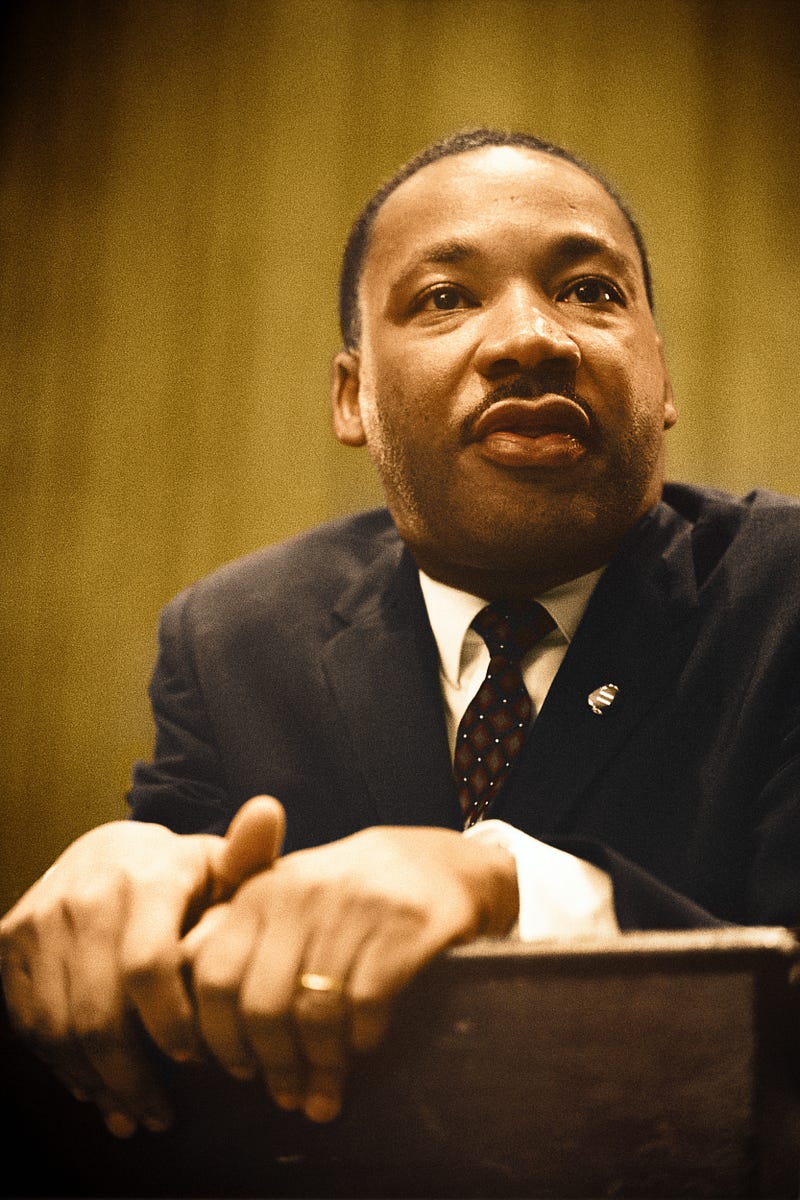
One such approach is called Servant Leadership. Coined by Robert K. Greenleaf in 1970, Servant Leadership is a philosophy that conceptually goes back thousands of years. Lao Tzu, The Buddha, Jesus of Nazareth, Abraham Lincoln, Mahatma Gandhi, Mother Theresa, Martin Luther King, Jr., Pope Francis, Nelson Mandela, the Dalai Lama…all are great examples of what Greenleaf termed servant-leaders.
“The servant-leader is servant first…It begins with the natural feeling that one wants to serve, to serve first. Then conscious choice brings one to aspire to lead. That person is sharply different from one who is leader first.” — Robert K. Greenleaf
At the core, Servant Leadership is a philosophy and leadership approach that emphasizes empathy, compassion, sacrifice, and service to others. Servant-leaders turn the traditional power hierarchy upside down, placing the needs of the community at the top of the pyramid while supporting and empowering others to do their best work.
What follows are the key principles of Servant Leadership. Leaders who become master practitioners of these become the people we most respect and want to emulate.
Servant Leaders are Listeners
“We think we listen, but very rarely do we listen with real understanding, true empathy. Yet listening, of this very special kind, is one of the most potent forces for change that I know.” — Carl Rogers
Most accomplished leaders excel as communicators. Many are polished and effective orators and writers, and most have a degree of charisma that helps them deliver messages in non-verbal ways. But great leaders go further.
When leaders embrace a Servant-leader model, they add listening to their already impressive communication toolbelt. Servant leaders learn to listen closely and deeply, to understand the needs of the community they serve truly.
These leaders actively seek out ideas and feedback. They are not threatened by counter-ideas or criticism. They accept that there is wisdom in the community that surpasses their own. What makes such leaders great is that they open themselves to listen without their egos blocking the way. They don’t just allow ideas to emerge from the community; they actively encourage it.
Servant-leaders listen carefully to themselves. They tune into and correctly interpret the echoes and reverberations felt and heard inside their bodies and minds. Servant-leaders read their community and themselves like a compass and feel confident about which direction to proceed.
Servant Leaders are Empathic
“Empathy is simply listening, holding space, withholding judgment, emotionally connecting, and communicating that incredibly healing message of you’re not alone.” — Brene Brown
Servant-leaders feel — they feel the warmth of the room they are addressing; they feel connections to others, they feel the joy and pain of others, and they allow themselves to be vulnerable by sharing their failures and short-comings.
Empathy opens doors that power and authority cannot. Leaders who can connect authentically with followers and who can honestly relate to the concerns of others are granted authority and power. Why? Because we want our leaders to know us as much as they know themselves.
We want our leaders to see the world from our perspective, to understand why we’re upset, or joyful, or angry.
Servant-leaders approach each day with an open mind. They attempt to understand the various perspectives and motivations that drive performance throughout the organization.

Servant Leaders are Aware and Self-Aware
“Servant leadership is easy for people with high self-esteem. Such people have no problem giving credit to others. They have no problem listening to other people for ideas. They have no problem in building other people up.” — Ken Blachard
Servant-leaders pay attention to everything. They know that even the smallest data point might have oversized implications. This is especially true when working with people.
Servant-leaders think about their team members' strengths and weaknesses and work hard to help all grow into the best versions of themselves.
This is impossible if the leader is not also honest about their strengths and weaknesses. Each of us has limitations. The question is, can we find opportunities to grow by examining our limitations?
Servant Leaders are Persuasive
“A genuine leader is not a searcher for consensus but a molder of consensus” — Martin Luther King, Jr.
Authoritarians dictate. They tell followers what to do, and they aren’t concerned with how the followers feel, nor do they see any need to persuade.
Authoritarians have it easy in this regard because dissent is usually not tolerated. There is no need to listen or to empathize (This may work for a while, but eventually the community will revolt. This rarely ends well for dictators!).
Servant-leaders spend considerable amounts of time attempting to achieve consensus. Consensus doesn’t require or mean that everyone agrees with the final answer to a question, but it does mean that everyone can express their point of view. Participation in the process makes people feel valued, even when they don’t get their way.
Servant-leaders usually know what direction they want to move the organization. But rather than rule by decree, the servant-leader will attempt to persuade the community of the wisdom of a particular approach. This means figuring out how to open doubters’ eyes to new possibilities.
Servant Leaders Have the Gift of Foresight
“As we look ahead into the next century, leaders will be those who empower others.” — Bill Gates
Because servant-leaders pay such close attention to feelings, they develop the ability to anticipate the community's needs. They integrate lessons learned from past experiences with the current reality and formulate a path forward.
Servant-leaders also anticipate the consequences of their actions and develop plans accordingly.

Servant Leaders are Stewards
“If leadership serves only the leader, it will fail. Ego satisfaction, financial gain, and status can all be valuable tools for a leader, but if they become the only motivations, they will eventually destroy a leader. Only when service for a common good is the primary purpose are you truly leading.” — Sheila Murray Bethel
No leader lives forever. Servant-leaders recognize that the position of responsibility they hold is more significant and more enduring than they are.
Servant-leaders also understand that the community is more prominent and more important than they are. So they think about the organization’s legacy more than their own.
Servant-leaders are humbled by the trust and confidence the community invests in them. Every deliberation and decision they take is framed by whether community trust and confidence are increased or decreased by this action.
If the answer the latter, servant-leaders will have carefully thought through why it is crucial to move forward in this way and will be able to build consensus around the decision.
Servant Leaders are Committed to the Growth of People
“The goal of many leaders is to get people to think more highly of the leader. The goal of a great leader is to help people to think more highly of themselves.” — J. Carla Nortcutt
Every member of the community has some level of ambition. Most members desire to grow beyond where they are now. It’s the servant-leader’s job to help them.
Servant-leaders invest considerable amounts of time working with community members to grow and advance, even if that means they will eventually leave this community. To some, it seems antithetical to devote so much time and energy to someone who plans to depart the organization someday.
But servant-leaders take it as a solemn duty to raise other leaders. They know that there is a positive compounding effect when they do. Within the community, people will notice the mentoring and will want it for themselves. They will also very likely work even harder because they have more to work towards when they imagine their future.
Organizations that launch leaders into the wider community are highly respected. And selfishly, launching great leaders opens the door for other talented people to fill those vacated roles, and bring their personalities and creativity to the job.
Servant Leaders Build Community
“The sacrifice ‘of’ self for the greater good is the greatest calling imaginable, and it is the bedrock of the greatest nations. The sacrifice ‘for’ self is the most pathetic calling imaginable, and it is the quicksand within which nations perish.” — Craig D. Lounsbrough
Servant-leaders build teams who work together respectfully and who inspire and motivate each other. Servant-leaders know that when team members feel like they are integral and vital parts of a group, they will work harder to achieve success for the whole team.
Servant-leaders don’t ignore conflicts. They actively seek to understand the sources of conflict and to address them.
Servant-leaders seek to build synergy into every area of the organization. They know that emotionally connected and empowered team members perform better and are more motivated and innovative.
Servant-leaders put themselves second, the community first. They focus on understanding the group's needs, providing the needed resources for success, and growing leaders in the ranks.

Conclusion
“The death of human empathy is one of the earliest and most telling signs of a culture about to fall into barbarism.” — Hannah Arendt
We need not fall into barbarism. We only need to embrace the lessons taught by Servant-leaders over the last 3000 years.
True, Servant Leadership is hard because it requires very high EQ (emotional intelligence) and unlimited patience. It requires leaders to recognize and respect the value of each member of the community. It requires a commitment to integrity and honesty. It requires an open heart when criticism is given, and vulnerability when the criticism is deserved.
But the effort is worth it because it results in happier, more productive, and more connected communities.
Most importantly, we won’t ever have to rely on one person to address our problems.
Instead, we can feel very confident saying,
“Together we can fix this.”