
How To Remember and Organize Your Ideas Before They Escape
9 ways that work for me

Isn’t it crazy how ideas have a way of striking when you least expect them?
They make an appearance at the most unexpected times, wrapped in the coat of inspiration. They have no sense of time and place. The just appear like little beacons of bright light, like mild shockwaves.
When they do, the mind has an a-ha! moment. We can’t wait to build on it.
Ideally, you should have a place, digital or non-digital, to record your ideas. You MUST write/note it all down somewhere so that brilliance is not lost to the world forever.
But let’s say this happens when we’re bathing. What to do? If you’re like me, you’ve already begun to write in your mind. However, that’s no guarantee that you’ll remember it later when you are out and applying that coat of moisturizer on your skin. Or when you actually sit down to write and wait for your muse, who’s gone for a long walk and you know not when she’ll return.
I have lost count of the number of times inspiration has struck at inopportune moments such as when I am…
- on my porcelain seat of wisdom
- showering
- cooking
- driving
- at the doctor’s
- in the market
- in the elevator
- in conversation with someone
What do I do?
I’ve found ways to overcome this challenge of not losing those precious ideas. Of course, when I actually get down to writing about them, I may not think they’re as great as they seemed when I first thought of them, but that is a different story. Not relevant now. What’s important is that the idea has been captured and is waiting for me.
I’ve even written on the misted mirror in the bathroom — and sometimes on my arm — or palm.
Which brings me to this question:
How to keep those ideas from vanishing?
Here are some ways that work for me.
1. Keep a notebook and pen handy
I see you looking at me skeptically. Your book is far away from the spot where the idea struck, right?
So, have several notepads around. While that sounds hilarious, it works. I shamelessly scribble on my kitchen shelves, which I’ve lined with white paper. I think it looks kind of charming and goes with the decor — which is basically mix and match.
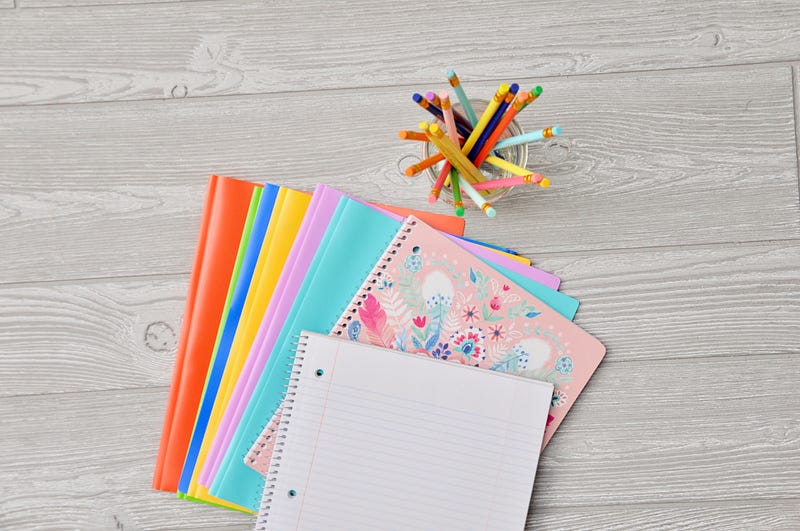
But seriously, you’ll be happy you did. Some months down the line, it can be so much fun to go back and look at what you’ve written. Promise!
2. Leverage technology
This is the smartphone age and it is only fair that we take advantage of its features. No need to be super-savvy. Just find the digital notepad and note your ideas. If you don’t have one, find an app. My favorite is Google Keep, which is easy to use and can be accessed online from anywhere across your browsers or whatever system you use. And yeah, it auto saves as you type. And syncs across devices. Win-win. Or use a note-taking app to store and organize your ideas. I love Google Keep! Saw something interesting online while browsing? Save it via the browser bookmarklet.
I message myself on WhatsApp or email myself — that works too!
3. Voice record your ideas
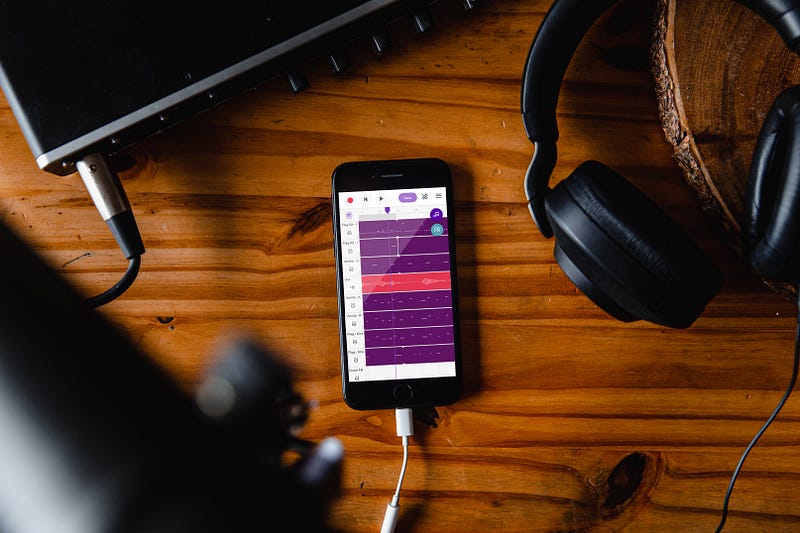
You’re not going public — not yet, anyway — so feel free to hit that record button and speak. Often my hands are busy but so is my mind. Also, being a little visually challenged, I find it tough to type on the phone’s tiny keyboard. On top of that, autocorrect is my sworn enemy and often gets me into trouble even though it gives me a good laugh.
So just click the “mic” and speak. Yes, takes a bit of getting used to — for the mic, that is — but you’ll get there quickly.
I remember when my friend’s mom first learned to use her phone, we were stunned to see her lightning-fast replies on WhatsApp. When we asked her how, she said she uses the audio feature. Why didn’t we think of that? ‘Duh!
Keep a recording, or just speak to text.
4. Use a notebook necklace
Seriously! That is a thing! Just get one, hitch it to an unusual “chain” or a chic leather cord — they are called notebook necklaces or literature jewelry — and wear it as an accessory.
I just grab a small spirally bound notepad and string a rope through it, and hang it around my neck. Cheap. Easy. Just waiting to organize my ideas!
5. Create Gmail drafts
One of my favorites. The almost unlimited space in Gmail and the fact that we can call up a “compose” any time, makes it easy to spill those ideas into a draft that autosaves itself…most of the time. This works if you are always connected.

6. Take photos
Does the sight of something trigger ideas? This happens to me all the time. I look at something, and see a story there. I simply pull out my camera and click — and I’ve stored the memory. Serves as a great mnemonic too. Nothing more uplifting than going through your photo gallery, reliving those moments. And writing about them.
7. Write on a whiteboard, blackboard
I find the blackboard easier because chalk is cheaper. Also, nostalgia value — school days. I also like the reusable chalkboard stickers you can fix wherever convenient.
8. Use sticky notes
Sitting at the computer? Use the digital sticky notes app. Or the actual sticky notes!
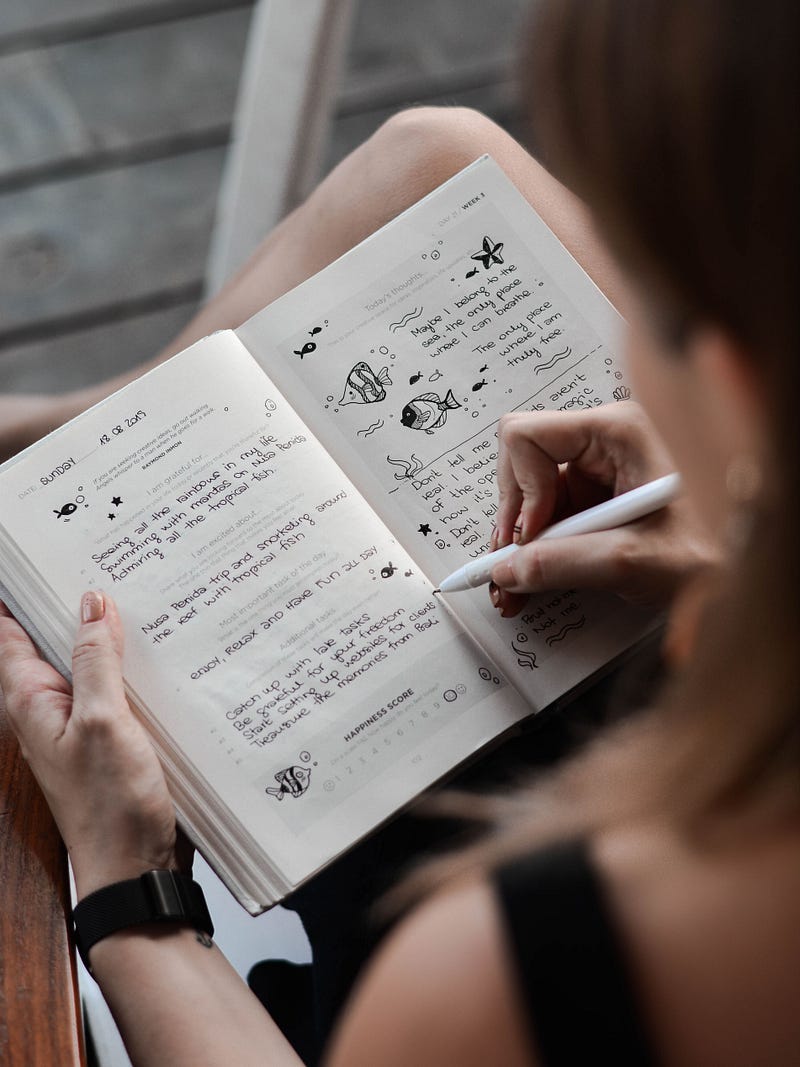
9. Use a bullet journal
Bullet journals are marvelous and versatile notebooks that help you organize your ideas, schedule your tasks, your to-do lists and much more.
How do you save and organize your ideas and lock them away before they escape?
Originally published at Vidya Sury, Collecting Smiles. Did you smile today?


