
TRAVEL WRITING PROMPT
How To Relax When You Can’t Go on a Long Holiday
Learn to unwind in your own backyard
In the early months of the pandemic, I consoled myself by saying that all the drastic changes demanded by the Covid-19 virus were short-term measures. The inconvenience was temporary; a test of resilience that was best borne with a smile. A year later, the once-surreal situation that has now become an unpleasant but accepted reality for the foreseeable future, makes me grimace.
As an unabashed urbanite who thrives in crowded spaces and fast-moving environments, I doubt whether I can endure being cooped up on an island for much longer. Singapore is Covid-free but reluctant to risk outside threats, particularly in the form of returning residents who have visited other countries. Therefore travel, my preferred form of rejuvenation is not an option. I need to find other ways to survive.
Mysteries of nature
Growing up in Mumbai, I assumed milk came in glass bottles or plastic bags, delivered to the doorstep each morning. I knew the names of common vegetables and fruits that were available at the store down the street but I had no idea whether they grew on creepers or shrubs or trees.
Textbooks' references to four seasons, particularly autumn and winter, seemed to be theoretical constructs, much like physics. The water cycle, however, played out in front of my eyes each year in the form of a sultry summer that gave way to monsoon rains.
My first introduction to changing seasons came in my first year on the east coast of the US. Landing in Washington Dulles airport on a cold December day, I was aghast to see wide avenues lined with tall tree trunks that resembled giant skeletons. Their barren branches shocked me as much as the unfamiliar cold.
When spring days arrived with warm days, spots of color on tree branches and sprouting tulip bulbs in the ground, my spirits lifted
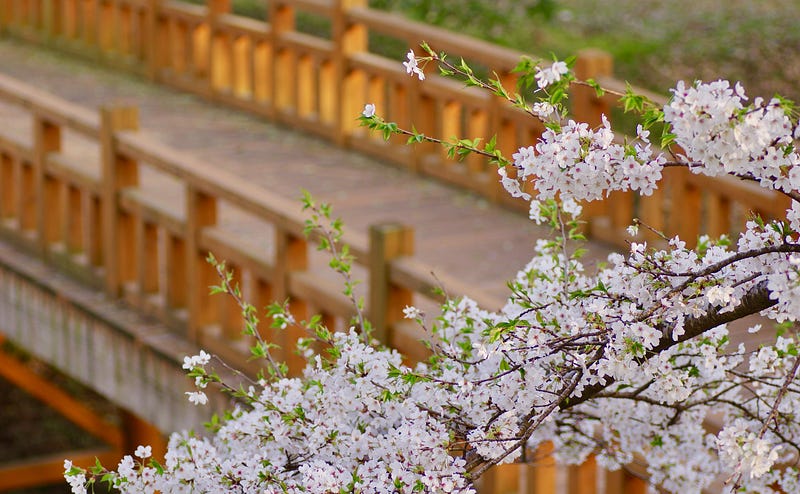
Finally, the homesickness that had plagued me all winter melted. The breathtaking view of the cherry blossom trees around the Tidal Basin and the Jefferson Memorial in full bloom in early April is indelibly etched in my memory. I hoped to one day visit Japan, the country that had gifted these Yoshino cherry trees to the United States.
Dreams take time, so do flowers
In March 2018, almost three decades after I expressed the wish to travel to Japan, my dream came true. My husband and I arrived in Tokyo in late March. We had made arrangements to walk part of the Nakasendo trail, an ancient path that runs between Tokyo and Kyoto.
Since the sakura usually blossoms in April, we wondered if we would catch the peak of the blossoming. But we were lucky. Tokyo looked like any densely populated city with its crowded trains and high rises, except for the majestic flowering trees lining its busy thoroughfares.
Side-effects of Shinrin-yoku
On the trail, we walked through picturesque villages and mature forests with well-marked paths. Each evening we checked into small ryokans, traditional Japanese inns. The hosts gave us cotton yukata robes to wear and served freshly-cooked food made using seasonal, local produce on exquisite crockery. To our delight, ryokans were able to accommodate special requests from vegetarian and vegan guests. After spending several hours each day absorbing the refreshing energy of the forests, we fell fast asleep on futons laid out on tatami-matted floors.
Although I had often visited the California redwoods in summer and admired the glorious colors of Shenandoah Valley in the fall, this entire experience was unusually soothing. It was my first foray into nature for a prolonged period.
The Japanese practice of Shinrin-yoku — forest bathing, involves soaking in the atmosphere of the forest by mindfully absorbing its sights, sounds, textures, smell, and taste. Invented in 1982 in response to the increasingly stressful life that the Japanese were leading, as well as to protect its forests, the practice gained prominence after studies proved its health benefits that included stress and blood pressure reduction and the ability to promote better sleep.
The act of immersing myself in nature forced me to slow down, be observant, and acknowledge the trees, the sky, and the gurgling river that kept us company for most of the trek
As a city slicker, it was an unfamiliar experience. Yet, it was exactly what I needed — an orientation to the therapeutic and restorative benefits of the natural world.
Escaping everyday life
In April 2021, I’m looking forward to receiving my Covid-19 vaccine shot and keeping my fingers crossed for the possibility of a vaccination passport to ferry me to foreign lands. But what can I do until then?
The accumulated stress of living and working from home demands a release. Last year we found creative ways to work from home. This year we need to find new ways to get outside.
My kitchen window offers a verdant view of a nature reserve that is literally in my backyard. Sometimes after rain, the dense foliage is slick and shiny. At other times, trees topple, branches collapse and it’s a glorious green mess. During a dry spell, the trees shed leaves, the grass dries up and everything looks forlorn, like an abandoned project, begging for mother nature’s grace.
In April, hot mornings are often followed by afternoon thunderstorms. I step out for a stroll after the rain dies down, enjoying the gentle drip-drop of rain falling from saturated leaves. A meandering walk through paths littered with fallen leaves and creeping vines, amidst thick shrubs and trees, slows down my heartbeat. The green canopy soothes my tired eyes.
My solo nature walks are intentional mindful pauses to invite mother nature to do what she does best, provide a nourishing environment for things to grow. These mini recharge breaks help clear my mind and allow budding ideas to take shape.
I have come to believe that learning to unwind in nature is a life-saving skill that can help us survive not just the pandemic, but the ups and downs of daily life.
As I look forward to a time when I can travel to a faraway place to have a rejuvenating break, I’m glad to have a quick serenity fix, right in my neighborhood.
#exploreyourbackyard
Ranjani Rao is a scientist by training and writer by avocation. She is currently writing her memoir about life after divorce and sharing her writing journey through her newsletter, Rewriting Your Happily Ever After.
Originally published at https://indiacurrents.com on April 15, 2021.

Sign up for our newsletter to stay informed with up-to-date curations from our editors:👇
We now offer exclusive writing services for our members. Discover how you can take advantage of our editing services and more.


