
How To Read Books Effectively
How to read so that you actually benefit from reading.
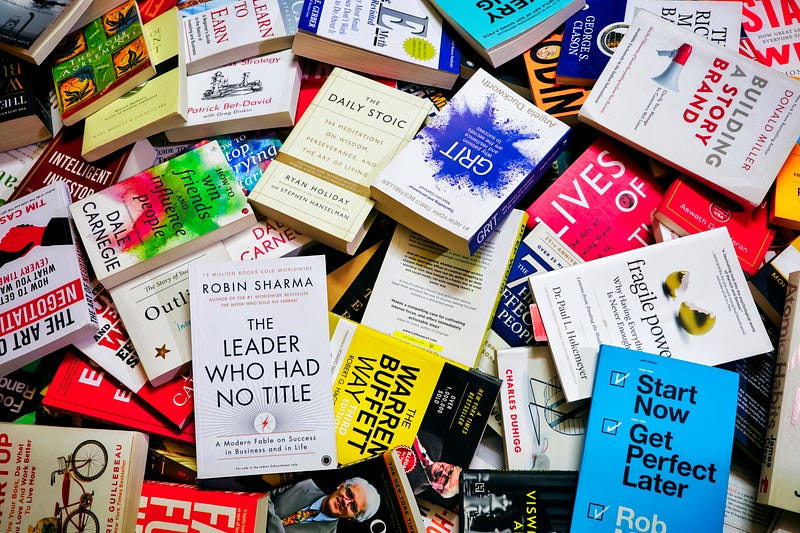
You could easily read 52 non-fiction books in a year. The question is not why would you because clearly to cover more titles than fewer. The real question is, what are you going to remember? It could be greatly summarised by Woody Allen’s quote:
I took a speed-reading course and read War and Peace in twenty minutes. It involves Russia. — Woody Allen
Don’t get me wrong. Reading fast and thus efficiently is great and I do recommend everybody to try to increase their reading speed and quantity. But then again, if you want to read non-fiction you might want to learn something from the read book. And the truth is that if speed-read then what are you gaining is close to nothing.
How to read books effectively?
I used to read like this:
- I would choose books semi-randomly, namely based on a vague recommendation from a friend, a nice looking front cover spotted in a bookstore or whenever I saw an interesting quote elsewhere. Without even thinking if I needed to read them.
- I was reading when I remembered it. I did it in bursts (e.g. 2 hours on the plane, 4 hours on the weekend, and then 2 weeks without reading).
- I didn’t take notes or I made scarce and vague notes in random places, like different physical notebooks, loose pieces of paper or a few phone apps. After that, the notes got lost and I never went back to them.
- I have hardly implemented anything. There was no reflection on how to translate the thought from the book into effects.
I have given this process a real thought. Reading a few books and blog posts on that topic was influential.
Now I read like this:
- 12 books a year, carefully preselected titles,
- 30 minutes of reading, but every day,
- I take notes on an organised basis,
- I go back to my notes regularly,
- I plan what and how to implement the stuff I read.
Let’s look at each and every step of that recipe.
1 — Choose only 12 titles per year
I set myself a yearly limit of books to read. It makes me choose carefully what I read. Thanks to the fact that I have one book a month, I can work on it slower and more accurately.
The most important selection criterion:
What particularly can I learn from this book?
Therefore, for example, a brilliant book about making businesses on UX design will not be on my list, because it is not my industry, and without the method, I’m describing, I would probably mindlessly swallow it.
The very process goes as follows:
- I check reviews — not only the rating but also the comments. Sometimes a book rated 4.7 / 5.0 is about the basics and it just isn’t for me. Therefore, it is worth verifying star ratings. Some better comments can be found in the Amazon/Audible comment sections or on Goodreeds.
- I look inside. I read the table of contents and the available excerpts, if given. I verify if it is useful for me.
- I am looking for opinions and recommendations about the book from other people whom I follow (for example Ali Abdaal).
Of course, 12 books is an example limit. You don’t have to stick to it.
Maybe next year I will only read 6 books? Who knows.
It is important, however, that you have a predetermined limit. Then you will focus on selecting the most important books for you.
2 — Read for 30 minutes every day
Try to recall the last book you read. Or the training you participated in.
What do you remember best? I bet the beginning and the end. It’s scientifically proven and described as the Serial-Position Effect.
I assume that if I remember the first and last 15 minutes of reading the most, it is best to read for … 30 minutes. I will remember a little less than 2 hours of reading. This is just my stupid theory, I have no scientific evidence for these numbers, and it is based mostly on the experience I have with myself.
So it’s better to read 30 minutes a day than 3 hours once a week. It is the same with learning to play an instrument, running or meditating. Shorter periods but more frequent and regular.
How to implement it in practice?
- Find a moment in the day when you are calm and free to read. For me, the ideal 30 minutes between breakfast and the start of work.
- Add 30 minutes of reading to your calendar. Developing a habit takes discipline — a calendar and reminders help.
- Make your task easier — read in the same place. Leave the book and notebook there, and let them wait for you. Routine simplifies life.
After 2–4 weeks, the habit enters the bloodstream. I don’t remember the last time I didn’t read in the evening. By reading 30 minutes each day, you feel progress. This motivates you to maintain the habit.
3 — Note, draw, doodle
Taking notes helps you remember. I write down the most important thoughts in my notebook. I can always come back to them and refresh the content of the book in 15 minutes.
I recommend taking notes and drawing. The diagrams, icons and small mind maps are great. Can’t you draw? Cool, neither am I. The important thing is to spice up your notes. The text wall is boring.
I used to read books in Polish, translated from English. But since I want to blog about them, I decided to read them in the original language, so that I can embrace the true writing of the author. It is not about learning the language, I think I am already after that point, however, it is always beneficial to devour a piece of good writing in a foreign tongue. I want to write about the topics mentioned in the books I read and knowing the correct vocabulary saves me the hassle of having to find the correct translation.
Funnily, I note everything in English. So that I can use the notes in my posts or books straight away.
4 — Get the most important lessons from the book
When I take proper notes whilst reading a book I will soon find that you will have a few full pages. That’s a lot. Then what I do is try to make notes of the notes. Something that will allow me to refresh the contents of the book within one minute.
After reading the book, I give myself a week. Then I go back to my notes and pick out the 3 most important lessons from them.
Each person can draw different conclusions from the same book, tailored to their specific situation. Therefore, I believe (not strongly) that such personal notes are better than ready ones, e.g. from Blinkist; however, the notes made by other people are still pretty valuable to anyone who wants to refresh their knowledge.
5 — Implement the knowledge
You could read hundreds of books but if you read them without taking any action you will be in the same position as a person not reading at all.
Reading the book on a regular basis, I think about how I can implement something at home.
In my notes, I add examples from my life that illustrate the conclusions of the book, if applicable. At the end of the reading, I list a few actions to be implemented.
A few noteworthy examples:
- Thanks to The Essentialist, I started to think more before saying “YES” to new commitments. I refuse to help more often. Amazingly, no one is mad at me. And I have time and energy for important, long-term tasks.
- Thanks to Fooled by randomness, I began noticing how often consequences would be virtually disconnected from the popularly believed causes.
- Thanks to Why we sleep, I now put a lot of emphasis on my sleep hygiene. I sleep in earplugs, with eye covers and at least 7 hours per night. I also re-established my relationship with caffeine by drinking coffee/energy drinks more strategically and keeping in mind its effect in time.
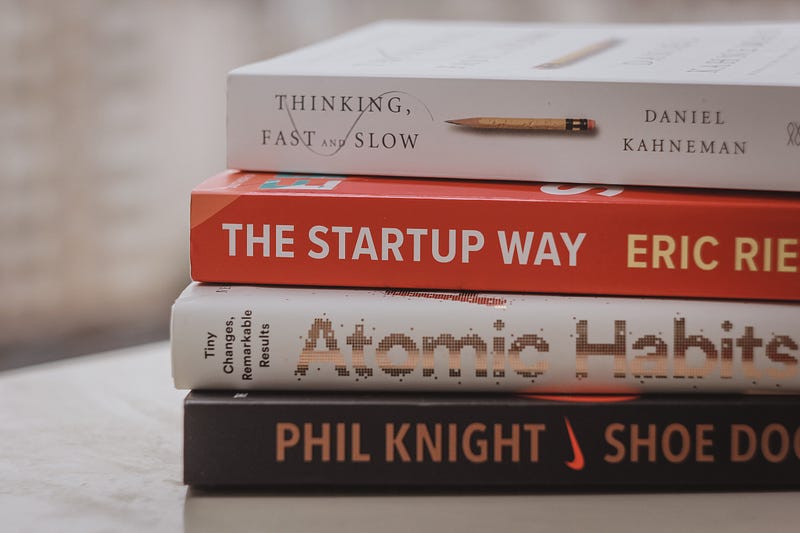
We can all be great readers, and we can all learn to read better. It just takes a bit of effort on our part, and some guidance from those who know how to do it well. With that in mind, I hope these tips for reading have helped you see the importance of reading — and learning to read — in a new light. Now go forth and conquer your next book! How will you apply what you’ve learned here today?
Further reading:
How to Read a Book: The Classic Guide to Intelligent Reading by Mortimer J. Adler, Charles Van Doren.
Hi, it’s Eric. Thank you for reading. I hope you’ve found the article at least slightly compelling. What can you do now?
- Get to know me — just go to the about me page or my link tree.
- If you like my style and want to read more of my stories — opt into my newsletter.
- If you want to be inspired by great thinkers, download my ebook “Achieve Great Things”.
Cheers!


