
How to Price Your Products To Sell Like Crack
Psychological lessons on pricing strategy to help you determine a price point that will skyrocket your sales

1. Cheaper Products Don't Equate To More Sales
When I first started selling websites I was terrified of being told “no.” I would give a very reasonable estimate that I knew was substantially lower than my competitors. However, every time a business owner said no, I would immediately offer to build their site for a lower price. I usually came to regret this decision when on the 20th iteration, the client would ask me to “move that image a tiny bit to the left, no maybe back to the right.” What I learned, was cheaper price points led clients to undervalue my work and time.
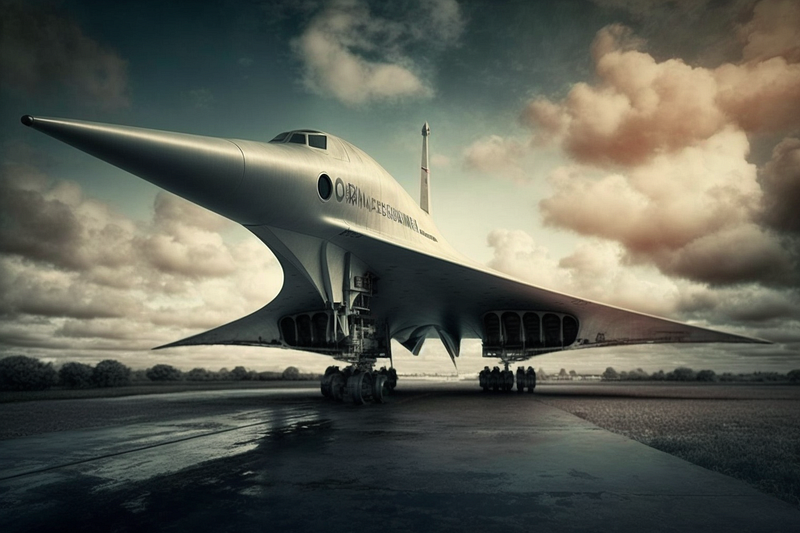
What’s interesting, is that oftentimes the higher the price, the higher the value a consumer places on the product (especially when it comes to luxury goods). To illustrate this point, let’s take a look at The Concorde.
The Concorde was a remarkable feat of engineering, being the first and only supersonic commercial aircraft capable of traveling at twice the speed of sound. It was also widely regarded as one of the most aesthetically pleasing machines ever built.
During the first six years of operation, British Airways experienced significant losses due to the Concorde. In 1982, the newly created Concorde division was handed over to Captain Brian Walpole with a two-year ultimatum to turn the losses into profits or face a sunsetting of The Concorde.
The Concorde team conducted market research and discovered that many customers were unaware of the actual cost of a ticket, as bookings were often made through secretaries or travel companies. However, when asked to guess, the customers assumed the fares were much higher due to their high status.
Based on this insight, the team implemented a new pricing strategy by charging customers what they thought they were paying, which resulted in a doubling of ticket prices to over $7,000 one way. This move repositioned the Concorde as an exclusive service for the wealthy, and it became a symbol of prestige and luxury.
What happened next is the thing of legends. Shortly after doubling their fares, half the tickets for its first London-New York flight were sold out in the first two hours! The change in price led to significant profits, with an estimated $50 million pounds in profit per year for British Airways.
This use case serves as a powerful reminder. Product price can determine product demand.
2. Don’t Charge The Same As Everyone Else
In a study by Yale University, they found that “an increase in similarity decreases the difficulty of choice and the likelihood that a choice will be deferred.”
This was discovered by giving test participants the option of keeping money or spending it on a pack of gum.
Test subjects were presented with two packs of gum priced the same (63 cents). What the scientists found was that subjects had trouble making a decision picking between the two, so 64% of them just deferred and ended up keeping the money.
Conversely, when the two packs of chewing gum had slightly different prices (62 cents, and 64 cents), then 77% of the test subjects decided to make a purchase!
While it’s important to do market research and determine what price your competitors are offering, don’t be afraid to price your product uniquely.
3. Use the Rule of 9
Have you ever wondered why so many items at the store end in .99? You might have asked yourself, “Who the heck carries around pennies anymore? Why don’t they just round it up to a dollar?”
Well turns out, it’s because of a strong psychological pricing principle. In a study by MIT and The University of Chicago a mail catalog was altered to offer various prices for the same product. What they found was astounding!
Products that price ended with a 9 not only outsold the same exact product priced $5 higher, but they also drastically outsold products priced $5 lower! Studies over the years have confirmed this psychological quirk of humans.
You will often see this principle applied in brick-and-mortar stores, but as online shopping becomes more and more prevalent, we will continue to see more of this pricing model online as well.
So the next time you’re out shopping and notice the number 9 again and again, consider how you can apply this same psychological trick to your own products as well.
4. Utilize Price Anchoring
The principle of anchoring suggests that people tend to rely heavily on the initial information they receive when making decisions. This is why placing a $20,000 car next to a $50,000 car can help sell the former.
In a study examining the effects of price anchors, researchers discovered that both undergraduate students and real estate experts were influenced by pamphlets containing artificially inflated prices of surrounding houses when estimating the value of a sample home. If the house next door is advertised to cost 30% more, then the sample home in the same neighborhood comes off looking like a steal!

Even the experts, the professional real estate agents, were swayed by the higher prices, demonstrating the power of anchoring to human psychology. By placing premium products and services near standard options, businesses can create a sense of value for potential customers. This can lead customers to view the less expensive options as a bargain when compared to the premium products or services.
5. Bundle Multiple Products to Increase Sales of Both
Price bundling happens in every industry. For example, let’s say you sign up for DirectTV, they will likely try to sell you an accompanying package that fits your interests. Are you a fan of sports? They will likely try to upsell you on Red Zone and Sunday Ticket. Are you a movie buff? Guess what, they have a package that includes HBO Max, SHOWTIME, STARZ, and Cinemax!
The point is, successful companies have gotten better and better at classifying user segments and offering relevant bundles that cater to those segments.
In a study titled, The Dynamic Effects of Bundling as a Product Strategy authors from Carnegie Mellon and Yale demonstrated the effects of this psychological pricing strategy. They studied sales of Nintendo’s Game Boy over 4 years and found that when Nintendo bundled games with their consoles, sales of both consoles and games increased tremendously. In fact, bundling led to a jump of over one million game sales!
Final Thoughts
While oftentimes pricing your product can feel like throwing darts at a dartboard, we hope these studies around maximizing your product’s price point will help guide you. These tips and tricks on product pricing can offer us insight into the psychology of consumers and what buyers gravitate towards.
If you are looking to sell your products online, you might also enjoy our article on starting an online business.
Startup Lab
Want to stay up to date on Startup Lab articles? Please consider Subscribing for updates here Following us here Or using our referral link to sign up for Medium here