
Diabetes; Health
How to Prepare Thanksgiving Dinner with a Diabetic Guest
Both you and the diabetic could eat 7 meals at one sitting, if you are not careful. Easy to avoid when you plan ahead.

Different measurements, same results. Thanksgiving is coming up and you are going to gorge yourself. At least, most people will, unless you are a diabetic, especially Type I who takes insulin.
They have to be careful with every meal, especially Thanksgiving. A wrong calculation, they could pass out or go into convulsions. That’s pretty easy to avoid with a little planning.
If you are hosting a diabetic, you can reduce the risk. Just remember a couple of things:
1. A diabetic can eat anything, but not in any quantity
2. The time the meal is served is important
Insulin
The diabetic must calculate the insulin dose for each meal based on a blood test and number of carbs, not sugar, in grams for the meal.
The amount varies by patient. Each one is different. The typical Thanksgiving meal in the menu pictured below requires a large number of units,
enough insulin for 7 meals.
Insulin is not that precise. That many units could be either an overdose or not enough, since that much food can’t be absorbed as quickly as a normal-sized meal. Therefore, there is a risk that they could pass out or go into convulsions, extremely low, but those risks still exist.
My doctor told me the number of calories I needed per day to maintain a steady weight. The menu here contains enough calories to cover 7 meals for me, no different than the diabetic!
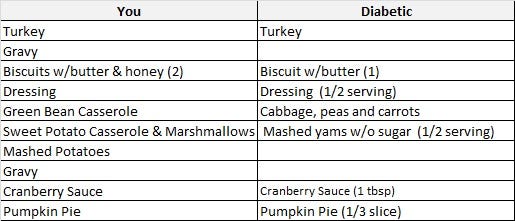
The number of meals applies to the author and one diabetic. Every person is different because of weight, gender, exercise programs, and other factors. In any case, the number of carbs and calories are much higher than one meal for most people.
Calories and carbs were calculated from the linked recipes listed in the post for a traditional Thanksgiving dinner. Your list of dishes may differ.
So, as the home chef preparing the Thanksgiving feast, what can you do?
Two small menu changes:
(1) Include some low-carb vegetables on the menu. High-carb vegetables, such as potatoes and beans, won’t work. The diabetic must measure and count their carbs.
(2) Modify some recipes. I reduced the sugar in an apple pie from 1 cup to 1 tablespoon. The sugar kept the spices from clumping. Then, I changed the serving size from 8 to 12 per pie. That covered one insulin unit.
Cut the sugar in the pumpkin pie listed below by 2/3 and you can do the same thing. Probably, nobody will notice.
Also, make a batch of mashed sweet potatoes, similar to regular mashed potatoes, with a little cream and butter (no sugar or cinnamon). We tried them for the first time a couple of months ago. Now, we have them quite often.
Finally, as the host, you should not get upset if someone does not eat everything that you spent hours preparing, or in the quantities that you think are reasonable.
Timing
There are two types of insulin: fast-acting, which acts over 4 hours and covers carbs for the meal; and stabilizing, which keeps the blood sugar numbers somewhat level over 24 hours. The stabilizing shot is taken at the same time every day.
Meals must be around 4 to 5 hours apart to keep the fast-acting doses from overlapping. Closer would cause an overdose.
Dinner needs to be at least 4 hours before the stabilizing shot since adjustments may be required, either in carbs if the blood test number is low or an additional fast-acting shot if the number is too high.
If the Thanksgiving meal is three hours late, everyone else can munch chips and popcorn while watching the football game on TV. The diabetic cannot eat those high-carb snacks, especially between meals.
The diabetic can wait a little while, but not for three hours! It will throw off the timing for the remaining meals of the day and the stabilizing shot.
He will have to eat his meal earlier, and entirely skip Thanksgiving dinner. One year, we went out to a restaurant because the meal was not ready in time. The host was upset — too bad.
Conclusion
You can’t completely eliminate carbs and sugar. If the blood sugar goes too low, a person will pass out, diabetic or not. The brain needs sugar to function.
Preparing dinner for a diabetic guest isn’t hard if you plan ahead and include some dishes with no or low carbs. The diabetic knows precisely how much of the higher carb dishes he or she can eat.
You, too, will benefit if you eat smaller portions and everybody is better off if the meal is on time.
Recipes (with links)
Traditional dinner and alternates
Turkey Perfect Gravy Biscuits Dressing Green Bean Casserole Sweet Potato Casserole & Marshmallows Mashed Potatoes Cranberry Sauce Pumpkin Pie
Calories and carbs by ingredient were obtained from CalorieKing.
Disclaimer: This article is the opinion of the author and does not constitute medical advice. Each diabetic is different and Type 2 differs significantly from Type 1. The diabetic should consult their diabetes doctor about their own case.
Other critical information (What YOU need to know when Employing, Living with, or Working with a Diabetic):


