
Writing Advice
How to Plot Out a Story Like Michael Crichton
…and generate a birds-eye view of your story
I am generally a pantser, as I explained in this article. My words tend to zigzag behind my thoughts as they try to keep up. When I reach a plot point or scene where I’m unsure of the direction, I stop and take a short walk or go through my research again. Sometimes a walk is enough to dislodge what is stuck, or if I’m lucky, I might end up with a new idea, and other times I have to wait a day or more. When I start a story, I begin with an idea only, a premise that interests me, and build on that. Research for me usually happens early on in the writing process, after I have already written a few chapters. Like starting a car and then letting it idle to warm the engine.
Until Interspecies, I never wrote a complete outline where I parse all my research and plot lines. I did come close when I began “The Morrigan.” I knew how I wanted the story to end, and I knew another book would follow it, and because of The Seals of Abgal, I had the mythos already down, but I wasn’t sure how the character arcs would meet. I had snapshots in my head of scenes I wanted to use.
It meant I needed to create an outline to help me tell the story without leaving gaping potholes. Thus, I began constructing a series bible for The Guardians of the Seals series. All characters are described therein along with backgrounds, a generous plot description with various options for future use, and a précis on how the research connects to the narrative.
During the actual writing process, I would jot down ideas that came up or record significant new and unplanned developments. This way, I kept the bible updated and ready for future books, and it saved me time. Even now, when I revise, I only have to check the bible if I forgot the name of a street or building.
Plotting with Michael Crichton
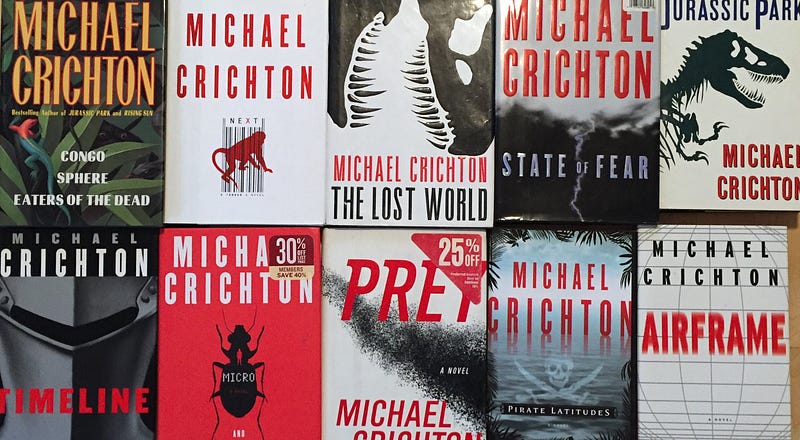
Writers use many ways to help them sort the plot. The index-card method is one of those ways, and quite a few successful authors rely on it. Which brings me to Michael Crichton.
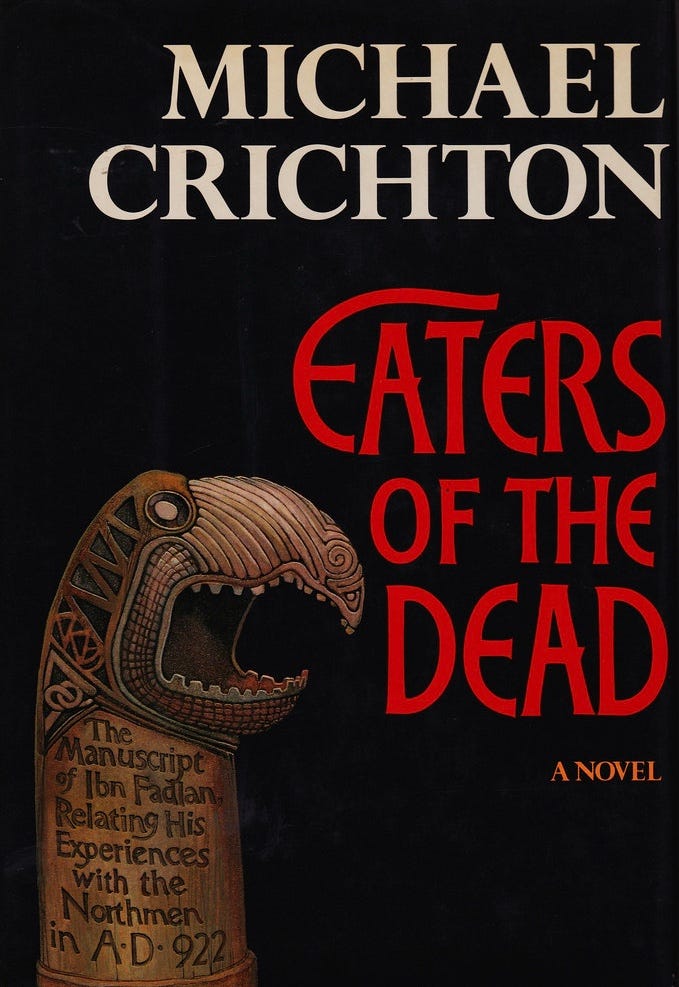
Michael Crichton was an enormously successful and talented author, producer, screenwriter, and director. He was also a physician. Crichton created the television series ER and wrote Jurassic Park, and over a dozen other books, some under the pseudonym John Lange. Sadly, he died of cancer in 2008. You may not know this, but he wrote a book called Eaters of the Dead, published in 1976, which was later made into a film called The Thirteenth Warrior, starring Antonio Banderas. I enjoyed the movie and have seen it probably half a dozen times.
Those who love the movie will affectionately recall the Viking prayer:
Lo there do I see my father; Lo there do I see my mother, my sisters and my brothers; Lo there do I see the line of my people, back to the beginning. Lo, they do call me, they bid me take my place among them, in the halls of Valhalla, where the brave may live forever.
When I saw the movie, I did not know it was based on a book, nor did I know it was a retelling of Beowulf. An old 926 A.D. manuscript written by Ahmad ibn Fadlan and his historical account of the Volga Vikings, also served as inspiration. This I also discovered after the fact.
I got hold of a copy of Eaters of the Dead and read it and thought it an entertaining read. My copy included an introduction to Fadlan’s manuscript as well as the translated text. As a writer and student of history and mythology, learning how Fadlan viewed the Northmen and their ways and mannerisms were fascinating.
Chilling, too was discovering that there is truth in his accounts of the horrors he witnessed. In the introduction to the text, Crichton explains the differences between western storytelling traditions and how Fadan wrote his report. He compared Fadlan’s style to a tax auditor writing a report, more intent on showing the truth for fear of endangering the veracity of his otherwise level-headed account. Once you realize that the manuscript is an eyewitness account of the events in The 13th Warrior, it’s clear you’re not dealing with a mad fantasy here but a tale told with cold certainty.
Crichton writes:
“Ibn Fadlan never speculates. Every word rings true; and whenever he reports by hearsay, he is careful to say so. He is equally careful to specify when he is an eyewitness: that is why he uses the phrase “I saw with my own eyes” over and over. In the end, it is this quality of absolute truthfulness which makes his tale so horrifying. For his encounter with the monsters of the mist, the “eaters of the dead,” is told with the same attention to detail, the same careful skepticism, that marks the other portions of the manuscript.”
I do not exaggerate when I say my skin tightened with goosebumps after I read this part. Not out of fear, of course, but with the realization that this wasn’t pure fiction. My interest and love of storytelling stem from my curiosity in asking: “What if those ancient tales were true but not in the way we imagined?” Answering this question is what gets my creative juices flowing. So you can imagine how the revelation made me want to look closer at Crichton’s writing process and his method for plotting stories.
I’ve mentioned in the past that I experiment with writing advice and tips gleaned from successful authors to customize my own writing methodology in search of the perfect balance. The idea is to find the best way to write an entertaining story and preferably one without giant potholes that could swallow a bus. In short, a sufficiently comfortable methodology that will sustain you for long periods, if not years, and enhance your overall productivity. So far, I have been happy with my bible method, but things do tend to get convoluted when it comes to developing plot, especially when you write the first draft in chunks.
Enter Michael Crichton’s index-card method
A few years ago, I discovered an article by Dorothy Cora Moore on the website Writers Helping Writers, in which she talks about Michael Crichton’s method for plotting out a story and the basic tenet behind it stuck with me for emotional reasons already mentioned and because of the sheer simplicity and practicality of it.
Crichton used index cards to develop detailed plots for his books, mainly because time was limited, and he needed to increase his productivity. The thing that amazes me the most here is that he developed this method while attending Harvard Medical School.
It requires you to plot out the details of your story on index cards before you even write the first draft. Crichton wrote books under a pseudonym to supplement his income while he was a student, and using this method was both expedient and practical and helped him write his books consistently.
Crichton would take the cards with him to class every day as they fit easily in his shirt pockets or lab coat, and he would fill them with words during the day as ideas came to him. When his mind conjured up lengthy dialogue strings, he would write them down and staple the cards together into dialogue groups.
Once he used up all the cards, Crichton would throw them into a shoebox and start with a fresh batch. When the shoebox became full, and the story felt done in his head, he would take the shoebox and emptied it on a large table and worked out the plot by shuffling the cards into scenes and the order he wanted to tell the story.
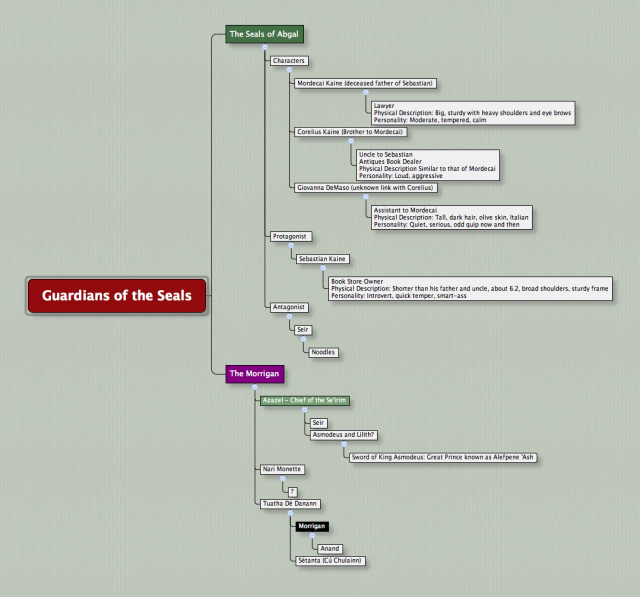
Mindmap
This system makes sense to me. I remember from my law school days how I used mindmaps to prepare for exams, and even plan my essays. It worked like a charm. I also use it for my stories from time to time. Mindmaps give you a holistic view of the plot and scenes, and I think Crichton’s index-card system works in much the same way when you have the cards displayed in front of you.
I think Crichton’s method may even be more flexible. It’s certainly more mobile. It’s easier to write on cards and shuffle them than paging through a notebook. I say this because I have dozens of notebooks with story ideas, and searching through pages of hastily scribbled notes can become tiresome, especially when you’re looking for something quickly. In that sense, the index-card method allows you more freedom to experiment with your plot and scene sequence because it allows you a bird’s-eye view of your story.
Now it’s true technology has changed dramatically since Crichton’s days, and you don’t have to use physical index-cards, though some may argue that that the tactile experience adds to the pleasure. There are various mind-mapping apps out there that are free, like here, here, and here (I have no connection to these apps apart from having used them in the past). On the other hand, I have no experience with digital index cards, so I can not make any recommendations. Scrivener is my primary writing program for long-form stories, and though it has a digital “corkboard” function that works in much the same way as Crichton’s index-cards, I haven’t used the function all that much.
Whether it’s the physical handling of the cards that helps with the creation process or having an overall view of the plot that opens up further opportunities, it’s not a bad idea to experiment with things and find out what works for you.
How do you plot your stories? Do you have a special or unique system? Let me know in the comments below.
Enjoy!
Source: Michael Crichton’s Method for Plotting Out a Story | WRITERS HELPING WRITERS.