
How to Plan Your Own Itinerary
Easily customize your entire trip.

If you are like me, then you like to customize your trip. Tours or packages aren’t usually how I like to travel.
But planning your trip from beginning to end is a daunting task. There are so many details. Here is what I have done in the past to create my itineraries.
It doesn’t matter if you want to plan a weekend or a week-long trip. Spreadsheets are your best friend.
You can organize each aspect of the trip using spreadsheets.
Keep everything together, from budgets to hotel bookings. Here is how I break down the tabs on my spreadsheet. It works for me.
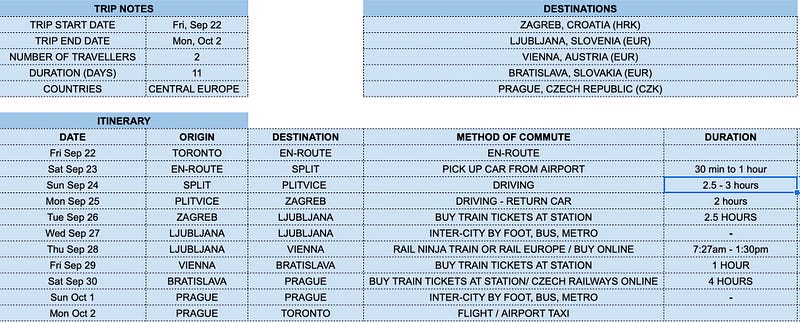
ITINERARY
Create a summary tab to start.
A summary tab allows you to keep the housekeeping in one spot for easy reference. Include dates, flights and destinations here.
ACCOMMODATIONS
A second tab houses the information about hotels or hostels.
Start with some research on potential accommodations. You can compare the options here on things like price and reviews.
After booking and confirming the accommodations, place all the information on this tab. Where necessary, print out hard copies for reference.

TRANSPORTATION
The types of transportation depend on the destination. You may need to rent a car. In that case, note down the research and bookings here.
Otherwise, include information about other forms of transportation such as trains or buses.
ATTRACTIONS
List all the places you want to visit. To avoid wasting time commuting, note how you intend to get there and how long it takes. Google Maps would be your best helper here.
Where applicable, include details such as hours of operation and admission fees.
BUDGET
Keep your finances on a tab. Make it fancy or make it simple.
Include pie charts and graphs to highlight expenses if you like. It can give you insight into how you spend your money on a trip.
Try not to overwhelm yourself on this tab and include too much information.
Maybe all you need is a total budget and a list of expenses.

TASKS
Having all your to-do items on one tab helps keep everything organized and easy to see.
List everything you have to do in the days leading up to the trip.
Outline what you need to do in the three months, one month and one week before the trip.
For example, try cleaning the entire house before leaving on a long trip. Who doesn’t enjoy coming back to a clean house?
PACKING
Dedicate one tab to packing. Packing can be overwhelming. Simplify the task into categories. Make sure to leave a section for packing your carry-on.
OTHER
Leave your last tab for miscellaneous tasks and notes.
You can include other tasks such as researching internet options at your destination. Or making sure to keep your itinerary in digital and physical copy.
Planning a trip is no easy feat. Let me know if this helps you out!
Sources
Photo by Vlada Karpovich from Pexels


