
How to Perfect Your Emails
It can all come down to one question you can ask yourself
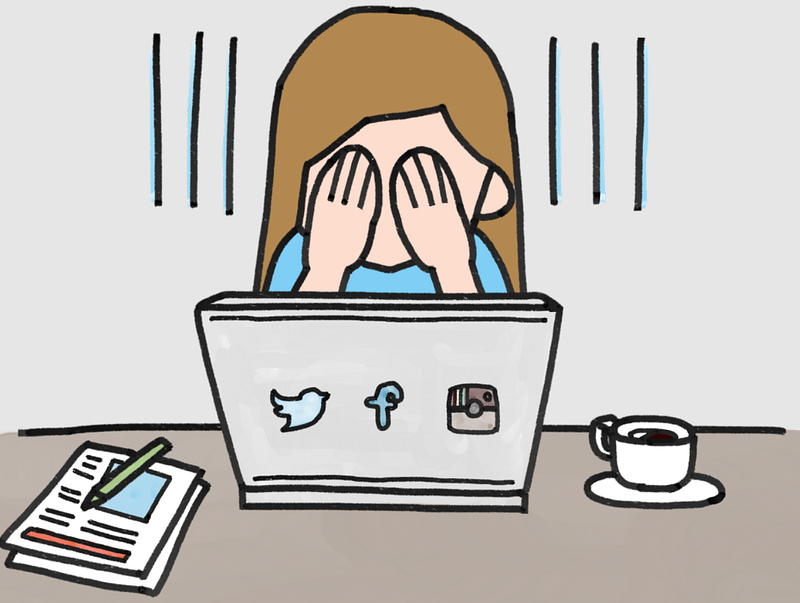
Don’t we all wish we can write that perfect email every time? Make an impact every time?
As The Maverick Files mentioned in a recent article, we are both obsessed with writing the perfect email.
It feels like it’s always either too professional or not professional enough, too personal or not personal enough. You’re worried your email might be too long or too short, not passionate, or too emotional. With email as our only window in someone’s heart and mind these days, it’s exhausting.
I’ve been working in consulting for years, and by my [conservative!] calculation, I’ve now sent and received over 780,000 emails. I have become fascinated with emails as a mode of communication.
You can make an impression, a lasting one, without ever meeting or hearing someone’s voice — by a few words on a white screen. You can make an impression on your subject line! That email can get someone to like you or dislike you, it can get actions to be taken or actions to be ignored. It can get you a sale, a contact, or a new job. And it’s all in a few words you write.
Getting a response is likely the most common frustration I have seen. You might think they are not responding because they are not interested or don’t have the time or the money, maybe they missed the email, maybe this is too difficult of a task for them.
It is none of the above.
It is mostly in the words you used. And always in how the email made them feel. Keyword to all the below, personalize.
Hope you’re doing well
I ask you to please, never again type these words.
Why? It is a hollow formality, the most essential trait of which is insincere.
When you email, you want to make the sender believe this email is personalized to them. You want them to get the sense you are sincere in every word you type, and you have taken the effort to think through each one.
Some recipients notice this consciously, others will simply sense your sincerity. In either case, you’re winning.
So what do you do?
If you have a personal relationship with them, then use a more personal tone. Simple tailor-made examples might be:
- I hope you’ve had a wonderful weekend at the cabin
- Hope your dog is doing better after his surgery
- How was your parent’s birthday last week?
If you don’t have a personal relationship yet, then don’t worry and simply get to the point of the email to start building one — because the truth is, ‘hope you’re doing well’ is not the way to get there.
Type like you speak
The Maverick Files gives a good example of how we sound too formal in emails when we use “by way of introduction” as a start.
I’d take it further and talk about this as a theme in your email.
Type as you speak.
Why do we feel the need to be more ‘formal’ in emails when we never do so live? What happens to us when we start typing? It’s as if we are speaking a different language.
This goes beyond how you introduce yourself. Think of meeting someone live for the first time. It would be quite awkward to start a conversation with “kindly please.. “, or use words like “furthermore”, and “please note”.
Yet we find we use those words and many of their vernacular equivalents smattered across our emails.
So what do you do?
Here is one test which always works with me: read the email out loud before you send it.
People sense the personal energy in an email, and they respond accordingly.
There is also no better time than today to be yourself. We live in a time where we are advocating for vulnerability, authenticity, and a personal touch. We are inundated with automated responses, chatbots, and tailored ads.
The world needs more ‘you’, and there’s no better person to give them more ‘you’ than….well, you!
As Meg Ryan put it, responding to the classic “it’s business, it’s not personal”:
What’s wrong with being personal? Whatever it is, everything ought to start with being personal.
15% lighter
You might scoff at this.
Once you have written your email, go back to the beginning, and then read it again with one goal: cut out 15% of the words.
Yup, I mean it. 15%.
Why 15%? 10% is too low, we can do better, and 20% is too much. 15% is the sweet spot. It will take some time, and some finesse.
Why? What difference does it make, it doesn’t a significant amount of additional time to type those few words. Right? True, it doesn’t. This one time.
The average office worker spends 2.5 hours a day on email. This translates to 650 hours a year. 15% of this is 97.5 hours. Cutting down your emails by 15% is approx. a gift of 4 days every year.
Before you hit send: rapid-fire tips
Few quick things you can do before you hit that Send button
- Re-read it!
- Check recipients — not just who you are sending it to. Ask yourself: would anyone else benefit from getting this email?
- Preview line: most of us read our emails on our phones first. What will the preview look like, will those 1–3 lines deliver the message you want? Will it make the sender want to open the email? Or, if there’s an action you need them to take, will it say so within those lines?
- Un-email: do you really need to send this email?
That million-dollar question
Lastly, always ask yourself one question as you look at the email you beautifully crafted for the last time.
If you had to forget everything in this article, and any other tips you may have received, simply remember this one question, ask it to yourself, and it will make a difference.
Can you send this email, as it is, to anyone else?
That’s it.
If the answer is “yes”, do not send it.
If you can change the name and some titles, then hit Send to the next person, then you have not tailored the email enough; it is not personal. It is generic.
The keyword to any successful email is: personalize.
Get this one down, and your recipients will thank you for it.
If you enjoyed this and would like more detailed tricks, templates, and examples, I wrote a book about it. You can easily get it on Amazon here or by clicking the link below.
Thanks for reading.