
How To Overcome Your Limiting Beliefs, and Achieve Much More Than You Think
Here’s how doing this helped me complete my first marathon.
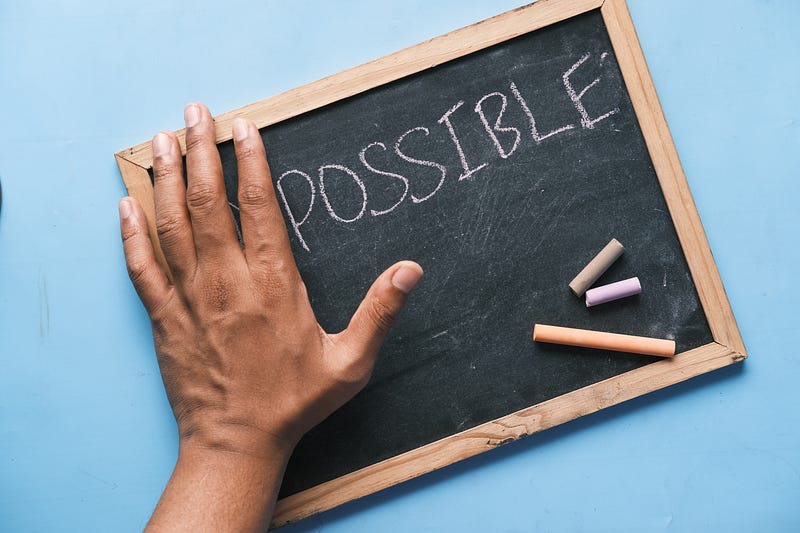
How many times have you written yourself off, or passed on opportunities due to beliefs like:
“I’m not smart enough”
“I’m not fit enough”
“I’m too old to do that”
In December 2022 I decided I wanted to run a marathon. At the time I had completed a couple of halves but was very much a stop-start runner — relying on the trusted walk a bit, run a bit technique for getting round.
The idea of running a marathon filled me with a mixture of uncertainty, fear, and excitement. But the most overriding feeling was one of disbelief. I didn’t tell many people I was training for a marathon as I didn’t think I could actually do it.
Then in May 2023, I completed my first marathon. Yes, it was flat, and no I didn’t smash my time. But I achieved something I didn’t previously believe was possible for me.
Training for, and then running 26.2 miles is as much a mental journey as it is a physical one. There is something about pushing your body past its limits that challenges your brain like nothing else.
My biggest learning from marathon running is that I can do more than I think I can. It has left me feeling ready to take on new and bigger challenges that I would have previously shied away from.
In this article, I’ll share what I’ve learned about identifying and overcoming limiting beliefs through marathon running, and how you can apply this to achieve more than you thought possible. I hope these learnings serve you in the same way they are serving me.
What Are Limiting Beliefs?
We’re all made up of stories — assumptions and beliefs you hold about yourself and the way the world works. These beliefs often characterize our self-image. Examples include:
- There is no way I could complete a marathon. (Even if you sit in a wheelchair, many marathons feature a wheelchair division.)
- I don’t have a brain for maths.
- I’m terrible at public speaking.
But these beliefs are not a statement of fact. And holding onto them can place artificial limits on what is possible for you and your life, preventing you from achieving what you are truly capable of.
After all, if you don’t believe something is possible in your life, you’re unlikely to follow through with pursuing it.
How Do Limiting Beliefs Develop?
Our belief systems are shaped during our early development, as we start to create mental maps of who we are and what is possible for us.
According to the psychiatrist and Harvard Medical School professor John Sharp, “This narrative is not the one that contains the objective facts of our lives; instead, it’s the story you’ve been telling yourself about who you are and how everything always plays out”.
These narratives are often reinforced by well-meaning but unhelpful opinions from parents, teachers, and friends. If not challenged by outside perspectives, on the journey to adulthood these beliefs become our internal truth.
Our brains set these belief systems up to try to protect us from pain. Failing at anything is painful. So, if you learn at an early age that a certain situation is going to be painful, your brain puts limits in place to help you avoid similar situations in the future.
The problem is that often our internal beliefs simply aren't true, and stop us from reaching our full potential. Famed novelist Marilynne Robinson refers to her internal beliefs as her “mean little myths”.
Going back to my primary school days, I was never good at sports. I can remember one teacher actively encouraging me not to participate in our school football team because “it’s just not for you”. And I was never picked for any of our track and field sports days because “there’s a lot of other things you’re good at”.
But now I wonder, sure I wasn’t naturally athletic, but because I was told this by my teachers at 6 or 7 years old, did I simply stop trying? Did I internalize their rhetoric and simply align my self-image with the image they had of me? Looking back, the answer is clearly yes and I have spent the rest of my life, at least up to this point, telling myself I can’t do athletic things because of it.
What a waste.
Beliefs Become Blueprints for the Brain
Over time your brain will seek to validate your internally held beliefs through external experiences. Left unchallenged confirmation bias sets in — your brain seeks information that reinforces your belief system whilst ignoring information that challenges it.
The more your beliefs about yourself are validated, the more entrenched they become. Your brain then uses your ‘belief blueprint’ to interpret situations that you come across in the real world and decide what you can and cannot do, with the primary objective of ensuring you avoid getting hurt.
Your beliefs and prior experiences act as a filter, distorting how you interpret reality, interactions, and opportunities.
For example, if a friend invites you to participate in a trail run, your brain might say “You’re not an athletic person, and lots of people get hurt doing these things. You should be afraid of this and decline.”
But thoughts are not facts, and the past does not predict the future. Not trying to challenge limiting beliefs will leave your belief systems to continue entrench themselves, and continue to limit your life potential.
A Powerfully Simple Framework for Identifying Your Limiting Beliefs (It’s As Easy As Abc)
The most effective framework I have found for identifying your limiting beliefs is rooted in Rational Emotive Behavior Therapy (REBT). REBT holds that it isn’t events that directly cause our emotions and behaviors. It is our personal beliefs and our personal interpretation of events that lead to emotional and behavioral reactivity.
Another way of thinking about this is that it isn’t the event that directly causes emotions and behaviors, rather it is your belief about the event that determines how you react to it.
REBT places this central philosophy into an ABC framework where A represents the activating event, B represents your belief about the event and C represents the consequence — the action you take in response to your belief.
As an example, one Sunday afternoon I was having lunch with some friends and told them I had signed up to run a marathon. One of them looked at me in horror, “Mate, I know lots of experienced runners who have really struggled in marathons. Some of them, really experienced guys, have died.”
Immediately my belief system kicks in, and I feel a wave of nausea flood my stomach. This is the evidence my brain needs to validate my pre-held beliefs. I am not a runner. I’m probably going to die. I shouldn’t do this.
I spend the evening googling marathon deaths to reinforce this pre-held belief.
You Have to Challenge Your Limiting Beliefs if You Want to Create New Consequences
But then I took a more objective approach to my googling, stopped reading the headline grabbing scare stories, and looked for more factual information. I wanted to know how likely it was to die running a marathon.
And I found that the risk of sudden cardiac death during or immediately after a marathon was around 1 death per 100,000 participants, and this was usually due to an undiagnosed heart condition. To put it another way, you are probably more likely to die driving your car on a Sunday morning, in low traffic, than you are from running a marathon.
And I realized there were things I could do to reduce my risks. I could train. I could eat right. I could see a doctor to check there was nothing nasty lurking in my biology.
Going back to REBT for a second, the theory also argues that we all hold “rational” and “irrational” beliefs. To remove artificial limitations, you need to find ways to challenge your irrational (or limiting) beliefs and begin to rewrite your belief systems.
You can do this by asking yourself open-ended questions that challenge your pre-held beliefs, and ensure your thoughts are based on sound logic before you allow them to dictate your actions. For example, you could ask yourself:
1. What is the evidence for and against this thought? Is there really any evidence that I can't run a marathon or is this an assumption based on an emotional reaction?
2. Is this belief based on a legacy from your past that no longer applies?
3. What is the source of this belief? Who are the people that helped create and enforce it? How reliable is their point of view?
Going through this exercise will help you determine whether your belief is factual, or based on an emotional thought — in my case fear of dying during a run. It helps to chip away at artificial beliefs and avoids black-and-white thinking.
If You Want to Change Your Beliefs, You’ve Got to Adopt a Growth Mindset
The simple truth is that we become our thoughts.
Your thoughts get entrenched over time and become your beliefs. You breathe life into these beliefs by putting them out into the world as the way you speak about yourself. And ultimately, your words become your actions.
If you want to change your limiting beliefs — believing you can accomplish something is the first step. It’s okay not to believe it's probable, but you do need to believe it’s possible. You have to believe in the possibility of change.
To do this, you need to adopt a growth mindset.
Standford Psychology Professor Carol Dweck has spent her career studying the origins of mindsets and their impact on personal achievement. Her research is synthesized in her book: “Mindset: the new psychology of Success”.
To briefly summarise her findings, she makes the distinction between people with “growth” mindsets and “fixed” mindsets. Someone with a growth mindset believes that talents and skills are fundamentally learnable and can be acquired through effort. On the other hand, someone with a fixed mindset views their personal abilities as inherently stable and unchangeable over time. You’re dealt the hand you're dealt.
To make the shift you need to rethink the challenge you’re facing and develop a plan of action. Stop asking “Can I…?”. Asking “Can I run a marathon” feels intimidating. “I’m not athletic and have many examples of this from my past, so probably not”. Instead, ask yourself “How will I…?”
“How will I run a marathon in six months’ time” feels way more approachable. “I suppose I should start by finding a running coach and setting up a training plan”.
Step (But Don’t Stride) Out of Your Comfort Zone
While these actions helped me begin to challenge my limitations and create new beliefs, nothing has been more powerful than taking action.
Each week I was running longer and longer, further than I’d ever run before. Without fail, each time I set out I was nervous. I was afraid I would fail. Or injure myself.
But then I didn’t. I would come home beaming, having run further than I ever thought possible for me.
Taking action that challenged my pre-held beliefs helped me accept I could do more than I thought I could.
This was only possible by stepping outside my comfort zone, but not too far outside. You need to stretch yourself without taking on something impossible.
Stepping outside your comfort zone is far easier to bare psychologically if you can do it in an environment that minimizes the risks. For example, on long runs, I’d share my live location with my wife in case I got into trouble and would take a phone and credit card with me. Worst case I could call a taxi.
Creating a supportive environment where you can take calculated risks will encourage you to take action outside of your comfort zone.
Parting Thoughts — Belief Without a Plan Is Just a Wish
On race day, I harbored a secret goal of wanting to complete in 4:30. While I didn't quite make that time I still consider completing my first marathon a massive victory.
The victory wasn't my time — the victory was that I conquered my limiting beliefs and overcame the fears that were holding me back. I didn't win a trophy, but I did win something far greater — I now know I can do more than I think I can.
Knowing what I know now, that I can compete, I’m not satisfied with my time. I have my eye on a second marathon this year. This time because I believe I am a runner, I believe I can do it.
Belief, of course, is useless without a plan. But if you don't believe it's possible for you, I doubt you’ll follow through on any plans you make.
I hope you’ve found this useful. If you’re looking to challenge yourself and push your limits, I would strongly recommend going for a run.
Who knows how far it will take you in other areas of your life.
Subscribe to get an email whenever I publish a new article.


