
How To Overcome Any Weakness in 5 Steps
Can you imagine a life in which walking is exhausting? Well, that used to be mine.
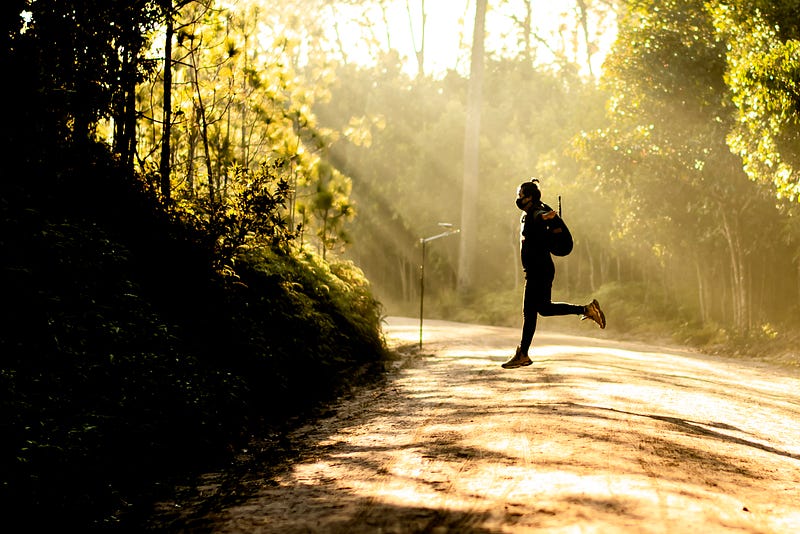
I was born with Myasthenia Gravis. A disease that affects about 20 people out of 100,000. What it does is that certain muscles are weaker and become tired more easily. Different muscles can be affected but most patients have it on their eyes. I didn’t. I was touched by a rarer version of it, affecting muscles in my legs.
I was diagnosed around the age of 6. At the time, I had to go through kinesiotherapy to learn how to run. By age 8, I could do it but would be outrun by any girl 2 years younger than me, if I could last until the goal.
It wasn’t easy. I was bullied by some kids who would run after me during recess. Then, during middle school, I was always on the girls’ team in sports, not able to follow the guys’ regimen.
When I was first diagnosed, I was told I’d need to take medicine for the rest of my life. The doses became more frequent and stronger. Yet, in the midst of all this misfortune, I had one thing going for me: I had a mild version of the disease. I could live with it.
One of the actions Myasthenia Gravis does is to make the muscle lose its automatic response. If your eyes are impacted, you might have to think about opening your eyes whenever you blink. Luckily, legs don’t require many daily reflexes.
Walking was my main problem. A 10–20 minutes walk would tire me for a while. An hour-long walk would put me down for the rest of the week. Today, I go on hikes, run regularly, and seem tired much later than many of my friends. All this despite the fact that I smoke.
What happened then? I overcame my biggest weakness through long and patient work.
1. Identify the Weakness
It’s impossible to solve a problem without knowing its existence. It’s impossible to solve a weakness without acknowledging you have it. It all starts from here.
I was lucky enough to have been diagnosed when I was 6. The doctors told me what it meant and how much it was going to impact my life. They told me in simple terms my life would never be easy. I would feel the impact of the disease throughout my life and should get used to it as soon as possible. If I could, then living a pleasant life was not off the table.
Sounds bleak, but that needed to be said. I should expect to struggle. But I shouldn’t become negative and believe my life would amount to nothing.
My weakness was made clear and all that was left was to go forward.
Not everybody is as lucky as I was. Most of our weaknesses lay under the radar. We live without noticing them and put the blame on outside factors, not realizing we’re giving up the power to change.
It’s not your boss’s fault you got fired, it’s because you weren’t working well on what was needed. It’s not your ex’s fault your last relationship didn’t work, it’s because you didn’t communicate well. It’s not the coronavirus’s fault your project failed, it’s because you weren’t flexible enough. Don’t like how that sounds? Unfortunately, it’s the hard truth.
What it comes down to is self-awareness. Realizing who we are and what our flaws are.
Are you aware of yours?
2. Decide its Importance
Not all weaknesses need to be fixed. Any strength we have has its downsides too. If you focus on fixing all your weaknesses, you’ll spend your life working toward an unattainable goal.
Some weaknesses need to be let alone, some others only need to be fixed partly.
In the world of polyglots, some people can read books in multiple languages but sound like beginners in their intonation. Some others sound like native speakers but their vocabulary is much more limited. It’s a decision each person makes.
In my case, I knew this wasn’t a weakness I could get rid of entirely. I had to learn to live with it and this meant I needed to become comfortable with its downsides. It was important to accept it and discover where I could improve and where I could not.
How important are your weaknesses to you?
3. Redefine the Weakness
While strengths have downsides, weaknesses have upsides. As long as you are aware of them, you can work around them when need be. You can think and work outside the box.
Sure, I could not run, and walking made me tired in no time. But that made me develop better direction skills. I was always searching for a shortcut and mind-mapping the neighborhood. Back then, there was no Google Maps and every trip was a new opportunity to make the next one easier.
I was also proud of my knowledge of bus routes. I knew how to get anywhere in my suburbs with a combination of buses. My parents still laugh about it to this day, reminding me how I would have made a great bus driver!
I was ashamed of being the first tired, the last arriving during a run, the one who would sit down first. That shame brought something unexpected: willpower made of steel. I became determined to never show the physical pain I felt in my legs. Remember when I said earlier that, nowadays, I “seem tired much later than many of my friends”? It’s because I often am tired, but have developed a habit of not showing it.
If a weakness impacts our lives on a regular basis, we try to ignore it, to push it down. Instead, we should always look for how it improved other parts. In my case, I developed a better sense of direction and a strong willpower.
What is your weakness improving in your life?
4. Follow Two Improvement Patterns
We can’t get rid of weaknesses in a short span of time. It’ll take months, if not years, of work. Sometimes, it’ll be hard work. Sometimes, it won’t even feel effortful. The key is to be patient and keep at it.
Successful businessmen worked on their crafts for years. Successful relationships take decades. Successful marathoners run for years. Successful polyglots improve their language skills for a long period of time.
The best way to fix a weakness is to tackle them in a two-speed system:
- Small and slow action
- Big bursts of efforts
I stopped taking my medicine around the beginning of high school. My doctor and parents were against it but I knew I was on a good path. The medicine I was taking felt like one of those drugs athletes would take: I felt stronger and less tired after taking it. The result? It was hindering the results of my efforts.
Throughout the years, I had learned to not sit down during recess and walk around with friends regularly. Through tiny efforts, what seemed obvious to most had become possible for me too. Sure, I was still mostly in the girls’ team in sports class, but my teachers were starting to put me in the guys’ one from time to time. As says James Clear:
“Small changes. Remarkable results.”
On top of this, I was also going to ski every winter for one or two weeks. I had been going since I was 1 year old and often felt more at ease going down a slope than walking. I reached a high level and knew the ski station like the back of my hand so I made each day there a challenge. Instead of going around the bumps found on slopes, I made a point to take them head-on, day after day. Each night, I could not stand. Each morning, I’d get my butt out of bed and go at it again, a smile on my face.
These bursts of efforts taught me to endure the pain. They pushed my limits. Year after year, it got easier and it was compounding with my small efforts at school. The daily pain never completely vanished but it did disappear from my consciousness. It became my new standard. What was my weakness once was now unnoticeable, even to me.
What small regular and rare big efforts can you make to improve your weaknesses?
5. Take Note of Successes
Fixing a weakness can be depressing. It’s tiring, full of failures, and often feels like we’ll never be done with them. Yet, there are successes every single day. We have a habit of overlooking them, but they are here.
When I first stopped taking my medicine, my energy plummeted. My life didn’t stop though. I was able to go to school and have fun with my friends. I was more tired at the end of the day, but I could live without my medicine.
Years later, I traveled around South Korea for 2 months and a half. I walked around and met tons of people. Nobody there ever got to know about my Myasthenia Gravis.
Two months ago, I went on a hike with 4 friends. One walks a lot and doesn’t smoke. The other three walk a bit and smoke on a more or less regular basis. Despite the fact that I was (and am) the heaviest smoker in the team, I was always ahead with the one used to walking a lot — often even in front of him. At the end of the hike, they told me how shocked they were to see me “painlessly” hiking so quickly. I couldn’t help but feel proud of how far I had come.
The biggest mistake we make when trying to fix a weakness is to focus on the negative. There are tiny successes all around us, waiting for us to notice them.
What successes are you overlooking right now?
I got lucky, I could overcome my disease. Not all diseases can be overcome but all weaknesses can. Notice the ones that matter to you, stay patient, and work at them in a positive mindset. Your life doesn’t have to be difficult. All it has to do is go forward.