
How to Optimize Your Writing Toolbox and Determine What Type of Writer You Want to Be
Part 2 in how to write a short story
“Good writing is often about letting go of fear and affectation, Affectation itself, beginning with the need to define some sort of writing as ‘good’ and other sorts as ‘bad’, is fearful behavior. Good writing is also about making good choices when it comes to picking the tools you plan to work with.” — Stephen King
In the second post in this ‘How to Write a Short Story’ series, I’d like to explore the writer’s toolbox.
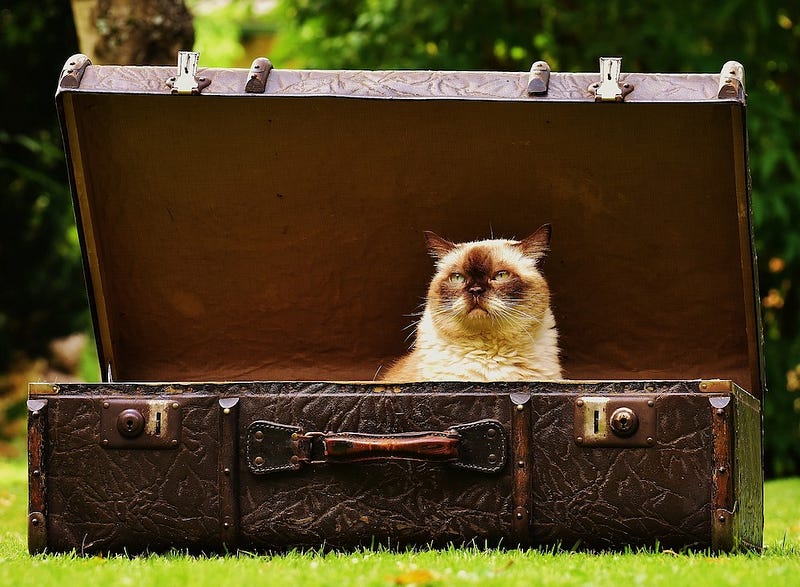
I first heard of this term when I read ‘On Writing’ by Stephen King. He envisions us writers to have a box of tools that we have at our disposal to perform the craft of writing. The toolbox consists of multiple layers, drawers if you will. Every drawer contains different writing tools. You have your vocabulary in one drawer, style in another, grammar in the next, etc.
As you might guess, every toolbox is unique to every writer. I imagine Oscar Wilde’s toolbox to be made of gold and decorated with rubies. It would suit him I think. Charles Dickens might have had a large and sophisticated trunk with hidden cabinets and secret storage compartments.
Mine as of this moment is a somewhat organized mess collected in a large backpack. Whenever I learn something new about writing I throw it in. Now is not the time to organize my toolbox and upgrade to a decent trunk. It’s time to collect as many tools as I can and polish the ones I already possess.
Reading about writing routines of other writers, studying their style, following writing courses or studying grammar, it all contributes to my toolbox. But I’m the only one able to select the right tools when the blank page stares back at me.
In this article, we’ll focus on how you can collect new tools for your toolbox, while carefully selecting the ones you already have.
What’s in a Writer’s Toolbox?
“Use the first word that comes to your mind, if it is appropriate and colorful.” — Stephen King
In the introduction, I already mentioned tools like vocabulary, style, and grammar. My advice here is: work with what you got. Don’t be pretentious, don’t use words you don’t know yourself. Use your own voice and say things as you would say it.
As I’ve said before, English is not my native language, therefore I must work with what I’ve got. Sure, I always strive to perfect my English, but not at the cost of my writing.
If you ask me to explain the difference between the ‘past perfect’ and the ‘past simple’, I have no clue what to answer. But I use these tenses in my stories though, most often correctly as well. I just don’t know all the technicalities of grammar (sorry folks). Someday, however, I’ll dive into it.
What I’m trying to say is, don’t worry about it, use what you know and get those words out! You’ll polish your vocabulary through both getting more experience as a writer and by reading many books.
Listen to every writer you encounter and pick the tools they use that speak to you. Read good fiction. Follow writing courses. Meet up with fellow writers.
Most importantly, find what works for you and stick to it. You don’t have to sound like Ayn Rand or John Steinbeck. Use the words you know.
“When it comes to a writing tool such as vocabulary, pack what you have without the slightest bit of guilt and feeling of inferiority.” — Stephen King
If you do want to learn more about updating your style and grammar, I suggest you pick up the book ‘The Elements of Style’. It’s short and concise. I do find it very dry and dull, but it does the trick so to say.
These are language related tools, but what else is hidden in the drawers of your toolbox? And remember, we’re focusing here on the tools you need for short story writing.
Handy Tools for Writing
Every writer has his or her own process and tools they use to get the words on the page. Here are some of my suggestions:
◆ Idea processing: I use my regular notes app on my iPhone for my short story ideas. An alternative is Evernote, although I’ve experienced some synching problems in the past. Of course, you can use notepads and pens too. Or you could just file your ideas in your mind cabinet as Haruki Murakami does. He argues that if an idea is worth pursuing, the mind remembers. But for those who don’t possess such superpowers (like me), use something you always have with you when inspiration strikes.
◆ Word processing: For short stories, I don’t think you need to get too technical. Pen and paper or a Word document should suffice. I always use Word. For more complex work like a novel, or mapping out this ‘How to Write a Short Story’ series, I use Scrivener. I have a friend who’s writing a book in Word and uses hundreds of sticky notes. I don’t get it, but it works for her. With Scrivener, I can easily file ideas and build my world in the same document as I write my chapters in. It’s so practical. Same for writing these series. I’ve got 15 folders with “Chapters” in this series filled with research, quotes, and ideas.
◆ Study materials: The internet is packed with (free) resources on writing. However, there’s so much out there, it’s easy to get lost. You can follow authors who write about writing (well, hello 😉), Jeff Goins offers great resources for example. I suggest you follow the ‘Writing’ tag on Medium as well. You can explore Udemy or Coursera for courses on writing (paid) or find something on Youtube (free).
◆ Books on writing: And of course, you can turn to books for advice. This is one of my favorite pastimes, to read about the habits and writing tips from great authors (I’ve covered Ray Bradbury to Stephen King and J.K. Rowling among others). My two favorite books on writing are: ‘On Writing’ — Stephen King, ‘Bird by Bird’ — Anne Lamott.
◆ Join a writing community: Wherever you are in the world, there are writing groups (offline and online). Try MeetUp and find a group near you. I actually want to do this more often. Groups vary from giving feedback, writing together or just discuss the art of it. It’s great to be with people in the same boat as you, looking to grow.
◆ Editing: For starters, use Grammarly. You will always make mistakes in your writing. And after reading your own words for the fourteenth time, you just don’t see it anymore. Next to that, ask your writer friends, avid readers or your girlfriend. Every bit of feedback helps. I have about six people who edit my short stories, just because they like it. My stories have greatly improved because of this.
What Type of Writer are You?
I’ve followed lectures about novel writing given by the great fantasy writer Brandon Sanderson. They’re all available for free on Youtube, and you’ll learn a ton! He introduced me to two types of writers.
I’ve been writing for at least two years (and some long forgotten attempts when I was younger, but those don’t count), but I never had a real notion of what type of writer I was. This isn’t necessarily a bad thing. Creating comes first, remember? However, since I’ve heard of outline writers and discovery writers, I must say I’m starting to understand my process better.
Perhaps you’ve heard of these terms. Maybe you know immediately what type of writer you are. I didn’t though. I’m starting to, which is progress.
First, let’s dive into the differences between discovery writing and outline writing:
Discovery writing:
◆ Exploring as you go
◆ Surprising yourself along the way
◆ The story tells itself
◆ You write with more excitement because you don’t know what will happen to your characters
◆ You figure out your characters with every chapter and explore their relationships
Outline writing:
◆ You know the route to the final destination, you know where you’re going
◆ Everything is planned out
◆ You have a better grip on your story
◆ You start with organization work
◆ Endings are well thought out and usually better
You could say that Stephen King is a “typical” discovery writer, figuring out his story and characters as he goes. J.R.R. Tolkien was a typical outline writer, spending years on building his world first, planning out his stories thoroughly.
I’ve discovered I’m somewhere in the middle if that’s even a thing. But hey, that’s my process.
I roughly outline my plot and scenes for my short stories. Sometimes I even use bullet points to plan every moment in my scenes and then I’ll start writing right after. However, sometimes I just start with an idea and see where the story leads me. You can use both methods for different stories as long as you tell it.
Just beware that you’re not outlining too much and you never start writing the story itself. Or writing too much “on the go” without a satisfying conclusion.
There’s no one way to write a story. There’s only your way. But it can’t hurt to inform yourself.
Try both methods, see what feels most natural to you.
So, what type of writer are you?
Previous article in this series:
Next article in this series:
Curious about some of my short stories? →
Please note: this post contains affiliate links.


