
How to Move from Success to Significance
My Halftime Reflections Remembered

Written on 18 February 2004
Today, the words of postmodern philosopher Richard Rorty in “Philosophy and Social Hope” (1999) sprang to life in my mind. He had asserted that “… there is a potential infinity of equally valuable ways to lead a human life, and these ways cannot be ranked in terms of degrees of excellence, but only in terms of their contribution to the happiness of the persons who lead them and of the communities to which these persons belong” (underline mine).
In our passage through this brief moment in time, which is called “Life” for want of a better word for “Hope”, it is always so easy to be tempted and lapse into ordinariness — a state I consider as just above mere existence.
As I contemplate deeper about life today (18 February 2004), ironies abound ….
Though Conceived in Love, Incubated with Love, And Nurtured by Love,
A person takes his first steps as a teenager into the adult world with an intense pursuit of selfish interests!
Where, and at what point did the message of Love become convoluted and embrace the ingredient of the Self? I often ask.
The answer beckons, but I was not looking.
The journey through life is essentially a journey of love. It is a journey along with visible milestones of errors as one struggles to escape the end of an otherwise meaningless existence. The marvelous poet Jorie Graham in her collection, The Errancy (1997), sees error as a heroic method in finding one’s way — “a wandering toward truth.”
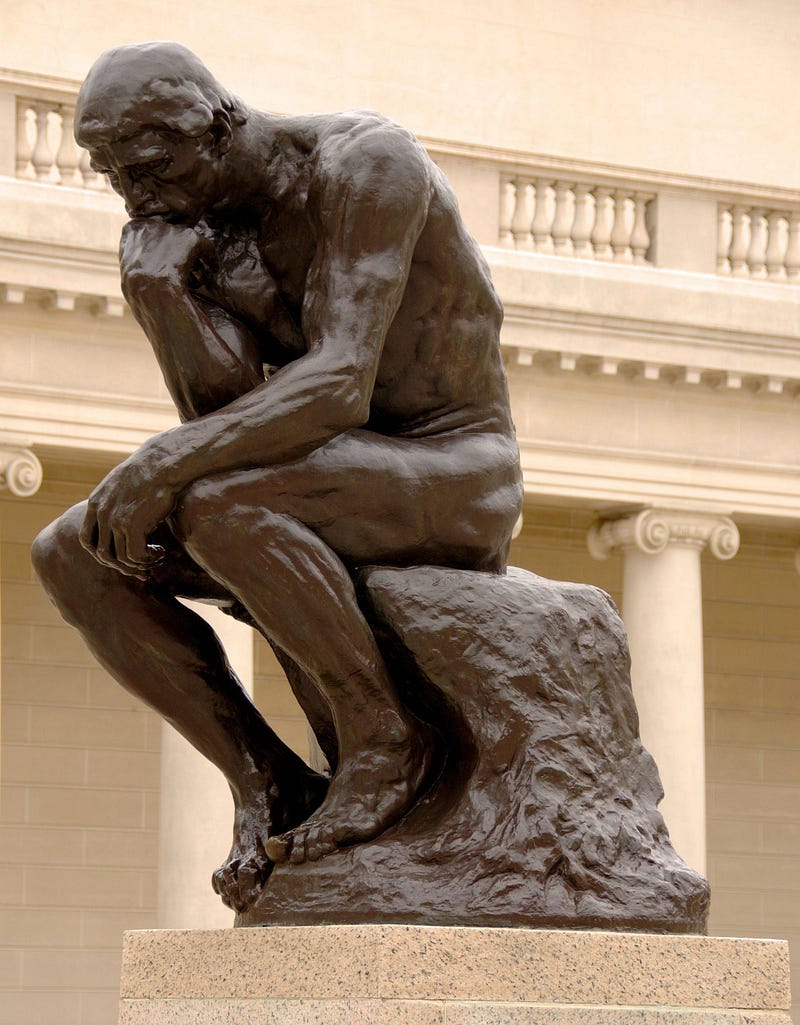
My journey towards the mid-century of life’s existence began as one who is uncertain about things, who sees paradox, ambiguity, chaos, absence and silence as central to the human condition. But for the certainty of Love, one could easily have become insane. Insanity as a therapy for navigating through ambiguity must surely be Nature’s best-guarded secret!
We are all subject to some degree of experiential uncertainties and have acquired the sense where the central role of love’s frequent absence points to its own hypocrisy. And we lapse conveniently into the comfortable understanding of the human condition as one where we are all in a perpetually suspended state of incompleteness, in an endless search of that elusive Happiness. The urge for “more” and “better” becomes quickly the justification for the pursuit of selfishness, thinly disguised as the noble accumulation of material wealth and prosperity in the hope of locating the happiness which satisfies the ultimate true meaning and purpose of life’s brief moment.
Sadly, “more” and “better” did not deliver the promised Happiness. The pursuit for life’s purpose hence degenerates into itself as the end; this is quite inevitable really, having already availed and tasted the sweet addictive juice of the Self as its bedfellow.
Samuel Beckett the philosopher fought back at “more” and “better” with the notion of “Lessness” (1970), a taking away rather than “moreness” and “adding to”. His is a philosophy, or “Tao”, of subtraction. He was of the view that “anyone nowadays, anybody who pays the slightest attention to their own experience, finds it the experience of the non-knower.” The more one gets, the more one wants; and the more one knows, the more one realizes that he knows only so little of life’s infinite wisdom and knowledge. Understandably, a deepening sense of impotence, ignorance, and a sense of failure inevitably follows increasing education and learning! We need to throw away intellectual solutions and move away from the destructive need to dominate others and life itself.
The common experience of many is thus one of waiting and struggling with a pervading sense of futility in the face of receding from the reach of happiness as one progresses in years.
The skeptics shouted, “It’s not even possible to talk about the Truth!”. The frustration of finding Truth is the integral part of his painful anguish in the loneliness of the man seeking Love. The anguish of loneliness lies in one’s persistence in a meaningless world without any significant others to love and share his/her life.
“We shall not cease from exploration;
And the end of all our exploring
Will be to arrive where we started
And know the place for the first time.”
- T.S. Eliot (1942) “Little Gidding”
True love has always been before us, just after the tip of our noses. God said, “You (are able to) love because I first love you” (1 John 4:19).
Does one therefore first develop the capacity to love before being loved? What then is the human state before loving and being loved? A love for Self, of course.
It is the spiritual awakening to personal significance in the profound realisation that one has already been loved, by God no less, that the bondage to the Self is broken. One then breaks free, to enjoy the liberation that empowers care, concern, and the privilege to love another human being. This privilege will soon experience and embrace much wonderful and silent pain …. What contradictions! And what beauty is this foundation of eternal wisdom! The nourishing feeling of being loved feeds to drive the daily meaningless activities of work and existence. And the only response of being loved is really to love those who love us … as well as those who have not yet known us.
Significance from true happiness, like true love, is found only through contributing to the enhancement of happiness and love in other people. A new day shall dawn on my 50th Birthday soon. Thank God for the privilege of another day to begin the 2nd half of my life.
In the book “Halftime: Moving from Success to Significance”, author Bob Buford (with Foreword by Jim Collins), published by Zondervan, says one of the most common characteristics of a person who is nearing the end of the first half of his/her life is that unquenchable desire to move from success to significance. The second half is more meaningful — something that rises above perks and paychecks into the stratosphere of significance.
“Success often involves carrying a box with you as you head for the top but never knowing what’s in it. Significance begins by stopping wherever you are on the journey to see what’s inside your box and then reordering your life around its contents. Significance may or may not require a change of jobs, but it always requires a change of attitude. Denis O’Connor and Donald M. Wolfe in the journal of organized behavior call this change in attitude a personal paradigm shift, ie major changes in one’s systems of perceptions, beliefs, values, and feelings. I (Buford) sometimes called it a reordering of our personal myth.”

Please enjoy my recent Articles.
You can also subscribe to my stories and social media posts via your email.
Enjoy more interesting Articles by signing up to Medium here: https://thefuturistoracle.medium.com/membership