How to Meditate
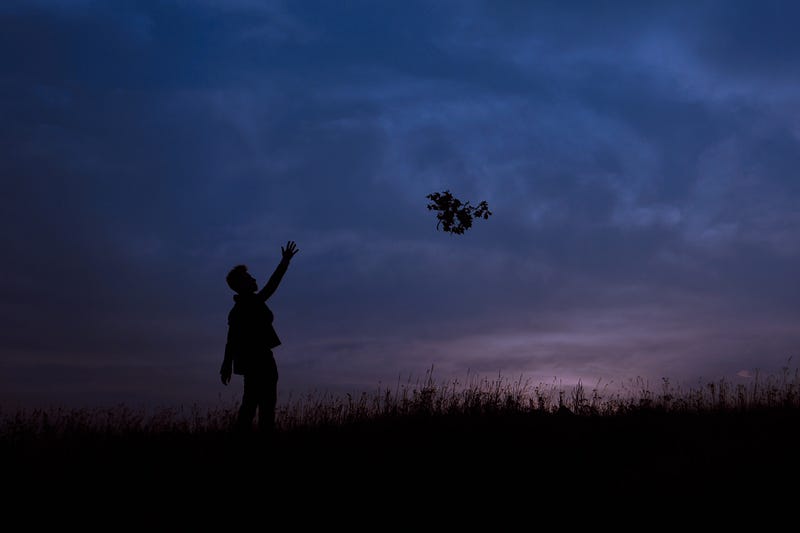
The key to letting go is to never grab hold.

This is about how to meditate, not about why to meditate. There is abundant documented information and research as to the why. My assumption is that since you are reading this you are at least interested in meditating. My hope is to simplify it for you and encourage you to give meditation a try.
My personal experience.
I had started and stopped meditation a few times in the past, unsuccessfully converting it to a habit. Recently I had some stressors that motivated me to try again. In short, I needed some help.
I committed to doing it first thing in the morning, on my tablet, using the Headspace app (there are others, such as Calm that work just as well). I chose to start small, with just a 5 minute session. At first 5-minutes was a bit of a struggle. It seemed to take forever. My main thoughts were “when is this going to be over” and “what’s the point, this isn’t doing anything.”
After a week, or closer to two, I started to enjoy it as it had become a calming influence. It made me feel content and comfortable. It still seemed to take a long time but I was starting to look forward to it.
At about three weeks my breathing became a whole-body experience. It was as if a light went off and I learned how to breathe, or more correctly I became aware of my breaths in the moments I was taking them. I wrote about this breakthrough here.
Then in another week or so I had another breakthrough while still at 5 minutes sessions. When my session ended I suddenly thought, “wait a minute I’m not done, I can keep going.” The time passed quickly; so I just kept my eyes closed and kept at it until I was ready to open my eyes. I just let it happen as it happened. I had let go, let go of ruminations on the past, let go of expectations for the future.
I did these 5-minute sessions for 30 days. Now I am at 10 minutes and that too seems short. My plan is to keep it at 10 minutes for the next 30 days and then increase it to 15 minutes. Occasionally too I’ll do two sessions during a day.
A key to meditation is there is no right way, wrong way, or even expected outcome for doing it.
Meditation is about being, about being present, about being present now.
Allow whatever happens to happen. Allow whatever comes into your thoughts to just come…and go…without judgment, without forcing it, without even trying. It’s not about doing, it’s about the absence of doing, or trying.
Simple steps to Meditation
Start by finding a comfortable relatively quiet place. It doesn’t have to be soundproof, just somewhere you won’t be easily distracted nor have interruptions.
At some point eventually, you can do it in an active, noisy, or public space. In fact, you’ll thrive on the distractions because they stop being a distraction and just become another thing coming into your mind and thoughts and just as easily going out. Those distractions cease to control you and you cease to try and control them. That’s the meditation Nirvana.
1 — Begin with your eyes open and taking deep but relaxed and natural breaths. Notice and just be aware of your surroundings, the external visuals and sounds in your space. 2 — Then close your eyes and internally notice your body, scan yourself from head to toe, and yours physical contact points with the floor, chair, couch, pillow, or wherever you have placed yourself. 3 — Now focus entirely on your breathing. Gently breathe in through your nose, out through your mouth. Notice the sensation of your breath as the air passes over and through your nostrils on the inhale and lips on the exhale.
This portion, this breath-work, is the core component of meditating. Do this for however long, or short, is comfortable for you. No amount is too little or too much.
Finish gently and deliberately, in reverse order of how you started.
3 — Let go of the focus on your breath and bring your attention back to your body and how it feels; it’s contact points and any pressure points, pains, or sensations. 2 — Then bring your awareness back to the external surroundings; the space around you, most particularly the sounds or physical sensations externally touching you. 1 — Lastly, open your eyes.
You’ve completed your meditation!
You owe it to yourself to give meditation a try. Remove all expectations and pressure. Allow yourself to make mistakes, for there are no mistakes.
Just let go and be.