
How to Make Transylvanian Coffee
(Just Like They Do in Dracula’s Birthplace!)
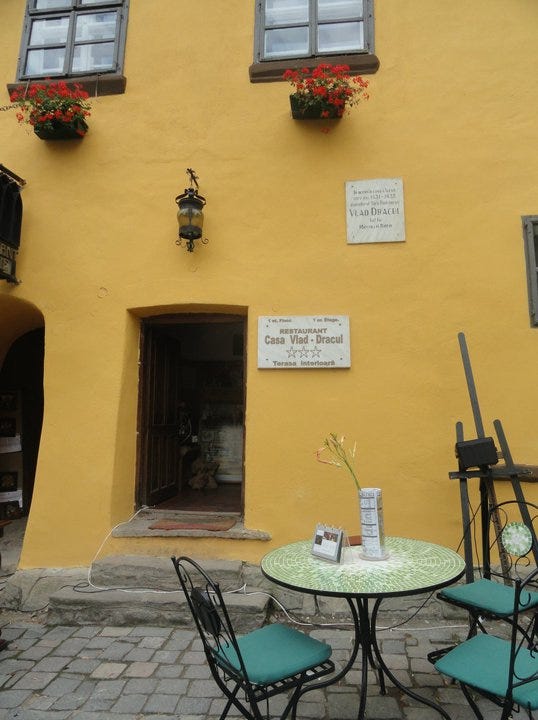
There was this place in Romania I used to visit in the summertime. It was one of the many hometowns of the famous Dracula… although everyone agreed that Dracula’s real name was Vlad Tepes.
On the family tree, his father’s name is Vlad Dracul, which sounds much more like “Dracula” than “Tepes” does to me. Like the American I am, I asked about this detail a time or two. However, everyone I asked agreed that Vlad Tepes was the one romanticized in the Victorian fairy tale. This town happened to be the birthplace of the famous son of Dracul.
In the summer, the cobblestone streets are full of hand-carved woodwork, eggshell-painted jewelry, embroidered blouses, and oil paintings. Mixed in with these are a few token souvenirs.
You could go up into the clock tower and look over the rooftops. There was also a church there with a date tiled into the rooftop that represented a year predating the existence of the U.S.A. as we know it today.
A few dollars will get you inside the actual place where Dracula was born. I never made it there though, because on the other side of the birth room of the Count was a coffee shop in the 100s-year-old building.
So, while the group I went with took turns crowding up in the room where the blood-sucker had still been an innocent baby, I went and stocked up on Transylvanian coffee.
I am usually a bit of a purist when it comes to coffee. I mean I do enjoy the espresso dessert coffees that come filled with syrups and topped with whipped cream from time to time. But I am not big on flavored coffees because they always taste artificial and sometimes a bit icky.
The Transylvanian coffee you found in this little shop tasted like Christmas in a cup and there was nothing artificial or icky about it, either. The bag came sealed off with a real wax seal and it had a picture of Vlad looking at you like he hadn’t had coffee in a few 100 years and was pretty upset about that.
I made a pilgrimage to this city and coffee shop almost every year. And then finally read the bag to find out what made this coffee so lovely. Turns out the recipe is Arabica beans, cinnamon, and a little bit of cayenne pepper. This may sound like a strange combination, but trust me when I say that if you can recreate this brew, you will feel like you are in an ancient European town surrounded by art and coffee.
Just watch out for the ghost of Dracula.


