
How to Make the Perfect Molotov Cocktail
For social gatherings or inequality-fueled revolution, here are the dos — and don’ts — of this HOT drink.
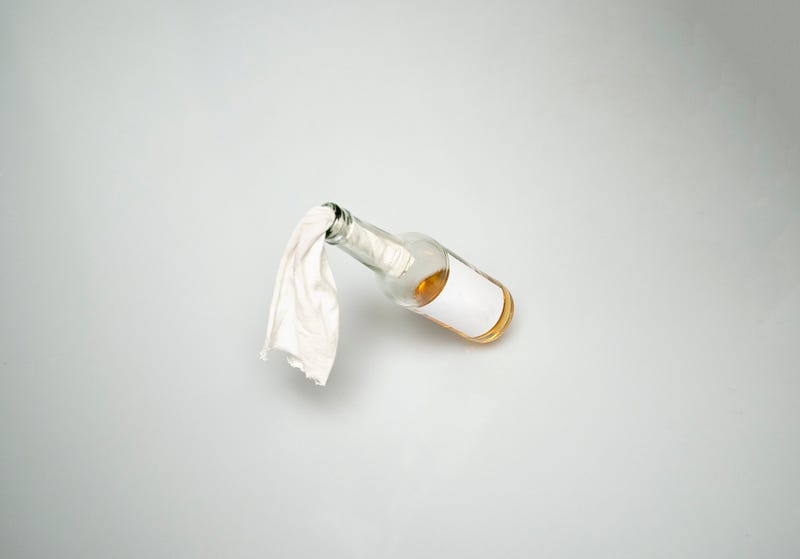
In 1939, as the Soviets rolled tanks into Finland, their propaganda minister loudly declared via radio broadcasts that nothing was wrong. “Those planes flying overhead,” he stated, “are not bombing missions; they are dropping humanitarian food deliveries.”
In honor of that foreign minister, Vyacheslav Molotov, the Finns firebombed the tanks, calling their improvised weapons “Molotov cocktails,” to go with the food parcels being dropped.
Due to the ease of production and the availability of ingredients to civilians, Molotov cocktails have become a popular symbol of uprisings. However, despite how we often see them depicted on television or in movies, there are definitely some wrong ways to go about mixing up one of these nasty, very-flammable concoctions.
I am not, of course, advocating that anyone should use a Molotov cocktail for anything. They are, after all, illegal to possess or manufacture in the United States, and many other nations have laws against them.
If there’s no uprising going on, stick to a less dangerous drink, like a bee’s knees.
But if a friend (someone who isn’t me, SWIM) starts ranting about rising up and overthrowing the bloated billionaires who are fueling massive disparities in wealth inequality… you could at least make sure they won’t do anything wrong when preparing this drink.
The ingredients in this cocktail
A Molotov cocktail has three main components:
- A casing. This is usually made of glass, in order to hold and store the fuel, but shatter upon impact in order to release it. Alcohol bottles are commonly seen in media, but Spaniards in their civil war were known for using jam jars.
- Fuel. This can be alcohol, kerosene, napalm, gasoline (petrol), or other compounds that are flammable. Again, in media, we typically see alcohol being used, but there are better choices (more on that below).
- A fuse, wick, or some other method for ignition. This could be a rag or other absorbent material stuffed into the opening of the casing, but it could also be wind-proof matches, or a mixture of chemicals that, when combined with chemicals inside the casing, will spontaneously ignite.
All three of these components can be fairly easily obtained by civilians, hence the popularity of the Molotov. In fact, during the early 1940s, as Britain faced the threat of a potential Axis invasion, commanders rushed to distribute instructions for creating Molotovs out to the British public.
The goal was to use these, as the Finns did, for anti-tank purposes. The strategy is fairly straightforward:
- Isolate a tank from the rest of its unit.
- Use gunfire, such as a rifle or shotgun, to persuade the tank crew to close the hatches on the vehicle. This lowers the visibility of the tank crew.
- Firebomb the tank, ideally from multiple directions so the tank’s gun cannot cover all angles.
- Use the haze to get closer, to further firebomb the tank and suffocate the engine and crew.
Thankfully, there was no ground invasion of Britain, so those reported thousands of homemade Molotovs were never used.
Common mistakes when mixing a Molotov
One of the big challenges with homemade Molotov cocktails is that they cannot be instantly used, or stored long-term; you need to light the fuse right before you’re going to use it. It’s like a grenade, but instead of just pulling a pin, you have to carry a lighter.
In the design most commonly seen in the media, the fuse is a piece of cloth, stuffed into the neck of a bottle. This rag soaks up the flammable liquid.
Note that Molotovs don’t explode on their own! That soaked rag doesn’t carry the fire down into the bottle, but rather ignites the liquid once it splashes, when the bottle breaks.
Because of this, it is important to ensure that the rag is stuffed tightly into the neck of the bottle, so that extra liquid won’t dribble out! Otherwise, when the rag is lit, there’s a risk of spilling flammable liquid on the user.
The wick also should not be very long! Again, remember that the wick is just a way to transfer fire to the target, along with the liquid. You only need a wick that’s an inch or two long.
(Scroll up to the top image. It’s a stock photo, but it’s also incorrect. You can see that the wick isn’t tightly blocking the neck of the bottle, and is also far too long!)
Another challenge is selecting the right fuel. There are upsides and downsides to each:
- Alcohol will burn well, but must be at a high proof or concentration; you can’t use regular 80 proof vodka. You’ll need to use at least 100 proof, ideally something even stronger, like Everclear.
- Gasoline will burn strongly, but won’t last long, so you get a big fireball but then nothing.
- The best fuels are mixed with a thickener; the Finns used gasoline mixed with roofing tar to create a form of napalm that lasted longer and stuck to targets.
Finally, it’s important to select the right casing. You’re throwing a glass bottle, which needs to be tough enough to stay intact while you’re handling it, but also fragile enough to break when it hits the target.
Unlike a grenade, nothing in the Molotov actually makes it “explode”, aside from the kinetic energy when it hits the target. Some tips:
- Don’t use a Molotov against a soft target. If you throw a Molotov at a bush, it won’t break, and you’ll just look silly.
- Many bottles, such as wine or champagne bottles, are designed to not break when they are dropped. They are generally too thick/sturdy to work for a Molotov.
- Some guides recommend scoring the bottles with a glass cutter or knife, in order to better ensure that they fully break when they hit.
- Throw overhand, like chucking a tomahawk or throwing axe. This can be tough, depending on fuse positioning, but gives greater range.
- The Finns eventually found that, instead of stuffing a rag into the open neck of a bottle, it was easier to strap a weatherproof match to the outside of the bottle, light it, and then throw the sealed bottle with burning match. This also ensures that nothing ignites prematurely or drips out.
The shortcoming and downfalls of the Molotov
Molotovs aren’t used much in war any longer. They have dismal range, take time to prepare, and, to be honest, won’t work against most tanks or military vehicles these days.
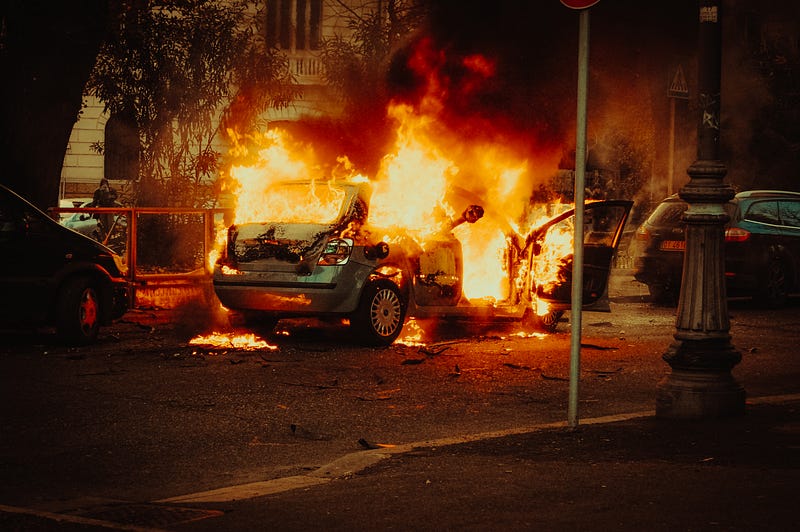
Even towards the end of the war, a single Molotov wasn’t enough to bring down a tank or armored vehicle. Many truck drivers learned to just “rock” their vehicles forward and backward, to extinguish fires on the tires before the rubber melted. Molotovs only worked as part of a larger, coordinated strategy.
If you’re in some form of a civilian protest, keep in mind that pulling out a Molotov is an escalation of force. If you’re fighting a guy outside a bar with your fists and he pulls out a knife, that’s an escalation of force. You’ll likely escalate with a knife or other weapon of your own.
If you’re protesting against something, and someone whips out a Molotov, be prepared for the police or forces on the other side to respond in kind. A Molotov is deadly, and it will elicit deadly force to be used by the other side.
Finally, every bit of using a Molotov is dangerous. You’re holding a flame, right next to a bottle of very flammable liquid. Drop it by accident? Fumble the throw? Have someone shoot or smack it out of your hands? There’s a very good chance you’ll set yourself on fire.
In summary: the perfect cocktail for a violent riot
A Molotov cocktail is a historically derived name for something that’s been around for thousands of years — a firebomb, a bottle of flammable liquid that is thrown along with a lit flame. It’s a nasty little improvised incendiary weapon that has remained popular due to its ease of construction.
Remember, a Molotov does not explode like a bomb; a good cocktail has a tight seal between the internal mixture and the outside flame! A good Molotov has a tightly sealed bottle, but one that is fragile enough to break when it impacts a target.
Despite what we see on television, most alcohols won’t be concentrated or high-proof enough to burn. Actual Molotovs are usually made with gasoline or kerosene.
And finally, one last warning: Molotovs are illegal, even if you just have the materials to make one and don’t even assemble it. Until riots get a lot more deadly, leave the bottles at the club.
If you enjoy reading stories like these and want to support me, consider signing up to become a Medium member. It’s $5 a month, giving you unlimited access to stories on Medium. If you sign up using my link, I’ll earn a small commission.


