
How To Make The Most Out of An Hour
Learn to eliminate what isn’t making you progress.
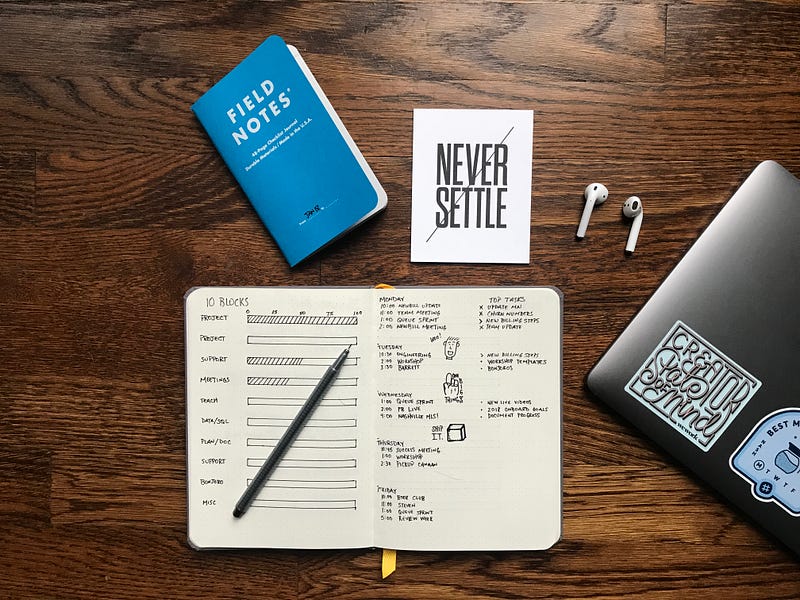
It’s the same thing every single day.
You wake up; you have your morning cup of coffee, you ponder life — for a few minutes — then get ready for the day ahead.
You write out a killer to-do list; you’re ready to tick off every one of those tasks.
“I’m going to have a productive day today.” You tell yourself.
An hour goes by; you’ve written a few words and sent an email.
Three hours go by, you’ve sent two emails now.
Six hours later, you’ve only ticked two tasks off your list.
What is it about your day that’s causing so much unproductiveness? You wonder.
You check your horoscope — maybe mercury is in retrograde.
Nope, that’s not it.
“I’m just not feeling it today — I’ll try again tomorrow.”
Tomorrow comes, and yet again — the previous day repeats itself.
The Trouble Is You Think You Got Time.
Time is priceless; it’s worth more than money. Why? Because money comes back to you, whereas the 24 hours of each day that we’re all given — once spent, are lost forever.
You can’t replenish it, despite any efforts. You check things off your to-do list, only to pile on more things.
The trouble is, you think you got time.
You put off things for tomorrow what can be done today — you make plans without realizing you’ve already got a packed schedule.
Time seems so abundant and infinite — you say that you’ll pursue the career, read the books, get the role. You spoonfeed yourself the common line:
“There’s still plenty of time left.”
In reality, time is essentially nonexistent. It goes by so fast we don’t even know or understand where it went.
When you were little, time moved as slow as a snail. You couldn’t wait to grow up. However, as you grow older, you come to the realization that time is running out. And, as ominous as it sounds, we’re all running towards our ultimate demise.
How much time do we really have?
Not much. A blip on the radar of time. An infinitesimal occurrence. Just 24 hours in a given day. 86,400 seconds.
That’s all. Nothing more — nothing less.
The CDC says that as humans, our life expectancy is about 80 years of age — nearly 30,000 days. 30,000 days of choosing how we want to spend our time.
If you have goals and dreams and desires — then you can’t waste that time. You have to harness it, leverage it, and use it wisely.
If you think you have time and you can put off your dream life — you need to change your mindset. You don’t have that much time.
Ask yourself, how are you using the little time that you have on any given day?
If it was all to end next week— would you be happy?
Or, will you be resentful for the time you didn’t spend with those you love or the chances you didn’t take in life?
If you’re truly serious about not wasting your time — not even an hour — then let’s jump right in.
Audit + Analyze
Ask yourself, what are you doing with the time you have?
Are you working towards a purpose?
Or are you wasting your time?
In an article in Forbes magazine, psychologist Dr. Marla Gottschalk, suggests doing a calendar audit to identify if you have a real sense of where you spend your time.
Go through your previous calendar months and compare how you spent your time — if you don’t utilize a calendar, think back on what you’ve done for the last week or 2. If all else fails, start tracking your day-to-day activities for the next 1–2 weeks to analyze where you invest your time.
By doing this, you might discover that you’re not as aligned with your goals as you thought you were, and perhaps you were letting precious time slip away.
When I utilized this exercise — I noticed that the majority of the things I was including in my daily to-do list had little to no relevance to my goals.
I included little things like creating an inspiration board on Pinterest, reading the next bestseller by the end of the week, or doing 2–3 different types of physical activity in one day (walking, weight-lifting, running). While I enjoy those things, they didn’t maximize my efforts in obtaining my main objective which was to become a better writer.
Reading is excellent — and to be a great writer, you need to be an avid reader, but instead of adding fiction best sellers on top of my stack of growing self-help books, I could have simply continued reading what I already had.
We spend the majority of our time doing things that make us feel good temporarily or rather the things that need to get done in that exact moment instead of doing the things that need to get done to progress.
Redirect your focus.
Make Sacrifices.
According to a 2018 Nielsen Total Audience Report, nearly half an adults day is dedicated to consuming content. American adults spend over 11 hours per day listening, watching, reading, or generally interacting with media.
Overall video use — time spent with a TV set, computer video, and using video focused app/web on smartphones and tablets — netted out to nearly six hours per day for U.S. adults.
Can you imagine the number of things you could get done if you removed or even cut that time in half? You could spend 3–5 additional hours doing something actually valuable.
A lot of people love watching TV. Myself included, I love binge-watching TV shows, old classic films, and watching YouTube videos. Sometimes, I even start my day off with a YouTube video.
This is why it’s a sacrifice — to get the life you want; you need to invest the proper time into it, which means you’re going to have to cut some things out of your daily routine.
Everybody has their ‘thing.’ My thing was TV; I would pop a video on while I ate, or turn the TV on to watch *one* episode and let it quickly turn into seven.
Identify your ‘thing’ and ease your way into cutting it off. Not entirely — but at the very least, reducing the amount of time you spend on it by half.
Distractions often wreak havoc on our levels of productivity, and according to a University of California Irvine study, it takes an average of 23 minutes and 15 seconds to get back to the task, and refocusing is not the easiest.
Remember, the trouble is that you think you have time. But you don’t. So don’t waste your time scrolling mindlessly through social media or watching TV when you should be working.
I don’t turn the TV on till I’m either in bed or done with my workday completely; I figured instead of teasing myself with 1 or 2 episodes, it was best to go cold turkey.
The Secret: The Eisenhower Box
“How can I be more efficient with an hour?”
I asked myself after hours of staring at a blank screen.
Lack of time management produces one thing:
Failure.
When you lack time management skills, you become lazy, you lack inspiration, and more importantly, you lack discipline.
Thus I introduce to you:
Eisenhower had a fantastic ability to sustain his productivity not just for weeks or months, but for decades. And for that reason, it’s no surprise that his methods for time management, task management, and productivity have been studied by many for years.
Eisenhower’s strategy for taking action and organizing your tasks is fairly simple. By utilizing his decision matric, you will separate your actions based on four options.
- Urgent and important (tasks you will do immediately)
- Important, but not urgent (tasks you will schedule to do later)
- Urgent, but not essential (tasks you will delegate to someone else)
- Neither urgent nor important (tasks that you will eliminate)
In general, you want to gravitate away from the time-wasters (#3 and #4).
Things like long-term goals or anything related to passive income or self-education should be your top priorities (#1 and #2).
Personally, this guide has been useful for me because it makes me question whether the things I put on my to-do list are necessary.
At the beginning of the week, I create a list of primary goals I want to accomplish for the week — and I’ll utilize the Eisenhower matrix.
Then, throughout the week — I split my days up. I have found that time blocking is the most effective for me. Essentially, you schedule everything in your entire day, including meals and work projects to better manage your time.
The goal is to make sure you’re progressing at the right pace for relevant deadlines and goals.
Ask yourself, what are you working towards?
Learn to clarify what your goals are so that when you do start your day, you have a clear purpose.
We all have the same 24 hours in a day — learn to take ownership of your time and utilize it to better yourself and inch yourself closer towards your goals.
Redirect your focus so that instead of doing random things throughout the day to gain temporary gratification — you’re actually utilizing every hour; you have to accomplish the tasks that need your undivided attention.
You can get quite a lot done in an hour if you eliminate distractions and don’t check your phone every 10 minutes.
Utilize the Eisenhower Matrix to get more organized with your time; it might not be the perfect strategy. Still, I’ve found it to be a pretty useful decision-making tool for increasing my productivity as well as eliminating the behaviors that take up mental energy, waste time, and rarely move me toward my goals. I guarantee you’ll find it useful too.
To be quite frank, if you just eliminate the things you waste your time on each day, then you probably wouldn’t need any tips on how to be more productive at the things that truly matter.
Find what works best for you.
Mind Cafe’s Reset Your Mind: A Free 10-Day Email Course
We’re offering a free gift to all of our new subscribers as a thank you for your continued support. When you sign up using this link, we’ll send you tips on how to boost mental clarity and focus every two days.