
How To Make Strength Training Way More Relevant for Runners
Everyone should be doing this more often!

Tempo training is one of the most overlooked strategies in the health and fitness world. Your ability to slow down lifts and perform them under control is the true definition of fitness. Many runners often opt out of strength programs because of a lack of education, fear of weight gain, or preconceived notion about wasted time. Fortunately, not only does tempo training raise the difficulty of each exercise, but it elevates your balance, coordination, and overall mobility. In other words, not only will you become a more functional human, the time spent doing these exercises will have an immediate impact on your running performance and injury prevention.
If you want an ultra-effective challenge, it doesn’t get more functional or productive than this!
As a kinesiologist, I rarely see anyone take a tempo training approach. Whether they’re short on time or flat-out impatient, most folks push through workouts as fast as they can. While pumping through reps may look impressive, there’s much more to training than flashy speed. If you’re solely focused on lifting as much weight as fast as possible, you’ll lose the solid foundation carved from mobility, stability, and core control.
Today we’ll uncover this well-kept secret in fitness. Tempo training may very well be your golden ticket to freshening up your strength programs and ensuring they impact your running in the best way possible. Let’s jump into it!
Slowing Down To Level Up Your Running
As with all adjustments to a gym regime, please check in with your health provider if you have any concerns. While moving slower will likely make a lift safer, it should always be encouraged to check in with your professional to decide on the best tempo for you. There are vast combinations of tempos out there, so if you’re curious to know more about this particular strategy, take a look here.
For now, we’re going to focus on a simple technique I like to do when warming up for a lift or teaching a client a new exercise. The focus here is on taking 5 seconds to complete both the contraction and lengthening phase of the lift. Additionally, you’ll hold both the bottom and top ranges of motion for 2 seconds to ensure full control. To summarize, this is a 5/2/5/2 lift. While this may seem brutally slow when starting out, your body will quickly adapt to this new type of stimulus.
Here are 5 key lessons you will learn from ultra-slow tempo training:
- Controlling the lengthening phase has strength and muscle tone benefits.
- Your dominant side may be taking over more than you think. Now you have time to correct it!
- When you slow down, you’ll quickly become more in-tune with the body. Who says strength training can’t be a form of mindfulness?
- Mobility is more important here than ever. If there is a tight area in your range of motion, you’ll quickly realize what it is with this slow tempo.
- The stability of your core can make or break an exercise. Enjoy the prolonged practice you get with these tempo lifts.
Please keep in mind that this is merely one strategy out of many. If this 5/2/5/2 tempo doesn’t feel quite right, try exploring similar rhythms. The beauty of tempo training is that there’s always space to play around to find the perfect speed for your goals and priorities.
As a quick tip, try and take slow, repetitive exhales as you go through the contraction (working) phase, and do the same with inhales during the lengthening phase. This will encourage you to keep the core braced and stay in control as you go through each extended rep. Why don’t you try putting this strategy to the test with the 3 exercises below? As mentioned above, this can serve as a warm-up to your workout, or as a separate ‘coordination/motor control’ session.
1) Squat / Back Squat
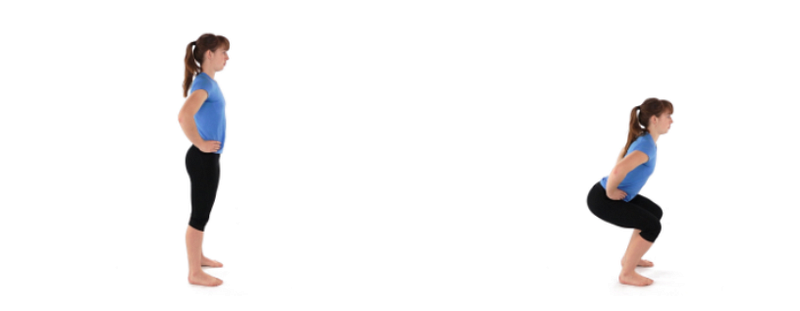
Cues: 10–15 reps x 2. Squats are one of the most fundamental resistance training movements out there. I would be doing everyone a disservice if they weren’t on this list. Start in a standing position with feet approximately shoulder-width apart. Next, brace the core and picture ‘stacking’ your ribs and pelvis. Once engaged, begin hinging at the hips and lowering while keeping the heels on the floor. Once at the desired depth, extend up by engaging the glutes.
If you’re looking to take full advantage of this tempo training modification, I’d recommend performing a back squat. The bar will provide you with the mobility and core stability challenges you need to fully maximize the benefits of slowing down your movements. As always, be cautious when starting out, and always lift light before you lift heavy.
2) Single-Leg Deadlift
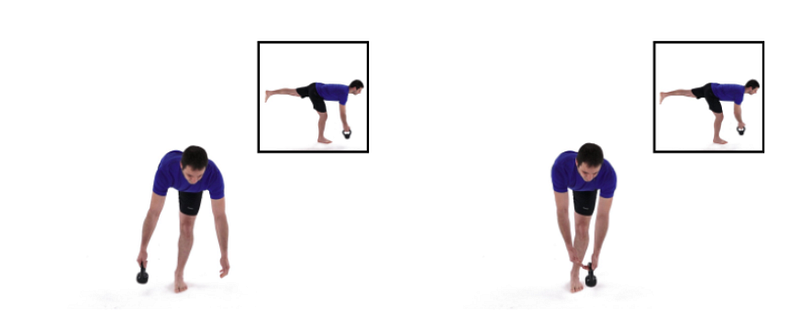
Cues: 10–15 rep/side. Before you begin, tighten your core and picture stacking the ribs over your pelvis. Next, plant one foot and hinge the hips until your back leg extends back behind you. All the while, keep the back + neck neutral and core engaged. Once you’ve reached the lowest point that you can control, extend the hips and fire up your glutes to return to the starting position. If you’re using weight, ensure it stays close to your legs throughout to protect the back.
You may notice that the athlete passes the weight into the second hand, but this is only a progression. If you’re just starting out, please just keep the weight in the opposite hand to the planted leg to focus on the hinge. Of course, you can also complete a regular deadlift instead. I do like the balance challenges that this single-leg modification brings when tempo training, so don’t overlook it.
We commonly overtrain the quadriceps while forgetting about the posterior chain (hamstrings, glutes, etc…). This is a fantastic exercise to restore some balance in your legs and it’s even proven to improve the lengthening of your hamstrings. Combine this with the multiple benefits of tempo training and you have one of the most productive exercises out there for runners.
3) Walking Lunges
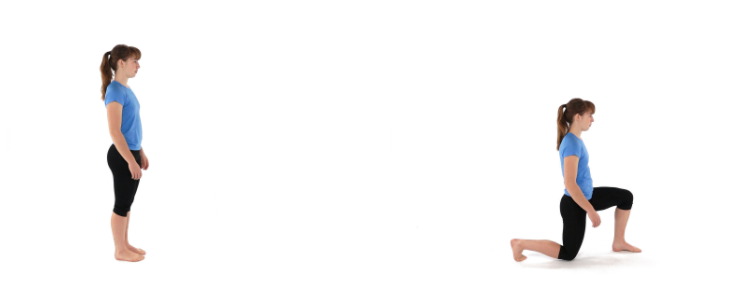
Application: 10–15 reps / side
Cues: 10–15 reps / side. Start in a neutral standing position. Next, step forward and establish a balanced split-squat position. Now descend so that your front and back knees get to a 90/90d position. Ensure you stop just before your back knee hits the floor. Next, press back up through your front heel and engage the glutes. Alternate the lead leg for every rep. Remember to exhale as you fight against resistance on your way up.
Easy progressions to the walking lunge include the lunge n’ twist and suitcase carry lunge.
Other Tempos To Try:
10/2/10/2 — ultra-focused on stability and motor control
2/0/2/1 — a standard lifting tempo for most exercises
4/1/2/1 — an eccentric-focused lift to practice lowering weights with control

In Closing,
The best-kept secret in fitness is more simple than you think. The act of slowing down may be all you need to expose your weaknesses and begin maximizing your fitness and running performance. Once you have a few of these ultra-slow-focused training sessions under your belt, you’ll quickly realize what you were missing. Not only will tempo training enhance your mindfulness around exercise, but it will also boost your coordination, motor control, balance, mobility, and much more.
The benefits are crystal clear… so what are you waiting for? It’s time to slow things down to level up your training!
-DavidLiira.Kin


