
How to Make Sense Of and Manage Anxiety
What it is, how it affects us and a variety of strategies to help.
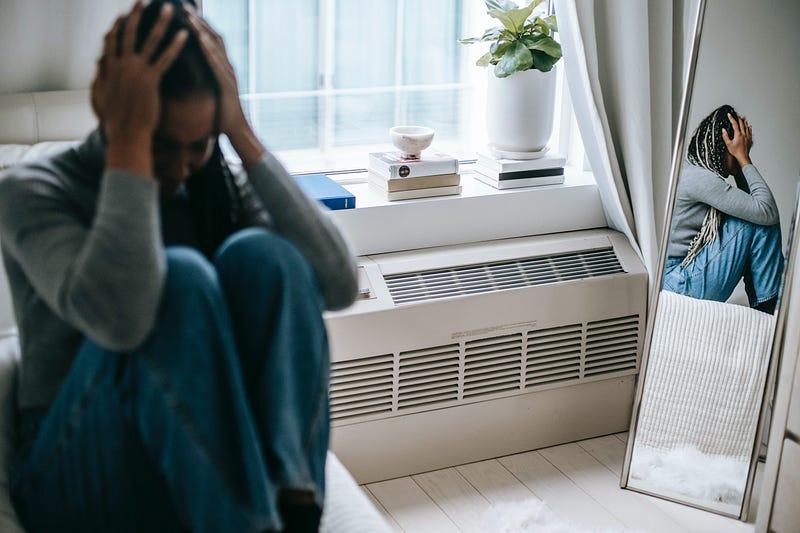
Understanding what we mean by anxiety can be a hurdle in itself and if we don’t know what it is, it’s hard to pinpoint why it’s occurring and what we can do to help us feel less anxious.
Anxiety is increasing around the world. But, it’s worth me mentioning that it’s completely natural to feel more anxious right now. There’s so much uncertainty everywhere. We’re waking up and probably thinking what’s on the news today because 2020 was a rollercoaster ride.
I am grateful to be able to deliver a specific therapy to family members at the moment and spend time on helping reduce their anxiety and stress in my day job as an assistant clinical psychologist, but I’ve definitely noticed an increase in anxiety with the people I work with.
The reality is, anxiety has been on the rise since early last year. Google trends show us more and more people are searching the word anxiety. Research shows those who follow Covid-19 news more experience higher levels of anxiety. And, unfortunately, most of the news out there is distressing, it contains rumours and misinformation, which research also tells us is why anxiety is on the rise.
My message right now is that we are all experiencing this together. A lot of us are going through similar emotions, so I don’t want you to feel alone. If we can understand a bit more about anxiety, how it affects us individually and have different techniques in place to help manage anxiety, it can make a massive difference. So, here’s my guide on making sense of and managing anxiety.
What Is Anxiety?
The National Health Service in the UK defines anxiety as “a feeling of unease, such as worry or fear, that can be mild or severe.” The truth is, we will always experience anxiety at some point and at multiple points throughout life. You might get anxious when you speak to someone new or if you’re about to take a test or have an interview. This type of anxiety will come and go, is mild and doesn’t affect our functioning. The key point here is that anxiety is a natural response to the perception of something that is a threat to us.
If anxiety persists for an extended period (several months) and really affects our day to day functioning, then someone may have an anxiety disorder. This can lead us to stop leaving the house or stop us from doing the activities that we enjoy.
Now, of course, it’s up to a qualified professional to give someone a diagnosis of anxiety but the key point here is that anxiety becomes a disorder when it really impacts our lives for a while.
There are multiple anxiety disorders. One of the most common is ‘generalised anxiety disorder,’ which refers to persistent anxiety to a variety of events. There’s social anxiety, which is extreme worry or fear about being judged by others. Phobia is another example which is fear towards a certain object or situation. There’s even more, but you can see that anxiety can manifest in different ways.
How Anxiety Affects Us
We know what anxiety is now, but how does it affect us? How do we respond to it? What emotions do we show? What happens to our body when we feel anxious? These questions are important. We want to be able to know when we feel anxious and our response to it because it becomes easier to manage. Like with anything, if we are left there thinking, what is happening and why am I feeling this way, it’s harder to manage it because we don’t know what’s going on.
Anxiety can affect us physically. It can create an increased heart rate, breathing rate, we may sweat more, experience fatigue and changes in our body temperature may occur. For example, if you’re about to have a job interview, it’s not uncommon for your hands to go clammy, your heart rate to increase and for you to experience a dry mouth. All those three happen to me when I experience a bit of anxiety. The important thing here is that there are multiple physical effects of anxiety and we all experience different effects.
From a psychological point of view, anxiety can affect our thoughts, feelings and our behaviours. The anxiety we are feeling from the pandemic may affect us in these three areas:
- Thoughts — you may think “how am I going to cope?”
- Feelings — you might feel sad, upset or experience panic because you’re thinking that you may not be able to cope.
- Behaviours — you may become increasingly avoidant and not want to go out anywhere.
When it comes to thinking about how anxiety affects us, it’s important to say that this anxious response is an adaptive response. It helps prepare us. But, it’s when we experience these effects more frequently and for a longer period where it can be harmful.
Psychiatrist Dr Daniel Wurzelmann explains it beautifully, “Anxiety can be helpful in alerting us to possible danger and encouraging us to prepare for upcoming challenges, like studying for a test or preparing for a trip. But, anxiety can become a disorder when it becomes overpowering and starts to interfere with our functioning and daily life, like causing irritability, insomnia, ruminations, or inattention.”
A good exercise is to think and write down how anxiety affects you specifically. We all react differently and the more you raise awareness to your own responses to anxiety, the easier it becomes to manage because you can utilise specific strategies (further down) to help with your anxiety. Have a think about how you react physically and psychologically or the next time you experience an anxiety-provoking situation, take note of your reactions.
Avoidance and Anxiety
It’s hard for me to talk about anxiety without mentioning something about avoidance as avoidance will result in the persistence of anxiety. When we feel anxious about something, avoidance is seen as a safety behaviour. We avoid the situation again to stop us feeling anxious. However, this approach doesn’t allow you to tackle your anxiety and gain evidence that it’s not as bad as you think.
Anxiety can really affect us because we have these physical and psychological reactions to the anxiety-provoking situation, but we then say to ourselves we should avoid similar situations because the feeling is horrible. I’ll be the first one to say that when this whole pandemic started, I didn’t want to go outside even to get food to cook. I was having worrying thoughts. If I kept avoiding going out, my anxiety regarding going outside would’ve persisted.
Instead, I went out to the shops, took my precautions and I was fine. The main point here is that avoidance will make your anxiety persist. I completely get that it’s a natural response. But, we just need to try out different strategies to help manage our anxiety.
Tips To Manage Anxiety
The purpose of this part is to provide a variety of strategies, that are backed by research and/or experts to help when you’re feeling anxious. You don’t have to try all of them. Just pick a couple and see how you get on:
Reframe Your Anxiety
Reframing your anxiety means increasing your awareness of your worrying thoughts and changing how you interpret a situation that may be anxiety-provoking to change your response. Evidence published in the Journal of Anxiety Disorders found cognitive restructuring produced large positive effects in reducing social anxiety.
How to do it:
- Identify the trigger — is it the lockdown? Not being able to see your friends and family? Or is it the uncertainty of work and finances?
- Identify automatic thoughts — make a note of the instant thoughts that come into your mind when you feel anxious. For example, if you’re anxious about going outside in this pandemic, you might think “If I go out to the shops, I’m going to become ill.”
- Identify your emotions — write down all the emotions you are feeling at that time. Are you might feel worried, irritable, scared, upset?
- Develop different ways of thinking — now the fun part. Time to write down alternative statements/thoughts that you can say in the same situation. For example, “I can go to the shops and take my own precautions by wearing my face mask and carrying hand sanitiser and I’ll be fine.”
- Repetition of alternative statements — say those alternative thoughts to yourself out loud in these triggering situations.
Try Experimenting
A good way to tackle avoidance and break the cycle of anxiety is to experiment. What I mean, is that you go and gather evidence against your worrying beliefs. It gives you a chance to challenge and disprove your anxious beliefs. In my example, I was anxious at first to go out but I tested this belief by heading out to the shops. The reality was that I was completely fine after.
A study published in the journal of Cognitive and Behavioural Practice found behavioural experiments result in a substantial decrease in general anxiety symptoms. These effects were also sustained after a six-month follow-up. So, try testing your belief because often, it is just our mind playing games.
Diaphragmatic Breathing
This is a brilliant breathing exercise that increases the amount of oxygen you take into your lungs by utilising your abdominal muscles and diaphragm when breathing. It can really help with calming you down by reversing a lot of the physical responses we get when we feel anxious. For example, research has found that diaphragmatic breathing can reduce anxiety, heart rate and breathing rate.
Healthline recommends three easy diaphragmatic breathing exercises to try. One basic procedure involves:
- Sit in a comfortable position, relax your entire body and place a hand on your chest and stomach to help you engage your stomach and diaphragm when breathing
- Breath in for two seconds making sure your stomach is moving outwards.
- Gently press on your stomach, exhaling through your lips for two seconds and repeat.
It only takes 5 minutes and you can do it anywhere and however many times you like.
Limit Your Media Exposure
As research tells us that exposure to the news is affecting our anxiety levels, it may be a good idea to reduce your exposure to the news. Studies show that if we perceive negative news, we’re more likely to experience negative emotions and behaviours. If that’s the case, then managing anxiety becomes extremely difficult.
To help with managing anxiety, Psychologist Elissa Epel encourages limiting media exposure and sticking to reliable sources of information because there is a load of crap out there on coronavirus and the vaccine. Set yourself a limit of how many times you are allowed to look at the news in one day. Then, set yourself a goal of taking in positive information or looking at things to help you relax instead.
Progressive Muscle Relaxation (PMR)
PMR involves tensing one muscle group at one time, followed by slowly releasing the tension. A recent study found anxiety levels reduced massively in individuals who were isolating due to Covid-19 after they practiced PMR for 5 days for 30 minutes. Here’s how you can give it a try:
- Take a deep breath and contract a part of your body, for example, your arms and hold the tension for up to 15 seconds.
- Slowly exhale and start to release that tension from your arms slowly.
- Whilst releasing the tension, notice your muscle slowly relaxing and picture the tension flowing out of your arms.
- Wait 10 seconds and repeat with a different muscle group. Work your way around your body.
Schedule Your Worry
Having a particular time when you worry is a brilliant way to manage anxiety and is backed by research and psychologists. Research has found those who had a scheduled worry period each day had a reduction in worry, anxiety, insomnia and other negative emotions, compared to individuals who worried multiple times throughout the day.
Clinical psychologist, Nick Wignall says “By purposefully acknowledging your worries and writing them down, it signals to your brain that you’re aware of the most concerning and important issues in your life and that you have a reliable system for staying on top of them.” Try and schedule 10 minutes each day where you bullet point all your worries on a piece of paper. Don’t problem-solve, just write down all your worries. It helps to reduce the number of times you worry throughout the day, helping manage your anxiety.
Identify Things to Be Thankful For
Studies have shown that practicing gratitude can predict fewer symptoms of depression and anxiety as it’s associated with being less critical and punishing to ourselves as well as showing more compassion to ourself. It can act as a distractive mechanism and shift your mind onto something more positive, calming your anxious response.
There are so many ways for you to identify things to be grateful for. You can say things aloud to yourself, you can write it down each day and revisit what you’ve written to keep reminding yourself, you can write an appreciation letter to someone, send a small video to someone close to you thanking them for their support, the list is endless. Personally, I like to say the things I am grateful for out loud to myself every day.
Be Aware That Your Mind Likes to Play Tricks
Our mind is a master of playing games with us and often, it is these tricks that fuel our anxiety. If we are more aware that our mind does play games with us then we can counteract them and manage our anxiety.
Clinical psychologist Marla Diebler recommends noticing your thoughts when they occur and writing them down to declutter your mind. The second step she recommends is to notice that your thoughts “Are not objective truths. You get to decide whether the thoughts are worthy of your attention.” I’m also a big fan of replacing thoughts so you can say something like “Here’s that negative, anxiety-provoking thought again! I know it’s not true. My mind is playing games here.”
Final Thoughts
Anxiety is within all of us. It’s one of our natural reactions when we see a threat or danger. Because I’ve noticed increased anxiety in my day job and the stats show us that anxiety levels are increasing, I wanted to give you an overview of anxiety to help you make a bit more sense of it so you can manage it better.
Anxiety does affect us physically and psychologically and this may lead to a cycle of continued anxiety as we start to develop avoidance behaviours, to stop us from facing an anxiety-provoking situation.
However, with a few different strategies we can manage our anxiety much better and reduce our avoidance:
Reframe your anxiety.
Gather evidence against your anxiety through experimenting.
Try a diaphragmatic breathing exercise.
Decrease your exposure to the media.
Try progressive muscle relaxation.
Have a scheduled worry period.
Look at the things to be grateful for.
Be mindful that your mind does play tricks and tell yourself that these tricks are false.
Experiencing anxiety is inevitable, but, by understanding it a bit more, you can identify exactly when you feel anxious. You can then pick a couple of the tips above to help manage your anxiety.
Mind Cafe’s Reset Your Mind: A Free 10-Day Email Course
We’re offering a free course to all of our new subscribers as a thank you for your continued support. When you sign up using this link, we’ll send you tips on how to boost mental clarity and focus every two days.