
How to Make Perfect Pork Chops
Moist, flavorful, and tender
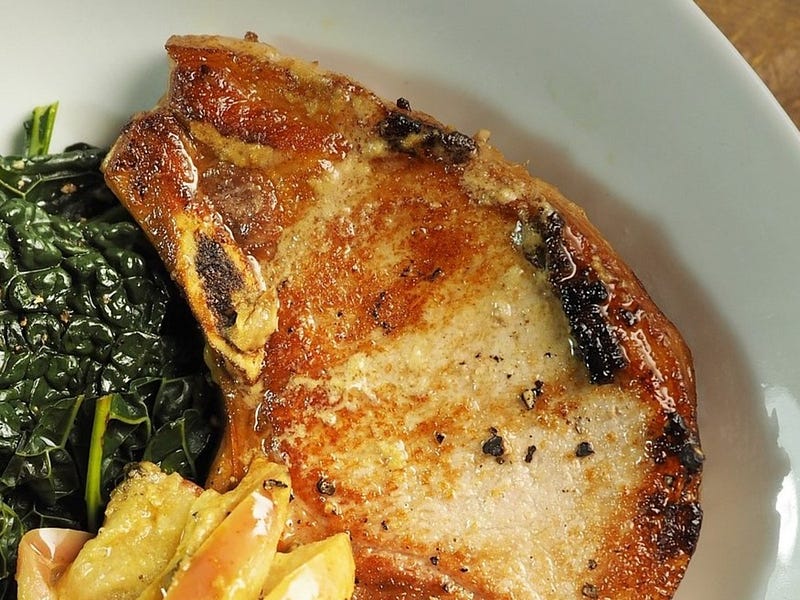
My Mother’s Pork Chops
My mother made the most amazing apple pies. The filling was a matchless blend of sweet-tart fruit and the pastry was buttery and flaky. Her bread was perfection — a tender white loaf enrobed with a golden brown crust. Her fried chicken was crisp and crunchy and the potato salad from her kitchen was tangy with dill pickles, eggy, creamy — worthy of awards.
Pork Chops Don’t Have to Be Tough
But then, there were the pork chops. Mom’s pork chops were a completely different story. It is apparent that my mother believed any hooved animal must be sacrificed — in other words, cooked to near cremation. The only beef I remember was hamburger simmered for hours in canned tomato sauce and served over spaghetti; this was somewhat palatable. However, pork chops were not accorded the same funereal preparation.
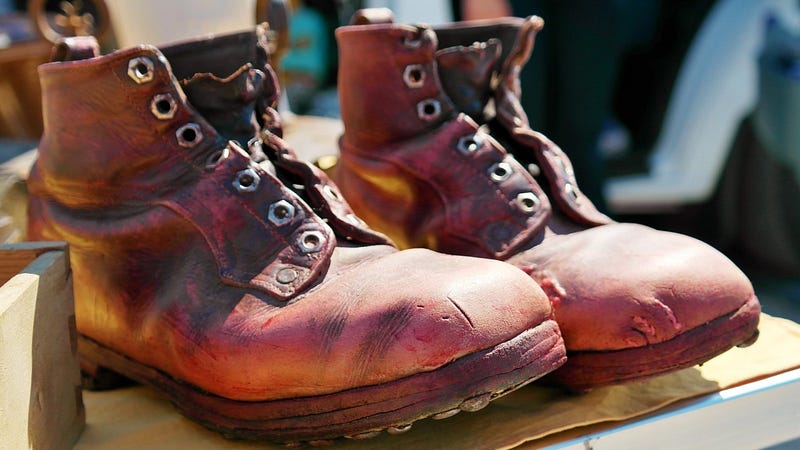
Mom’s chops were fried, and fried, and fried some more until they were grey, lifeless, and as tough as the soles of my hiking boots. I hated pork chops… until I ate them at a friend’s house.
I couldn’t believe that what I was tasting was an actual honest-to-goodness pork chop. I didn’t need a sharp steak knife, sturdy fork, and lots of sawing back and forth. This meat was fork-tender, moist, and full of flavor. Absolutely Heavenly!
Sad to say I never learned the secret of my friend’s perfect pork chops, but with many years of trial and error (and with GREAT emphasis on the error part), I have found, at last, the Holy Grail. There is a way to cook pork chops so that they are moist, flavorful, fork-tender, and totally melt-in-the-mouth.
What Part of the Pig Is a Pork Chop?
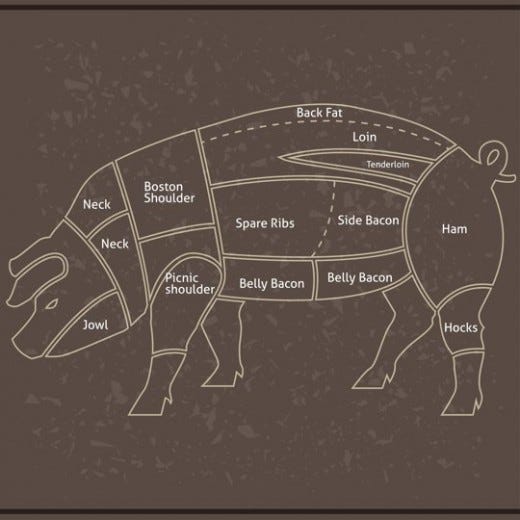
Pork chops come from the upper portion of the pig (along the backbone) from the shoulder to the hip. This is the area that includes the tenderloin — an expensive cut of meat that, I think, is not worth the high cost. Yes, it is easy to prepare and is tender and moist (when handled properly) but is seriously lacking in flavor. If I have the choice of a slice of pork tenderloin, or a perfectly cooked pork chop, I will opt for the chop every time.
Step 1: Select the Correct Chop
To cook a truly wonderful pork chop, you must first start with the correct cut of meat.
From the shoulder to the back of the pig, there are four major sections where pork chops come from: the shoulder or blade chops, rib chops, loin chops, and finally, sirloin chops. Here’s the breakdown of each section:
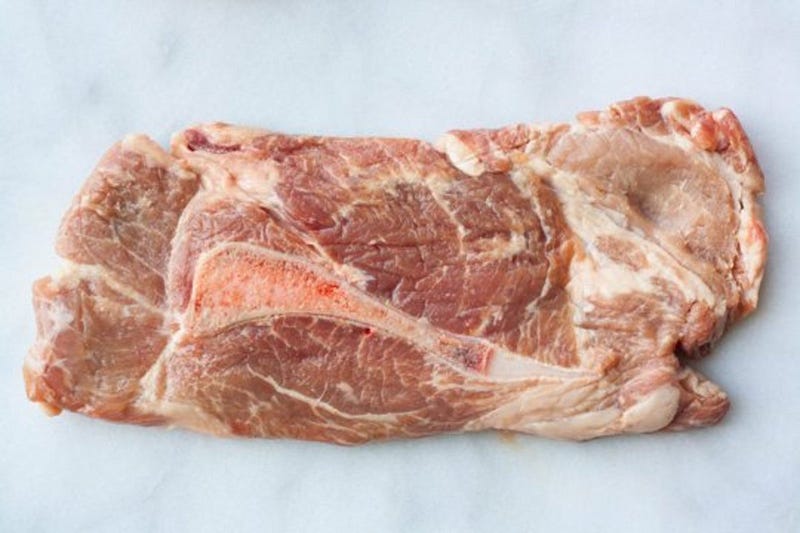
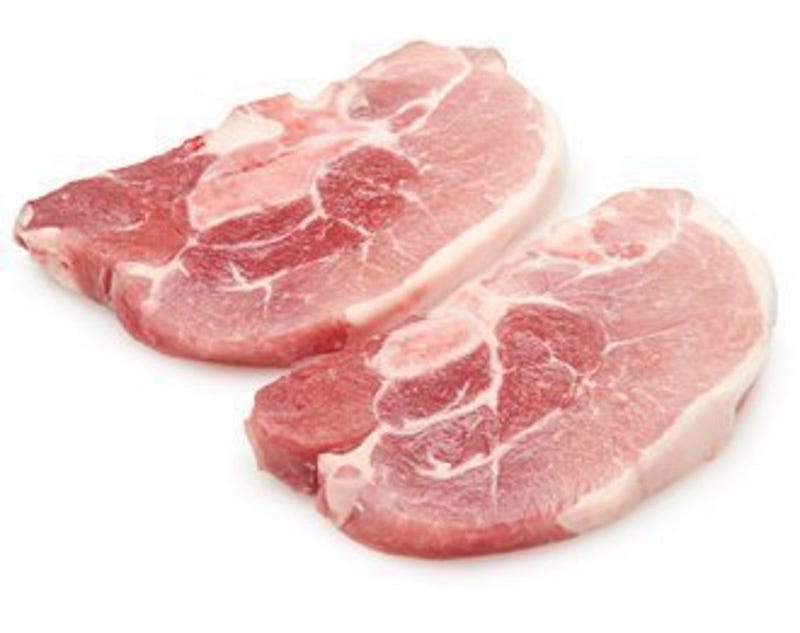
1. Shoulder Chop
Also known as blade chop, blade steak, pork loin blade chop, pork shoulder steak, pork shoulder blade steak, or pork steak. The meat is dark-colored and has quite a bit of fat, some gristle, and bone but is hugely flavorful. Shoulder chops need a slow braise (moist heat) to cook properly.
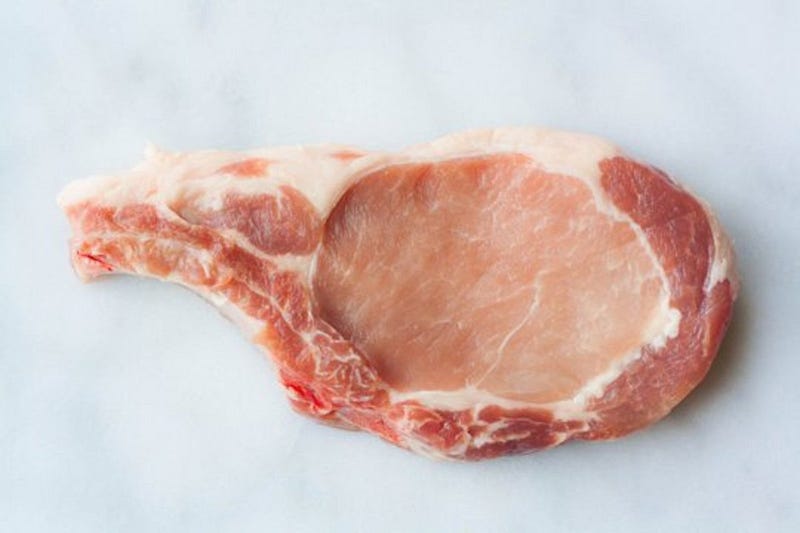
2. Rib Chop
May also be named center-cut rib chop, pork chop end cut, pork rib cut chop, rib end cut, and rib pork chop. Obviously, these come from the rib section (the rib bones are baby back ribs). There is no tenderloin meat in this cut. These chops have more fat than loin chops and are very tender and have a mild flavor. They are lean.
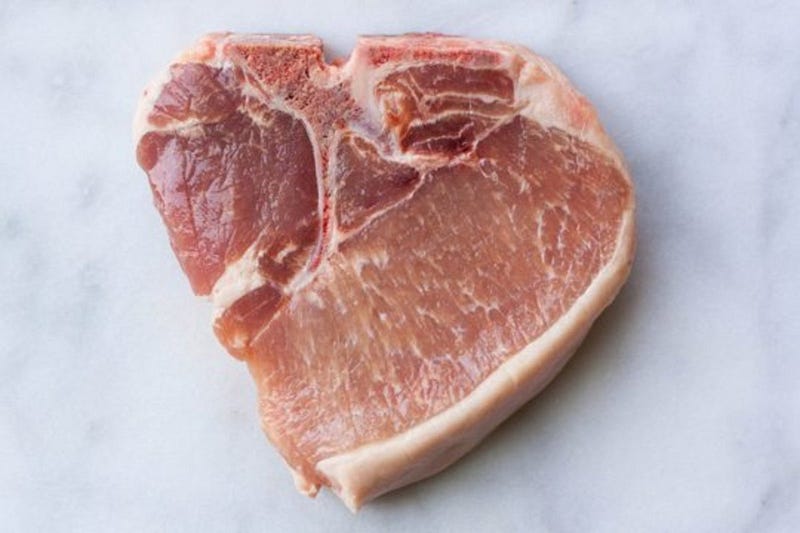
3. Loin Chop
Other names might be center loin chop, center-cut loin chop, loin pork chop, pork loin end chop, porterhouse, and top-loin chop. This cut comes from the hip, toward the back of the pig. They are very lean, with a mild flavor. Because this cut contains both tenderloin and loin, they can be difficult to cook.
4. Sirloin Chop
This might also appear in the butcher shop as a sirloin steak. This is a lower-cost cut, from the hip area. There is a higher percentage of bone than in other cuts. However, this particular chop is high in pork flavor but can be really tough. These should be cooked slowly, in a moist-heat braise or stew.
And, the Winner Is…
So which chop is the winner when selecting the perfect cut for an extremely moist, tender pork chop? Hands down, it is the rib chop.
Step 2: Brining
Once upon a time, brining was for pickles. But about a decade ago people started to brine their Thanksgiving turkeys. And guess what? It was no longer a given that turkey would be dry, stringy, and tasteless. When brined, that turkey became as plump as Great Aunt Matilda.
Now, I will admit that I have never brined a turkey — the Carb Diva family typically cooks a 25-pound monster and finding a vessel large enough to brine that behemoth is not an easy task. But brining a couple of pork chops? I can do that. And The Science of Brining (below) explains why you should too.
The Science of Brining
Brine is a salt dissolved in water. Two simple ingredients that can make a world of difference in your cooking.
The salt in brine not only seasons the meat, but it also promotes a change in the meat protein structure, reducing overall toughness and creating gaps that fill up with water and keep the meat juicy and flavorful.
Step 3: L-O-W Roasting
Low roasting is cooking at a low temperature — on my oven, the lowest possible setting is 175 degrees F. and that is the temperature that we will be using for our chops.
Why is low-roasting preferable to the standard method of roasting at 350 degrees (or more)? Let’s think for a moment about what happens when a roast is prepared in the oven. Let’s say that we want to prepare a prime rib, and we want it to be medium rare. The correct internal temperature to achieve medium rareness is 130 degrees F. If roasted in that 350-degree oven, it is obvious that by the time the interior reaches 130 degrees, the exterior will be much hotter — probably closer to the 350 degrees of the oven. The exterior will be brown, it will be dried out, and it will be closer to well done than medium rare.
Now, of course, a roast or a rib pork chop cooked at a low temperature will be moist and tender, but it will also have a very bland, pale color. That is why we quickly sear the chops on the stovetop before putting them in the low oven.
Here’s the recipe.
Recipe for Low-Roasted Pork Chops
Ingredients
- 2 tablespoons salt
- 1 tablespoon sugar
- 3 cups cold water
- 2 pork chops, 1 inch thick
- 2 teaspoons olive oil
Instructions for Brining
- Combine salt, sugar, and 1 cup of water in a medium saucepan. Bring to a boil over medium heat; reduce heat and simmer, stirring constantly, until salt and sugar and dissolved. Remove from heat.
- Add the remaining 2 cups of water to the salt/sugar solution. Stir to combine and reduce heat.
- Submerge the pork chops in the salt solution. They should be totally covered by the brine. Cover and refrigerate for at least 30 minutes and up to 4 hours.
Instructions for Cooking
- Preheat oven to 175 degrees F.
- Place olive oil in an oven-safe sauté pan and heat over medium-high heat until the oil is shimmering.
- Remove pork chops from the brine. Pat dry with paper towels. Carefully place in a sauté pan and sear for about 2 minutes; flip and sear another 2 minutes. Remove from heat.
- Cover and place in preheated oven. Roast until internal temperature reaches 145 degrees F. — about 2 hours. The meat will still be slightly pink inside.
- Remove from oven and let rest for 10 minutes.
What You Will Need
- Medium saucepan
- Measuring spoons
- Liquid measuring cup
- Large spoon for stirring
- Paper towels
- Large sauté pan with a tight-fitting lid
- Tongs for flipping chops
Don’t Worry, It’s Safe!
If you have an old meat thermometer you are probably thinking that I have either made a horrible mistake or I am insane and not to be listened to. The U.S. Department of Agriculture (USDA) has changed its recommendation for the safe cooking of pork. Years ago, we were told that pork must be cooked to an internal temperature of 180 degrees F. That is no longer the case. So, our pork is less likely to turn into shoe leather. Another consideration is that pork today is not the pork that our parents or grandparents ate. It is bred to be much leaner, so those old-school high temperatures would certainly render it dry, tasteless, and unpalatable.
One More Comment About Food Safety
Some combinations are just magical, aren’t they? Hot dogs and mustard, pancakes and syrup, spaghetti and meatballs, and the list goes on. But there is one combination that you don’t want to come from your kitchen — food, and bacteria.
Now keep in mind that not all bacteria are bad. If not for bacteria, we would not have yogurt, pickles, or soy sauce. Those foods are made with the help of healthy bacteria. But many other strains of bacteria are dangerous and can even be deadly. No doubt you have heard of outbreaks of salmonella from improperly handled fast food or E. coli from contaminated salad greens. You can avoid this problem and keep yourself and your family safe if you understand how bacteria grow and what you can do to prevent that growth from happening.
According to the U.S. Department of Agriculture, the danger zone for the growth of unhealthy bacteria is between 40 degrees and 145 degrees Fahrenheit. This is especially important if you are using “slow cooking” to prepare pork chops. My recipe mitigates the likelihood of unsafe bacteria by:
- Brining
- Searing at a high temperature for the first few minutes
Once the danger of preexisting bacteria has been removed, slow roasting can proceed without worry.
Source:
Did you like what you read? Become a Medium member to read all of my stories (and thousands of other writers on Medium) The membership fee is as little as $5 a month. [If you sign up for Medium using my link, I receive a portion of the membership fee as commission.]
If you wish to read my future writings, subscribe to my email list and you’ll be notified every time I publish a new story.
Copyright©2023  Linda Lum (Facebook, Hub Pages, Pinterest) is a retired
budget analyst for the Federal government, wife, mother, author, and lover
of anything and everything to do with food history.
Books: "Past and Present," "How Corned Beef Became Irish,” "Ask Carb Diva"


