
How to make money from the future of publishing
Take advantage of Technological Innovations poised to disrupt books!
Recently read an informative book by Joanna Penn about technological innovations that are poised (or could potentially) change the future of publishing. This is a marvelous book and presents ideas that writers need to take heed to stay competitive as automation further disrupts publishing. (Reference 1)
However, what struck me was that many of these changes can be lucrative new opportunities for writers and smart entrepreneurs who are willing to try new ideas. Any author publishing on Kindle is already a publisher and marketer, so why not add new income streams to your business of one?
Here are some of my thoughts on how you could possibly use those innovations to make money.
A] Centaur authors

Writers will create content augmented by artificial intelligence in the future. Although AI-generated content is not yet mainstream, it can support authors in multiple ways. It could be used for translation from English into other languages. AI could be used to see which keywords which are being requested by readers to suggest new content topics or identify which genres are most popular at the moment. It could also be to determine market fit.
Money idea #1:
If you are bilingual, you could offer quick translation services where an algorithm does the bulk of the work, and you spot check and add minor contextual changes. Remember people pay for convenience, so authors might not care how you get the job done. Plus, you could offer lower prices since automation would speed up your turnaround time, and indirectly your hourly rate.
Money idea #2:
Software like KDPRocket tells you which genres are highly competitive and which keywords are easier to rank as an Amazon bestseller. Similarly, you could recommend content ideas for books, blog posts, etc. which show a large demand from readers. Think Google trends for books.
B] Multichannel books:

In the future, books will no longer be static textual content, but interactive multi-channel content.. readers will be able to choose whether to read it as a book or listen as an audiobook or keep toggling back and forth based on their mood and interest. Some authors might also want to supplement their books with video content, book trailers, interactive worksheets, etc.
Money idea #3:
If you have a book that is part of a series, such supplemental content might coax readers to pre-order using embedded video trailers or opt-in to your email list. Instead of monetary discounts, authors could create extra content for premium subscribers.
After all, the way we consume and produce content has changed dramatically in the last ten years. So why should publishing be any different?
Money idea #4:
Not all authors are tech-savvy, so smart hustlers could bundle services to create a text+audio version of the same book.
C] VR/ AR:
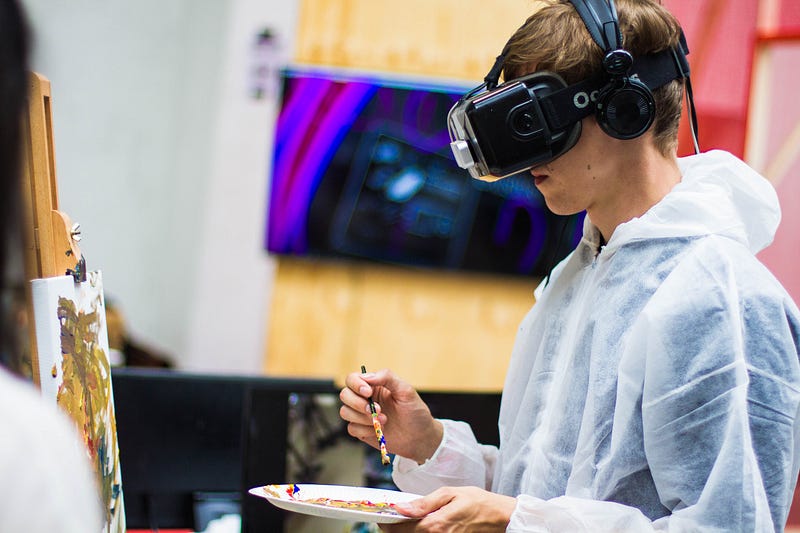
Technologies like virtual reality and augmented reality are already becoming mainstream, however not for books. Yet. In the book, Joann Penn suggests that readers could immerse themselves in the city where a fiction story us are based. After all, so many movies are made on books. The entire premise of Hogwarts at Orlando Studios is based on book experiences, so why not allow all authors to create a hybrid version marrying text and video?
Money idea #5:
Sites like Animoto allow users to create stunning book trailers using templates and themes for one time fees or a monthly subscription. (Think Canva gone 3D). If you have AR/VR skills, you could create a platform for authors to build such videos for their books using a modular approach. Imagine an author choosing a city, set of characters, and a couple of scenes, and boom! Your scene is set. Upload the appropriate book section, and readers will experience the book like a movie.
VR/AR are niche skills and folks on Upwork often charge $80-$100 per hour. Templates would make it more affordable to the masses. If you have sales skills but no coding, you could hire engineers once you get buy-in from customers.
D] Repurpose Content:

Shaunta Grimes runs a very interesting “Blog Your Own Book” month-long writing challenge here on Medium. (Hat tip to her for introducing me to this awesome concept!) Many other prolific writers also emphasize the notion of repurposing content — blogs to books, snippets as Tweets, etc. For example, someone recently published a book that is purely a compilation of all the valuable Twitter threads from Naval Ravikant (reference 3). Even WordPress has a plugin that allows you to embed tweets in a blog to make it easier for readers to share posts via social media.
Like coding, reusing content is just smart writing!
Money idea #6:
Imagine software that analyzes all your blog posts, tweets, and tells you if you have enough content to generate a book, using similar keywords and word clouds. Something that can both, aggregate content into a book and divides a book into blogs and tweets. Or embedded tweets inside an ebook, similar to the “highlight/tweet” toolbar on Medium.
E] Book Service Agency:
Of course, you could just combine everything and create a book publishing agency, especially if you already have the chops to perform social media or running ads or sales functions. Authors are notoriously bad at marketing themselves!
Money idea #7:
While Kindle and Google have lowered the bar for self-publishing, there is still a market for ancillary services. If your books are not making a lot of sales you should consider adding a second income stream using any or all of the ideas above. If you need more information about ancillary services or how to “outsource” your full book, then consider reading Alinka Rutkowska’s “Write and Grow” Rich. (Reference 2)
In conclusion, I hope you found these ideas thought-provoking. Is there any other technology that sparks new monetization ideas for you?
Last but not the least, do consider reading the books below — they are fabulous examples of great writing! No affiliations to me of any kind, I truly enjoyed them as they set off many novel ideas in my head. I am confident you will find them valuable too!
Book References:
- Joanna Penn's recent book is titled “Artificial Intelligence, Blockchain, and Virtual Worlds.”.
- “Write and Grow Rich” by Alinka Rutkowska.
- “Almanack of Naval Ravikant” by Eric Jorgenson.


