
How to Make History Come Alive
Get all of your senses involved
The warm, sweet air of Tinian Island filled its lush jungles and open emerald fields, providing a fragrant backdrop to the surrounding ocean’s alternating deep and light hues. The sky above was a bright indigo.
I was a U.S. Marine on a training excercise with some time off. I took that time to explore the jungle.
Tinian — a volcanic speck of an island in the southwest Pacific Ocean — had been once been used as a base for U.S. bombers who’d then flown on to drop the atomic bombs that had ended World War II.
During the war, an airfield had been built by the Seabees (or Navy combat engineers) for the impending attacks on mainland Japan. Just across where the Philippine Sea and the Pacific Ocean meet was the island of Saipan; it was only a few miles away and was visible from Tinian’s shores. The more well-known island of Guam was a little bit farther than that.
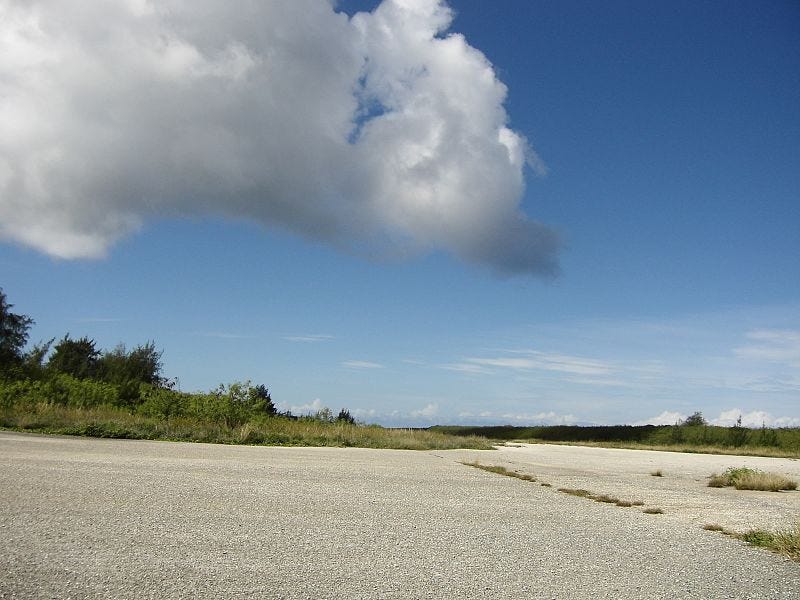
Tinian’s old runways were cracked from years of neglect; clumps of grass sprouted out everywhere. Unused runways — with their solid, open, and grown over expanses — harbor a strong sense of history. It’s easy to feel a connection to the past when there’s no difference in how things looked then to how they look now. On Tinian’s runways, only a few cracks and some wandering grass bore testament to the passage of time.
I closed my eyes and listened with all my senses.
Somewhere, a bird chirped. Its voice echoed through the palm trees and out into the open expanse of the ocean. Waves crashed rhythmically onto the black rocks, a strident counterpoint to the leaves whispering in the breeze.
I opened my eyes and looked around. If I’d been looking at the same landscape sixty years ago, or a hundred years ago, or a thousand years ago, I would have seen the same scene…except for one thing. That one thing was the cement wall that protruded from behind the creeping vines.
The only thing that had changed about the wall since it had been built was that it had been overgrown with vines and moss. Aside from its green carapace, though, the wall looked just as it must have when the Japanese had built the wall as part of their fortifications for the defense of Tinian Island in the Marianas Islands during World War II.
The wall wasn’t roped off. Herds of picture-snapping tourists weren’t photographing themselves in front of the wall to prove to their friends that they’d “been there.” There was just the wall, the jungle, and the ocean.
I walked closer to the wall. People died here, I thought, staring unabashedly at it. The only thing separating me from that horror is time.
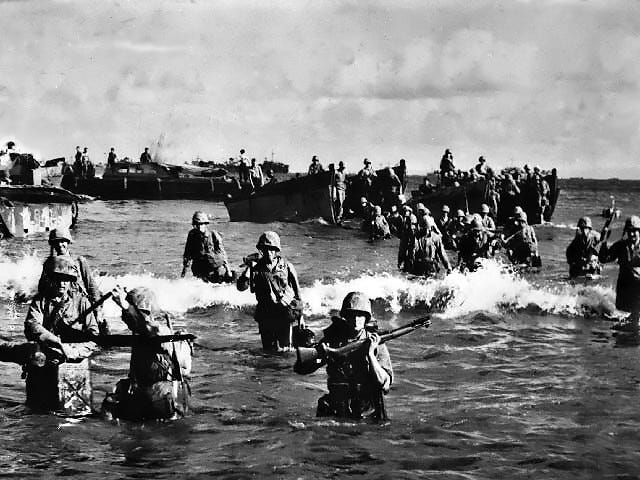
What did the Japanese think when they saw the U.S. Navy boat come over the crest of the horizon? I wondered. What was going through their minds when diesel exhaust from U.S. Marine landing crafts blanketed this wall? What happened right here where I’m standing? Just imagine…
I walked around the bunker down a long path and came into a clearing. A wooden sign stood next to a small patch of grass: “Bomb Pit #1.”
A nearby plaque read:
“From this loading pit, the first atomic bomb ever to be used in combat was loaded aboard a B-29 Aircraft and dropped on Hiroshima, Japan, August 6th, 1945.”
The world had been changed forever from something that had taken place right under my feet.
I closed my eyes again, breathed in the clean ocean air, listened to the rustle of the trees. Time and imagination, I reflected, are all that separate us from witnessing the greatest events in history. If we can develop our imagination and draw inspiration from the fixed sensations of our surroundings, only a speck of time separates us from history. We can almost feel like we were there.
History has always fascinated me like this. I learned this from my Dad feeling the same way. This love of history can be learned.
Then the wonder and curiosity stemming from that love can penetrate any subject from history to adventure to books to seeing beauty in the simple things.
The excitement, the adventure, the sights and smells and uninterrupted absorption of the essence of a place only happen when we’re really in that place physically or mentally with our senses honed.
Once we’ve felt that sense of wonder, we want it again and again.
Ask someone who metal detects for example how it feels to be the first to touch a relic since it was dropped by someone long ago. If they can explain that feeling, you’ll know what it is.
Smell the rain, feel the trees, touch the rocks — physically absorb what’s around you. Even if you aren’t actually there as good books can get us there too.
Only when you hone your senses and truly try to imagine can you feel history.
Unplug. Get alone. Close your eyes. Open your senses. Listen. Smell. Taste. Absorb. Imagine.
And if you are lucky, then you’ll start to feel history.
And you’ll get better and better at feeling it.
Soon, that immediate cerebral time travel will become a fascination for you.
A fascination that will stick with you forever.


