
Fitness | Lifestyle | Technology
How To Make Fitness Trackers Work For You, Not Against You
When tracking backfires your health goals
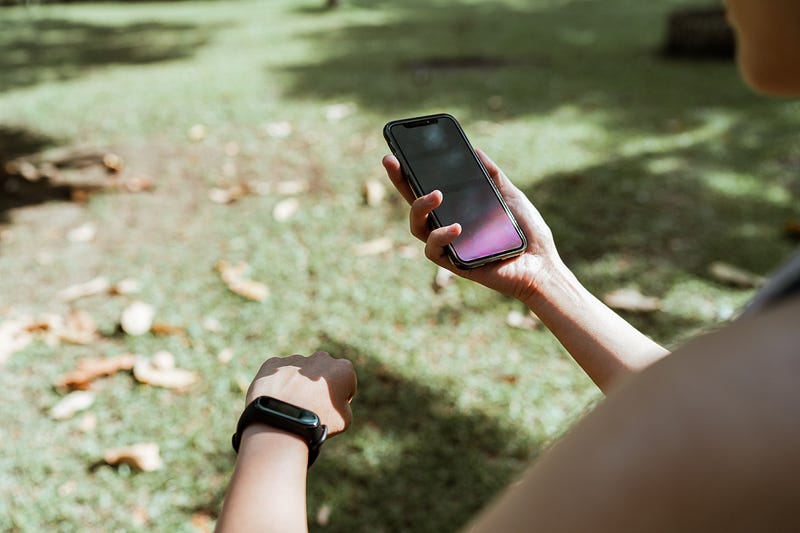
I love logging and tracking my routines via my Fitbit Charge 2 and its app. I use it when I am in that ready mental state to achieve my fitness and health goals. It allows me to stay accountable and also gives me an overview of how I am performing, eliminating the guessing game.
It not only tracks my calories burned and types of activities performed, but it also tracks my food and water intake, my sleep score, heart rate, and even predicts my menstrual cycle.
In fact, just earlier this year, as part of my personal health reset goal, I have been diligently inputting all my data in the Fitbit app. And in just 12 weeks, I am seeing the stark improvement in my health and performance goals. I loved the moment when I hit my 10,000 steps and that little man will appear on my watch with a “hooray” victory sign.
But all that came to a halt when the semi-lockdown happened in April. Everything came to an almost stand-still. I tried to keep up with my activity level for the first week, walking around the house or taking long routes to the grocery store, in the hope to hit the 10,000 steps. But I barely make it to 5000 steps a day.
And just after a week of the semi-lockdown, I ditched my Fitbit watch.
Because I didn’t want to feel all stressed up and demotivated for not able to hit the 10,000 steps. I also knew there was no way I can even hit just 5000 steps. Maybe it’s all excuses, but we are living in unprecedented times.
I know I am not the only one feeling this way. In March 2020, CNBC reported that 68,000 Americans across all states are moving significantly lesser up to 50%, and sleeping more by 20%.
While there isn’t any conclusive data yet as to how this might impact the current increasing global trend in preventable chronic diseases, such as obesity, diabetes, cardiovascular-related diseases, and hypertension, I now wonder about the effectiveness of fitness trackers and how we can make it work better for us, not against us.
The ever-changing role of the fitness industry
Fitness has always been evolving with its latest workout trends and diet fads. When technology and smartphones have proven that it is here to stay as part of our lives a decade ago, it caught up with the fitness industry, innovating itself to go beyond just the usual running and swimming.
Enter wearables or fitness trackers. Fitbit, Garmin, Nike+, Jawbone, Samsung, TomTom, Polar, and the list goes on, all enter the market with their fitness and activity trackers, promising their users a greater likelihood of hitting their personal bests and goals.
And now nearly, everyone, ranging from the ultramarathoner to the weekend gym warriors, almost has some kind of a fitness tracker on their wrists, just like how nearly everyone has a smartphone. So if fitness trackers are supposedly designed with the main goal of increasing one’s physical activity and improved healthy eating habits, why are we still seeing a rise in the number of preventable chronic diseases, particularly obesity-related diseases? Has fitness tracking become more of a bane than boon?
Drawbacks and Roadblocks
- Sync issues
Most fitness trackers work on Bluetooth technology which allows it to sync to the app on your smartphone. If this fails to work, then the relationship with the fitness tracker pretty much ends there.
2. Heavy reliance on user input and memory recall
It requires the user to manually inputting the information into the apps on their phones either by entering the data right after each activity or relying on memory recall at the end of a busy day. This can be quite cumbersome especially for a busy individual or someone who is already very overwhelmed with a load of their lives or just averse to new technology.
It is no wonder than in a 2014 research article piece on the Dirty Little Secret of Fitness Trackers, over 50% of users of fitness trackers stop using them after 6 months.
The topmost cited reasons include
- technology issues such as unable to sync, device responsiveness to change, and battery lifespan.
- privacy and data issues
- design aesthetics and comfort
3. Outdated calorie-based model
Furthermore, the calories-in-calories-out model that we are so used to is actually outdated to promote sustainable change for healthy weight loss. The body’s metabolism pathway is a little more complex, while some can lose weight effectively just by reducing their calorie intake, others may not. (The many cases we see in The Biggest Loser weight loss show on NBC is clear evidence of that.)
Also, not all calories are created the same. One also has to consider the type and proportion of macro- and micronutrients to ensure a healthy metabolism as the body loses overall weight. Notice how sometimes as one loses weight, one may lose more muscle than fat, thus making them “skinny fat”?
4. Not all exercises are designed equal too.
High-intensity interval training or CrossFit style of training may not work for someone with a damaged metabolism; while slow-moving yoga therapy or long-duration steady-state cardio may work effectively for some.
5. Neglecting the invisible illnesses
More importantly, fitness trackers do not take into account the mental state and well-being of one. Mental health is not only complex but also still at its nascent in terms of being widely understood and discussed by society.
One may be battling with anorexia, addiction, or some other underlying emotional trauma, and they may abuse the use of the fitness tracker, thus exacerbating the deep-seated challenges one may be facing.
6. Falsifying a sense of accomplishment
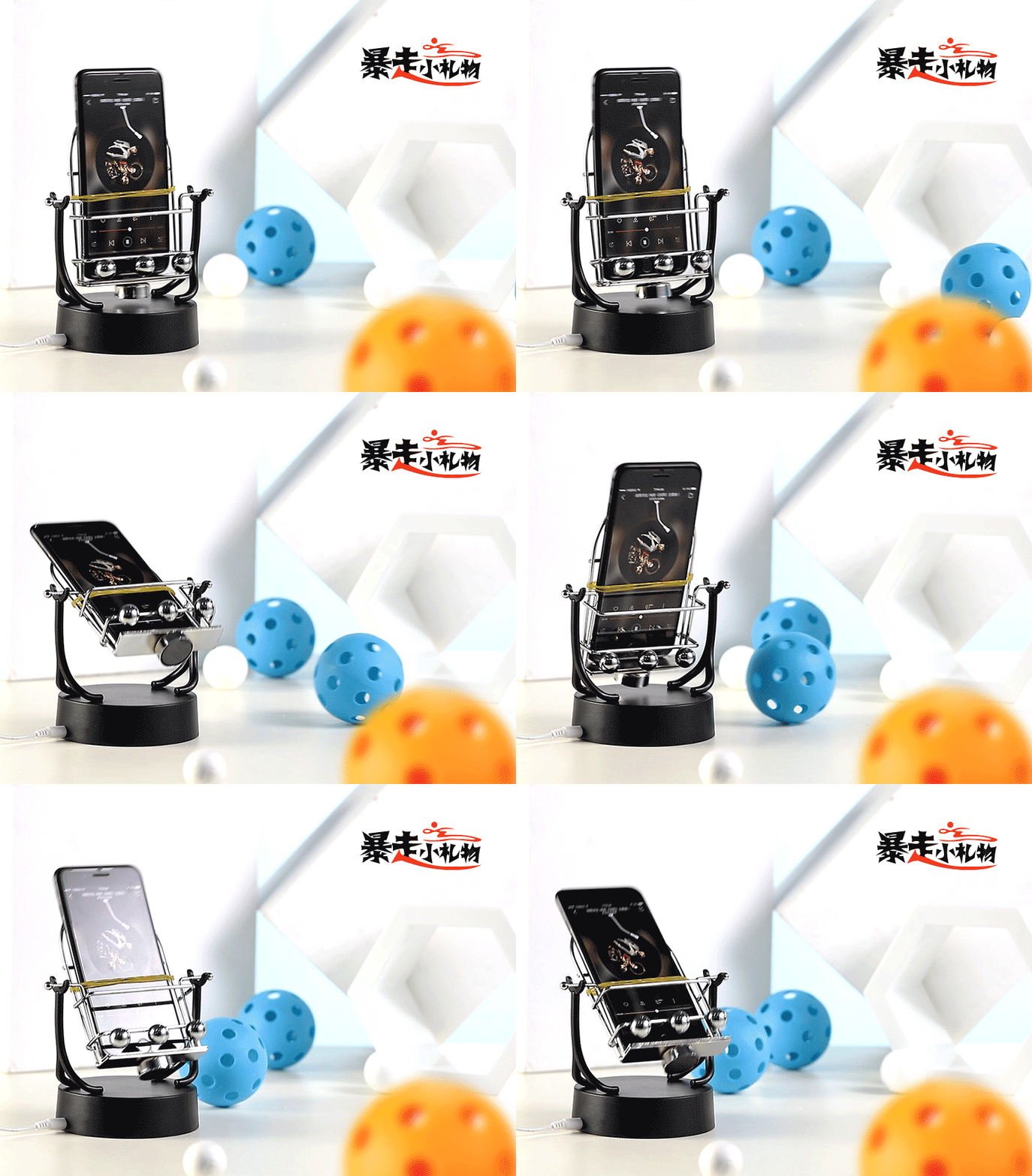
In fact, did you know, there are now cheap and affordable devices such as the shake swing phone or step shaker. It is basically a simple desktop-sized oscillating device, and one can just place their phones on it, and the device will “swing”, to mimic clocking steps.
It operates either with a battery or just plugged into a power source. This obviously works only on phone trackers. The end result is giving a false sense of “accomplishing” steps for the day, without actually doing the work.
There is also another way of clocking steps on your fitness tracker, by mounting the wrist tracker on your ankles, and by shaking your ankle, while sitting down, steps are also accumulated. This also works by swinging by arms vigorously.
All these just show how the fitness trackers have yet to keep up with the complex needs and nuances of how our body mechanisms work.
So then, how can we make fitness trackers work for us?
Without sounding like it’s doomsday, we also do need to recognize the positive influence fitness trackers made to our days.
In a single case study conducted in 2017 by the University of Connecticut, on the effectiveness of using a fitness tracker device in self-monitoring behavior change for an overweight type-2 diabetic geriatric subject, when working with a team of a multidisciplinary health team,
it was found that after a 36-week (9-month) intervention program, the subject showed improvements in active minutes, steps taken, overall miles walked, change in miles per day walked, hours of sleep, and reducing calorie intake.
1.Set short-term goals
All these just mean that fitness trackers can indeed help to support the initial behavior change required, so for anywhere between 3–12 months. It is, however, unclear if the subject remains self-reliant to maintain the lifestyle change after the study.
2. Get our mindset right
One of the most important things with maximizing the usefulness of a fitness tracker is supporting habit change without the over-reliance of the tool. Our mindset approach towards using tracking our lifestyle metrics with trackers needs to be periodically reassessed and re-evaluated.
Ask — What is the intention of using the fitness tracker? Ask — Am I losing the original focus on why am I tracking? Ask — Have I become obsessed with quantifying everything, including my happiness and joy, that I forget that a healthy life also includes a healthy mood and mind?
When we can authentically and courageously ask ourselves these questions, we open a new way of looking at how to have a healthy and working relationship with fitness trackers.
After all, we do want to prevent a “relapse” of slipping into old unhealthy habits or worst yet, being backfired from not having a tracker in life and thus lose a sense of autonomy over one’s lifestyle.
3. Set new goals
We can also set new health and performance goals to avoid falling off the bandwagon. Working with a health coach skilled in behavior change can also help you to find clarity in setting new goals and sticking to them.
4. Involve others
If it is within means, we can also get social, by doing a group challenge or getting accountability with your fellows.
Parting Thoughts
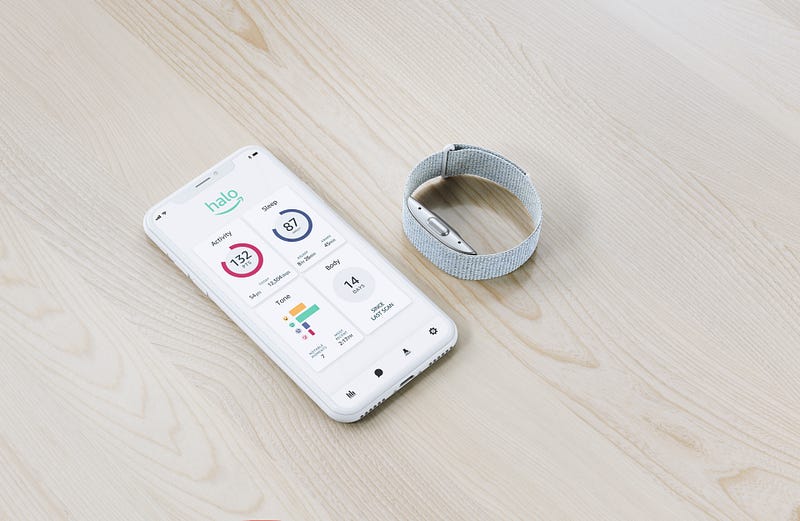
Fitness trackers have come a long way since the old designs of pedometers, and it certainly has evolved tremendously in the last 5 years. Right now, we are even able to track our mood just by our mere tonality, in the new beta-released product of Amazon Halo.
Fitness trackers are also now under consideration for use in contact tracing in some cities to help spot emerging outbreaks of COVID-19 cases. [1], [2], [3]
I am hopeful that fitness trackers are definitely here to stay. This would just mean the design of these fitness trackers will have to evolve to keep up with the ever-changing needs of both the human bodies and societal needs, to make it work better for us. It is, after all, an estimated $15-billion dollar industry.
And sometimes, it’s also really okay to detach from all fitness trackers for a while. I certainly had in the past 6 months with a “Fitbit detox” and now I’m feeling refreshed and clearer to get back with some renewed goals.
Perhaps, we all need a “Fitness Tracker detox”?
Related reads
- Is your fitness app making you fat? [TechCrunch]
- Do fitness trackers promote eating disorders? [PsychologyToday]
- A study of fitness trackers and wearables [HFE UK]
- Piwek L, Ellis DA, Andrews S, Joinson A (2016) The Rise of Consumer Health Wearables: Promises and Barriers. PLoS Med 13(2): e1001953.
If you like to receive bite-sized actions and stories, check out Yan’s The 3Min Club, where twice a month, you receive 3Ms (movement, mindfulness, mantra) you can do in 3 minutes.