
How to Make Decisions — According to Carl Jung
Dealing with Life’s Questions (That Have No Answer)
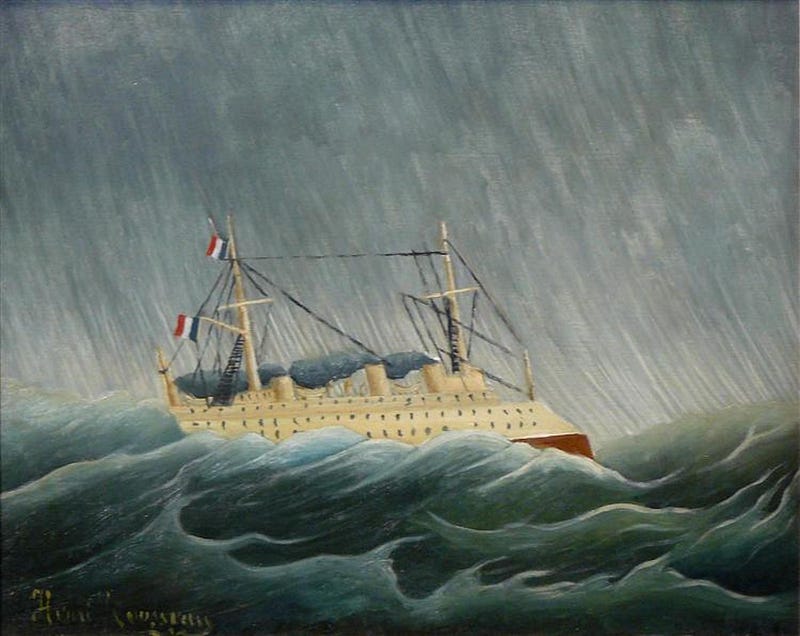
Are you comfortable with questions that have no answer? According to the psychologist Carl Jung, “The greatest and most important problems of life are all in a certain sense insoluble.” There are questions in life that can never be solved — only outgrown. This “outgrowing” observed by Jung consists of a new level of consciousness.
In Memories, Dreams, and Reflections, Jung wrote,
The meaning of my existence is that life has addressed a question to me. Or, conversely, I myself am a question which is addressed to the world, and I must communicate my answer, for otherwise, I am dependent upon the world’s answer.
Similarly, the writer Alan Watts suggested people get fouled up because they want the world to have meaning as words do. As if your meaning connects to a mere word or you were something that could be looked up in a dictionary. “You are meaning,” stressed Watts.
The psychologist Viktor Frankl (author of Man’s Search for Meaning) insisted we should not ask what the meaning of his life is but rather must recognize that it is us who are asked. “In a word, everyone is questioned by life,” wrote Frankl, “and they can only answer to life by answering for their own life.” Does it ever feel like life is questioning you?
Strangely, even if one discovers life’s questions, it does not mean they will ever have certainty of the answer. Jung explained, “Psychological or spiritual development always requires a greater capacity for anxiety and ambiguity.” Likewise, the theologian Thomas Merton suggested that we don’t need to know precisely what is happening or exactly where it is all going. All we need is to recognize the possibilities and challenges offered by the present moment and embrace them.
How comfortable are you with not knowing?
Have you ever gone swimming in the ocean? If you’re like me, you experience a bit of anxiety around what might be swimming beneath you. There is uncertainty, and there is often nothing we can do about it. In a similar way, life requires us to navigate deep waters without knowing what might arise in the future.
Jung observed,
“I have frequently seen people become neurotic when they content themselves with inadequate or wrong answers to the questions of life. They seek position, marriage, reputation, and outward success of money, and remain unhappy and neurotic even when they have attained what they were seeking.”
Finding meaning requires us to listen for and navigate life’s questions while at the same time accepting the notion that many of the questions have no answer. To quote Jung a final time, “As far as we can discern, the sole purpose of human existence is to kindle a light of meaning in the darkness of mere being.”
Thank you for reading; I hope you found something useful for daily life.
P.S. If you’d like daily meditations on the art of living, check out the Perennial Meditations newsletter.