
Culinary Documentation
How to Make Crispy Hash Browns
Heat-seeking chef targets potato perfection
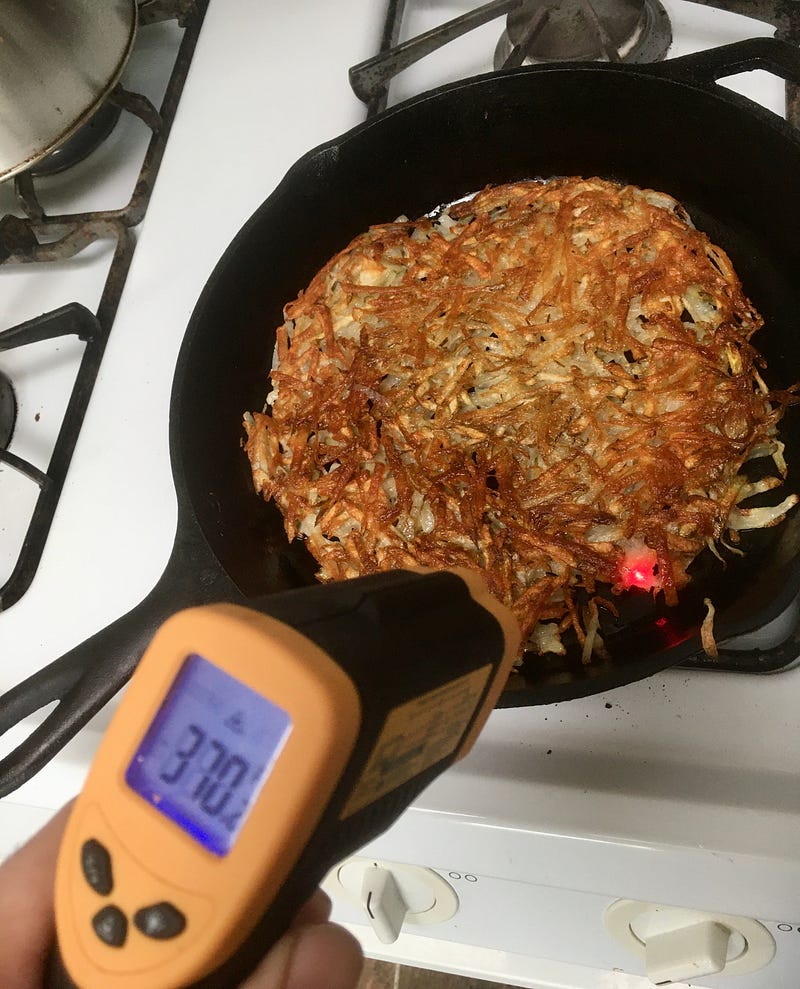
I have been perfecting hash browns, a dish that was simple for me to make in an industrial kitchen on a flat top grill. They MUST be crispy and my home gas range struggles to get a pan hot enough. After some trial and error and a few “hangover style” breakfasts where the hash browns are accompanied with a pair of over-easy eggs, I now have a definitive technique.
- Use russet potatoes. Yellow Finn, Yukon Gold, etc. are not going to be crisp. Leave the scrubbed skin on and grate no more than will cover 1/2" depth in the pan, overloading takes more heat. Also, don’t go all the way to the edges of the pan so the fringe will be extra crispy.
- Cast iron skillet. The Caraway pans do OK, but running them hot is risky to the surface and the oil has to be scrubbed off afterward. The cast iron is a quick wipe and the density of the iron stores heat very well.
- Squeezing the water out of the potatoes might help but this is currently inconclusive since the latest batch was perfect and did not get the squeeze.
- Heat the oil to 450° F minimum, 475° if you can, before putting the spuds in the pan. I have an infrared thermometer inspired by Breaking Bad that is not too expensive on Amazon and has many other uses around the house! This one confirmed the center of the pan was running 50 degrees cooler than where the flame was located, electric burners might be more even. Swirling the oil and moving the pan around helped even out the heat.
- The type of oil is critical. Sunflower oil is good for high heat without smoking or adding flavor. Canola is the worst.
- Using the right amount of oil is trickier than is sounds. It should be a puddle so it does not dry up before the browning is done but not so much the dish becomes soggy with oil.
- Heat up the grated potatoes in the microwave. You need to retain that heat in the pan and a potato from the fridge is going to suck the heat right out. One minute on high should do it. Slide the raw hash into the pan and make it flat but not pressed so the oil can get in through the lattice. Watch, don’t touch.
- Have patience. The edges will look like the browning has finished but don’t fall for it. Rotate the pan 180° every now and then since hardly any stove is perfectly level, and both the heat and oil need to be evenly distributed. Flip and wait again.
- Serve hot with a side of salt, pepper, and Tabasco sauce. If guests won’t come to the table or are busy on their phones just grab and go. Snoozers are losers.
Bon appétit!


