
How to Make a More Beautiful Memory
Don’t record it.
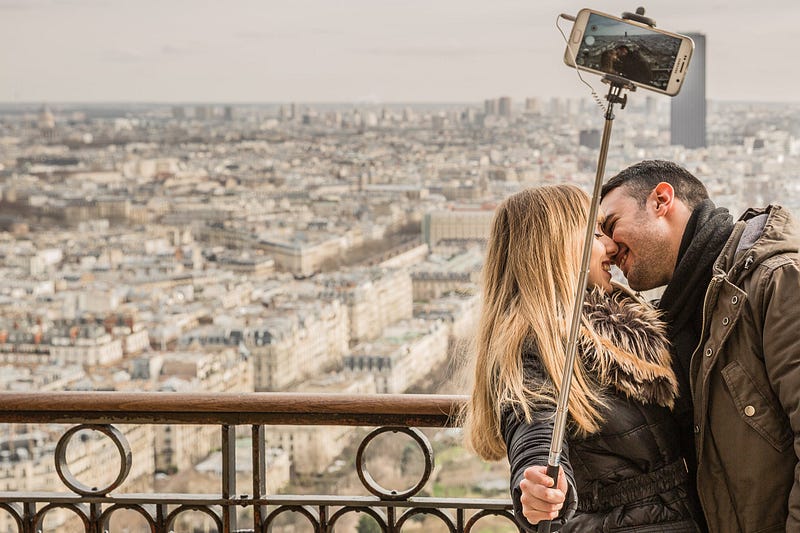
I am so glad that I have not recorded the most beautiful moments of my life. I have found that my brain is the best place to keep these memories. On the other hand, I am grateful that I have recorded the smaller events. Otherwise, they’d be gone forever. Now I have all of my memories saved in their most beautiful form possible.
I’ve found the perfect balance.
This balance of recording vs. experiencing is critical to the preservation and beauty of all memories, big and small.
Adele said it best from the stage during her concert to a lady recording her:
“Can you stop filming me with a video camera because I’m really here in real life. You can enjoy it in real life, rather than through your camera. Can you take your tripod down? This isn’t a DVD. This is a real show. I’d really like you to enjoy my show because there are lots of people outside that couldn’t come in.”
Her frustration with over-recording instead of just experiencing something is legitimate. She knows that recording something often takes away from truly experiencing it. It robs your brain of the opportunity to create the best memory it can.
Sometimes we need to stop recording and just experience beauty when it happens around us.
Our brains have always done better than our phones in capturing these most beautiful events.
This concept applies mostly to our experiences with people. When you are in nature there’s enough beauty there for experience and recording.
The big beauty with others should belong to our minds. The little beauty, to our devices.
Science backs up this concept.
When we spend too much time taking photos, it means we are not making memories, NPR reports.
“I think that the problem is that people are giving away being in the moment,” Maryanne Garry, a psychology professor at the Victoria University of Wellington in New Zealand
She conducted an experiment in an art museum where she had some students observe some objects while others photographed the objects. Then they were given a memory test.
Henkel found what she called a “photo-taking impairment effect.”
“The objects that they had taken photos of — they actually remembered fewer of them and remembered fewer details about those objects. Like, how was this statue’s hands positioned, or what was this statue wearing on its head? They remembered fewer of the details if they took photos of them, rather than if they had just looked at them,” she says.
So we create fewer memories of something when we record it. This is not a good thing for those events that could become our most beautiful memories.
When we are in a situation where lasting memories will definitely be created such as births, special events, love, proposals, deaths, first kisses, or any other life event or “first” for us that will be retained for sure in our brain, we should let them be created as our brain intends — without interruption from a device.
As a personal example, remembering my son being born and looking at me for the first time is so much more valuable as a memory to me than if we had a video of the whole thing. But I just watched a video of him building a snowman when he was 1. I am so thankful we recorded that because my mind didn’t.
It is a fine balancing act.
But once you’ve learned to accomplish it successfully, your memories of all of your life experiences will be balanced and retained in their most beautiful form.
While the Internet and smartphones may seem like the greatest inventions of our generation, the truth is there is nothing more precious than a strong and healthy brain rooted in an ability to make and retain memories. -Dr. Patricia Fitzgerald.
Today when I feel something of beauty is happening in my life, my phone goes away so it can’t possibly cripple the formation of a great memory.
But I pull that phone back out for the normal good stuff.
I couldn’t be happier with the beautiful results — both in my brain and on my phone.
“If you do not enjoy a moment, you lose it forever. If you enjoy it, it is yours forever.”― Debasish Mridha


