avatarCasey Botticello

Free AI web copilot to create summaries, insights and extended knowledge, download it at here

5189

Abstract

Casey Botticello</a> of <a href="https://passioneconomyguide.com/">Passion Economy Guide</a></figcaption></figure><h1 id="2ce3">Key Direct Factor #1— Text Match Relevance</h1><h2 id="a991">Optimize your Amazon listing title.</h2><p id="697c">Your listing’s title is the most valuable real estate on your Amazon product listing.</p><p id="0fd6">Your product title is the part of your listing that will have the greatest impact (both positive and negative) on product performance in search.</p><p id="d135">Per Amazon suggested best practices, your title should contain elements such as:</p><ul><li>Brand</li><li>Product line</li><li>Material or key feature</li><li>Product type</li><li>Color</li><li>Size</li><li>Packaging/Quantity</li></ul><p id="9019">The secret to an effective title is how you order these elements, along with one other major ranking factor: additional target keywords.</p><p id="c2b8">In my experience, keyword order and keyword choice can dramatically influence Amazon product sales and rank.</p><p id="63d8">Titles in organic results typically have between <b>115–144 characters </b>depending on the product/category. Titles in right rail ads have around <b>30–33 characters</b> and mobile titles have between <b>55–63 characters</b>.</p><p id="04d0">It is critical to place the most relevant keywords first.</p><p id="8240">From a practical standpoint, you want to make sure every customer, regardless of search result location, knows exactly what we’re selling. In my experience, the algorithm correlates higher relevance with keywords that appear earlier in the title.</p><p id="1e15">You’ll want to make sure the title reads naturally, yet contains all of the essential elements of the product along with target keywords.</p><p id="cf28">The listing bullets are an opportunity to present the features and benefits of your product.</p><p id="7c05">For example, titanium lining is a feature and the feeling of power and increased strength are benefits.</p><p id="e54a">Also, just like the title, words used in the bullets will be indexed by the Amazon A9 algorithm and used to help identify your product when customers use the search bar.</p><h1 id="78dc">Key Direct Factor #2 — Price</h1><p id="7b90">Depending on your writing genre, you may find that you get more traction with Kindle Unlimited subscribers. For example, romance readers tend to read more eBooks per month than readers of other genres.</p><p id="68fa">Knowing your target reader is a good starting point in deciding whether you enroll your eBooks in KU or not.</p><p id="c6ab">If you decide not to join KDP Select and therefore forego the enrollment of your eBooks in KU, then it is a matter of pricing your eBooks competitively to sell more books at 70% royalty. Take a look at eBooks, and even print books, in your genre and price accordingly.</p><p id="d350">As a general rule, the sweet spot to set the retail pricing for eBooks is between <b>2.99 and 5.99</b>.</p><h1 id="5fab">Key Direct Factor #3 —Availability</h1><p id="aa1d">This is a major factor with <i>most </i>products on Amazon, but is not an issue with Amazon eBooks since digital distribution is taken care of automatically by amazon.</p><h1 id="0928">Key Direct Factor #4— Sales Velocity</h1><p id="4b4e">Increasing sales velocity is the most effective way to rank higher on Amazon’s SERPs.</p><p id="acd5">Sales velocity is relative to your competition for the same search term (i.e., recent [weighted] vs. lifetime sales velocity). It is also a measure of conversion.</p><h2 id="83ec">How to Enhance Your Sales Velocity</h2><p id="9fd0">Advertising is the most powerful lever that can increase your sales.</p><p id="432d">There are various types of paid placements on Amazon including:</p><ul><li>Headline Search Ads.</li><li>Product Display Ads.</li><li>Sponsored Products.</li></ul><p id="f479"><b>Headline Search Ads</b> are the banner ads that you see at the top of a SERP and in product displays.</p><p id="fcfa"><b>Product Display Ads </b>are those ads which show up in a number of places but you most commonly see them on the product detail page, right beneath the buy box.</p><p id="9769"><b>Sponsored Products</b> placements can be considered the most powerful of the three advertising options. A large portion of advertising revenue comes through Sponsored Products.</p><h2 id="b39b">Producing Premium Content</h2><p id="834d">Half the battle when selling on Amazon is getting people to find your products and using advertising to drive them back to your product detail page.</p><p id="b9fe">Like any other marketing initiative, the goal is to maximize the rate at which those buyers convert. If you get a hundred people to your page, not all of them are going to purchase.</p><p id="27b6">To mimic the experience of a shopper purchasing a product in a brick-and-mortar store through the two-dimensional medium of a screen, you have to use a combination of your:</p><ul><li>Images.</li><li>Reviews.</li><li>Coupons/promotions/discounts.</li><li>Written content.</li><li>High-quality images.</li></ul><p id="c698">Pushing premium content<b> </b>can positively impact sales velocity. According to Amazon, this resul

Options

ts in over a 5 percent increase in sales due to increased traffic and conversion.</p><p id="bc35"><a href="https://sellercentral.amazon.com/gp/help/external/help.html?itemID=202102950&amp;language=en_US&amp;ref=efph_202102950_relt_10521"><b>Enhanced Brand Content</b></a> exists for those that are using Seller Central while <b>A+ Content </b>is for sellers using <b>Vendor Central. </b>Both basically mean the same thing.</p><p id="4b8a">You need to provide additional, high-quality image content on a detail page that gives buyers a better understanding of what they’re buying to give them more confidence that they’re actually getting the product they were hoping for.</p><p id="066a">Products and brands which are utilizing these types of content see a decrease in the number of returns and customer complaints because their expectations are set accordingly.</p><p id="9de0">You’re actually writing that content for two types of audiences on Amazon:</p><ul><li>The machine — Amazon’s A9 algorithm. Amazon is indexing and using your content for text match relevancy against a keyword query that customers are putting in the search bar.</li><li>Actual human shoppers who make it to your detailed page.</li></ul><p id="f946"><a href="undefined">Casey Botticello</a></p><p id="9c90"><i>Thanks for reading this article! Leave a comment below if you have any questions, and if you want to learn more about blogging, content marketing, or subscription newsletter strategy, be sure to sign up for the <a href="https://bloggingguide.substack.com"><b>Blogging Guide Newsletter</b></a>!</i></p><div id="6c7e" class="link-block"> <a href="https://bloggingguide.substack.com"> <div> <div> <h2>Blogging Guide</h2> <div><h3>Learn how to make money writing online and navigate the digital publishing landscape! ✔️ Medium ✔️ Substack ✔️ Amazon…</h3></div> <div><p>bloggingguide.substack.com</p></div> </div> <div> <div style="background-image: url(https://miro.readmedium.com/v2/resize:fit:320/0*AAcjK3UII8QUo4u9)"></div> </div> </div> </a> </div><h2 id="f68a">If you liked this article, here are some other articles you may enjoy:</h2><div id="10d0" class="link-block"> <a href="https://bloggingguide.com/best-niches-for-affiliate-marketing/"> <div> <div> <h2>Best Niches for Affiliate Marketing - Blogging Guide</h2> <div><h3>Looking for a list of the best niches for affiliate marketing? Read our guide covering low competition niches for…</h3></div> <div><p>bloggingguide.com</p></div> </div> <div> <div style="background-image: url(https://miro.readmedium.com/v2/resize:fit:320/0*57cvZ6C5x0ZcIYvj)"></div> </div> </div> </a> </div><div id="1651" class="link-block"> <a href="https://bloggingguide.com/100-blogging-tips-for-new-bloggers/"> <div> <div> <h2>100+ Blogging Tips for New Bloggers — Blogging Guide</h2> <div><h3>Blogging tips designed to help new bloggers create, market ,and monetize their blog content. </h3></div> <div><p>bloggingguide.com</p></div> </div> <div> <div style="background-image: url(https://miro.readmedium.com/v2/resize:fit:320/0*GIPbiWvlkUmPUKoZ)"></div> </div> </div> </a> </div><figure id="735a"><img src="https://cdn-images-1.readmedium.com/v2/resize:fit:800/0*jxGUDN_JEbAGoOsa.png"><figcaption></figcaption></figure><p id="1c21"><a href="http://www.caseybotticello.com"><b>Casey Botticello</b></a> is an internet entrepreneur and the founder of <a href="https://bloggingguide.com"><b>Blogging Guide</b></a>, an online community of writers with an<b> <a href="https://bloggingguide.substack.com">award-winning newsletter</a></b>. He is also the creator of the popular <a href="https://gumroad.com/l/medium-course"><b>Medium Writing Course</b></a><b> and the <a href="https://bloggingguide.gumroad.com/l/substack-course">Substack Newsletter Course</a>.</b></p><p id="2a73">Casey previously worked at several tech startups, a lobbying & strategic communications firm, and has created several businesses of his own. He is a graduate of The University of Pennsylvania, where he received his B.A. in Urban Studies.</p><blockquote id="547a"><p><i>You can connect with him on <a href="https://www.linkedin.com/in/caseybotticello/"><b>LinkedIn</b></a>, <a href="https://twitter.com/blogging__guide"><b>Twitter</b></a>, <a href="https://www.facebook.com/groups/mediumwriting"><b>Facebook</b></a>, follow his Medium publications, <a href="https://medium.com/digital-marketing-lab"><b>Digital Marketing Lab</b></a><b> </b>and <a href="https://medium.com/blogging-guide"><b>Medium Blogging Guide</b></a><b>, </b>or reach out to him directly on his<b> <a href="http://www.caseybotticello.com">personal website</a>.</b></i></p></blockquote></article></body>

How to Make $158,404 in Passive Income Writing Books for Amazon KDP

Mastering A9 — Amazon’s organic product ranking algorithm

Source: Casey Botticello of Blog Banner

I’ve written before about how you can make passive income using Amazon’s Kindle Direct Program (KDP).

Since publishing this article, I’ve received a lot of requests for a follow up article, explaining some of the strategies I’ve utilized to improve eBook sales.

My biggest piece of advice is to take the time to understand how amazon’s internal search engine works. Half of the battle of selling on Amazon is making sure your products get found.

“My biggest piece of advice is to take the time to understand how amazon’s internal search engine works. Half of the battle of selling on Amazon is making sure your products get found.”

According to Amazon’s own data:

  • 70 percent of Amazon customers never click past the first page of search results.
  • 35 percent of Amazon shoppers click on the first product featured on a search page.
  • The first three items displayed in search results account for 64 percent of clicks.
  • 81 percent of clicks are on brands on the first page of search results.

Although quality writing is still important, Amazon is a crowded marketplace. It is essential to stand out from the crowd.

As someone who ghost-wrote books and designed targeted marketing campaigns for these same books, this strategy became clear quickly.

If mastered, I would argue that you can sell virtually any eBook on Amazon.

Below is a screenshot from my Amazon KDP Earnings Dashboard:
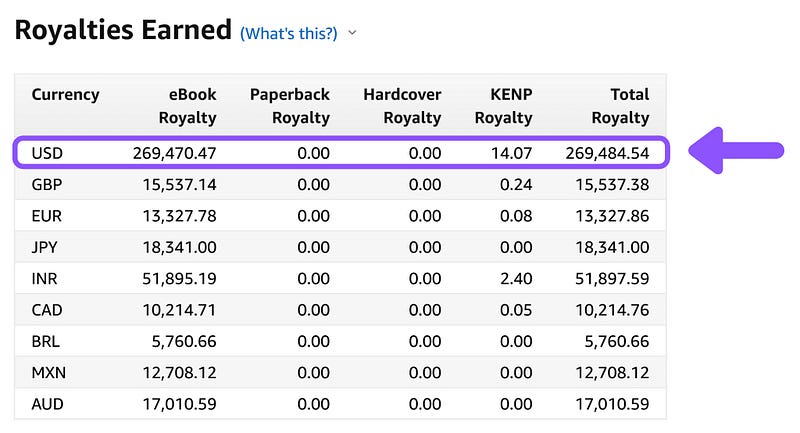
Source: Passion Economy Guide

Amazon’s A9

A9 is Amazon’s organic product ranking algorithm that is composed of direct and indirect factors used to match users’ search queries to products they are most likely to purchase.

Understanding how the A9 algorithm works and what it takes to show up on the first page of Amazon’s search engine results pages is really important in terms of driving incremental sales for your business and for launching new products.

Here are a few key factors that will help you improve your eBook sales through Amazon’s A9 algorithm:

  • Amazon defines relevancy as what people purchase after conducting a search. Therefore, weight is given to purchase behavior (i.e., conversions and sales velocity).

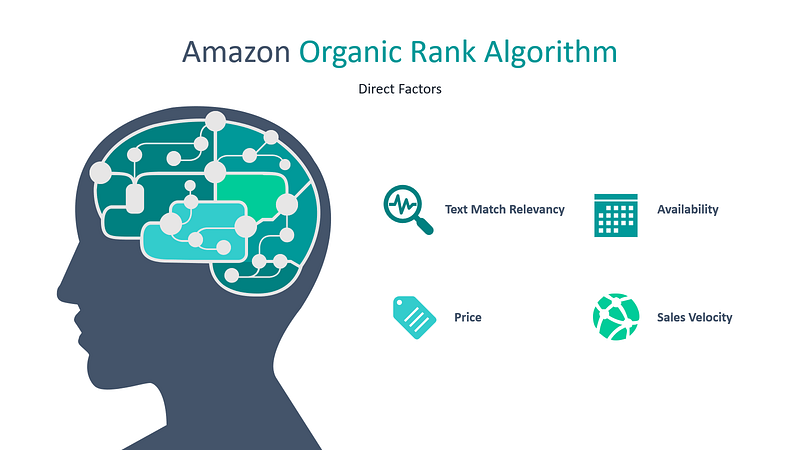
Direct Factors That Influence Amazon’s Search Algorithm

Amazon, in its Seller Central help resource, identified the factors that make product listings optimized for search.

Customers must be able to find your products before they can buy them, and searching is the primary way they can do that. Customers search by entering keywords, which are matched against the information (title, description, and so on) that you provide for a product. Factors such as degree of text match, price, availability, selection, and sales history help determine where your product appears in a customer’s search results. By providing relevant and complete information for your product, you can increase your product’s visibility and sales.

For all products on Amazon, there are four main factors that influence their ranking in the search algorithm:

  • Text Match Relevancy
  • Availability
  • Price
  • Sales Velocity
Source: Casey Botticello of Passion Economy Guide

Key Direct Factor #1— Text Match Relevance

Optimize your Amazon listing title.

Your listing’s title is the most valuable real estate on your Amazon product listing.

Your product title is the part of your listing that will have the greatest impact (both positive and negative) on product performance in search.

Per Amazon suggested best practices, your title should contain elements such as:

  • Brand
  • Product line
  • Material or key feature
  • Product type
  • Color
  • Size
  • Packaging/Quantity

The secret to an effective title is how you order these elements, along with one other major ranking factor: additional target keywords.

In my experience, keyword order and keyword choice can dramatically influence Amazon product sales and rank.

Titles in organic results typically have between 115–144 characters depending on the product/category. Titles in right rail ads have around 30–33 characters and mobile titles have between 55–63 characters.

It is critical to place the most relevant keywords first.

From a practical standpoint, you want to make sure every customer, regardless of search result location, knows exactly what we’re selling. In my experience, the algorithm correlates higher relevance with keywords that appear earlier in the title.

You’ll want to make sure the title reads naturally, yet contains all of the essential elements of the product along with target keywords.

The listing bullets are an opportunity to present the features and benefits of your product.

For example, titanium lining is a feature and the feeling of power and increased strength are benefits.

Also, just like the title, words used in the bullets will be indexed by the Amazon A9 algorithm and used to help identify your product when customers use the search bar.

Key Direct Factor #2 — Price

Depending on your writing genre, you may find that you get more traction with Kindle Unlimited subscribers. For example, romance readers tend to read more eBooks per month than readers of other genres.

Knowing your target reader is a good starting point in deciding whether you enroll your eBooks in KU or not.

If you decide not to join KDP Select and therefore forego the enrollment of your eBooks in KU, then it is a matter of pricing your eBooks competitively to sell more books at 70% royalty. Take a look at eBooks, and even print books, in your genre and price accordingly.

As a general rule, the sweet spot to set the retail pricing for eBooks is between $2.99 and $5.99.

Key Direct Factor #3 —Availability

This is a major factor with most products on Amazon, but is not an issue with Amazon eBooks since digital distribution is taken care of automatically by amazon.

Key Direct Factor #4— Sales Velocity

Increasing sales velocity is the most effective way to rank higher on Amazon’s SERPs.

Sales velocity is relative to your competition for the same search term (i.e., recent [weighted] vs. lifetime sales velocity). It is also a measure of conversion.

How to Enhance Your Sales Velocity

Advertising is the most powerful lever that can increase your sales.

There are various types of paid placements on Amazon including:

  • Headline Search Ads.
  • Product Display Ads.
  • Sponsored Products.

Headline Search Ads are the banner ads that you see at the top of a SERP and in product displays.

Product Display Ads are those ads which show up in a number of places but you most commonly see them on the product detail page, right beneath the buy box.

Sponsored Products placements can be considered the most powerful of the three advertising options. A large portion of advertising revenue comes through Sponsored Products.

Producing Premium Content

Half the battle when selling on Amazon is getting people to find your products and using advertising to drive them back to your product detail page.

Like any other marketing initiative, the goal is to maximize the rate at which those buyers convert. If you get a hundred people to your page, not all of them are going to purchase.

To mimic the experience of a shopper purchasing a product in a brick-and-mortar store through the two-dimensional medium of a screen, you have to use a combination of your:

  • Images.
  • Reviews.
  • Coupons/promotions/discounts.
  • Written content.
  • High-quality images.

Pushing premium content can positively impact sales velocity. According to Amazon, this results in over a 5 percent increase in sales due to increased traffic and conversion.

Enhanced Brand Content exists for those that are using Seller Central while A+ Content is for sellers using Vendor Central. Both basically mean the same thing.

You need to provide additional, high-quality image content on a detail page that gives buyers a better understanding of what they’re buying to give them more confidence that they’re actually getting the product they were hoping for.

Products and brands which are utilizing these types of content see a decrease in the number of returns and customer complaints because their expectations are set accordingly.

You’re actually writing that content for two types of audiences on Amazon:

  • The machine — Amazon’s A9 algorithm. Amazon is indexing and using your content for text match relevancy against a keyword query that customers are putting in the search bar.
  • Actual human shoppers who make it to your detailed page.

Casey Botticello

Thanks for reading this article! Leave a comment below if you have any questions, and if you want to learn more about blogging, content marketing, or subscription newsletter strategy, be sure to sign up for the Blogging Guide Newsletter!

If you liked this article, here are some other articles you may enjoy:

Casey Botticello is an internet entrepreneur and the founder of Blogging Guide, an online community of writers with an award-winning newsletter. He is also the creator of the popular Medium Writing Course and the Substack Newsletter Course.

Casey previously worked at several tech startups, a lobbying & strategic communications firm, and has created several businesses of his own. He is a graduate of The University of Pennsylvania, where he received his B.A. in Urban Studies.

You can connect with him on LinkedIn, Twitter, Facebook, follow his Medium publications, Digital Marketing Lab and Medium Blogging Guide, or reach out to him directly on his personal website.

Social Media
Writing
Business
Entrepreneurship
Passive Income
Recommended from ReadMedium