
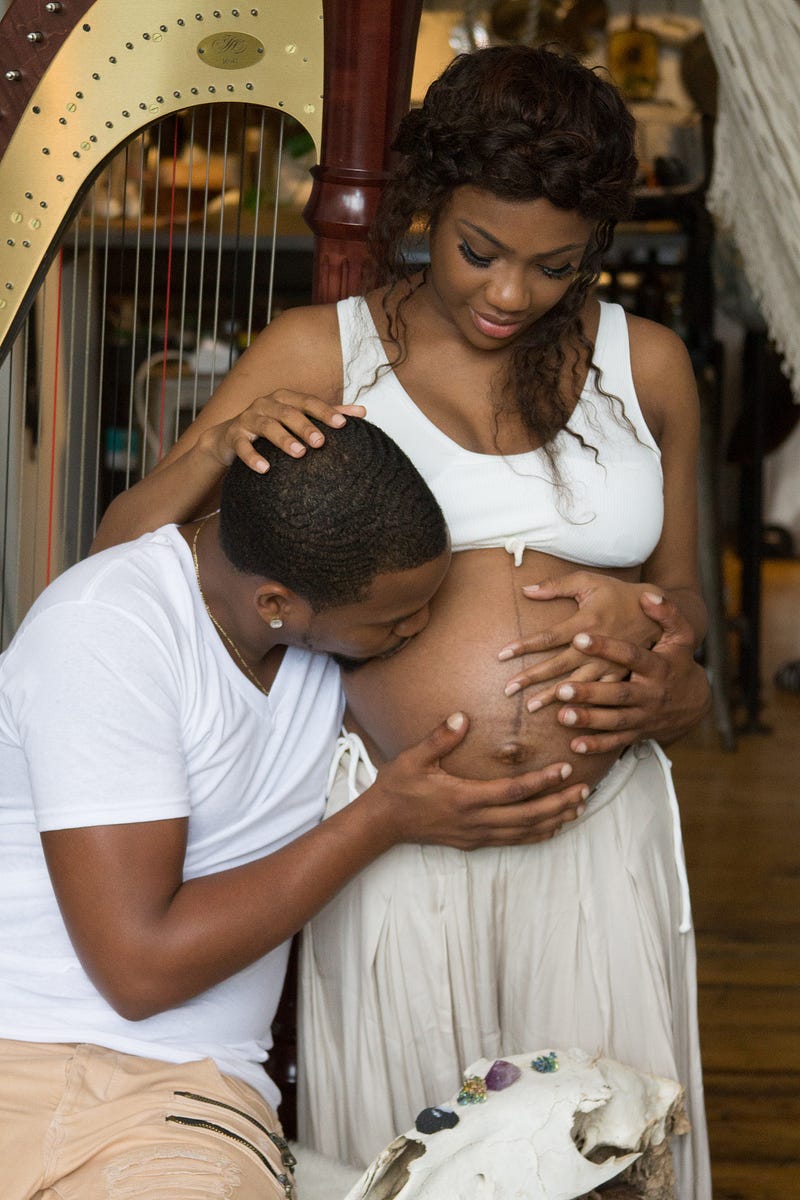
How to NOT Damage Your Child
The Secrets of Attunement for New Parents
For many years, the reasons for my addictive cycles, rituals and processes remained a mystery to me. In the initial stages of recovery therapy, the curtain was peeled back on the proverbial wizard of Oz — me, that is — cowering behind the flamboyant spectacle of substance abuse that had been my life until that point, revealing the reasons behind these often unconscious processes and patterns.
When I read Dr. Gabor Maté’s two seminal works: “Scattered Minds: The Origins and Healing of Attention Deficit Disorder,” and “In the Realm of Hungry Ghosts: Close Encounters with Addiction;” a lot of things about my childhood and adolescence fell into place.
Then, in further reading of Dr. Eric Maisel’s work related to addiction and creativity and using many of his books in my recovery process, I discovered not only how my childhood had impacted my creativity but also how my frustrated creativity had contributed to my addictions. Of his many books, for the sake of this article, I will draw from Maisel’s “Creative Recovery.”
This investigation will draw from the work of both authors and will be divided across three interrelated essays.
In this first one, I will look at the main developmental theories outlined by both Maté and Maisel and how attunement and attachment affect children, and how these processes may or not sow the seeds for future addictions.
For the second essay soon to be published, I will delve into how the effects of negative attunement and attachment observed in childhood play out in adolescence and adulthood, with a focus on risks of addiction.
In the third and last essay of this investigation, I will use my own life as a case study, applying Maté and Maisel’s findings to my own experience of how the risk factors present in my childhood underscored my addictive nature as an adolescent and adult.
Until recent decades, there was a consensus among the international medical communities that predisposition to addiction was genetic. When Maté and other physicians and neuroscientists’ findings surfaced in 2000, they were frowned upon as preposterous by the lay community and media at large, although these findings were no longer undisputed in the field of neuroscience.
In “Scattered Minds,” Maté focuses on the quality of parental attunement and environment in the appearance of Attention Deficit Disorder in children, and how this condition is a major risk factor for future addictions.
Aside from this “controversial” correlation, he outlines how the relationship between the parents themselves shapes the brain development of infants, focusing on the relationship between mother and child.
I can only imagine the outrage of parents at the time in discovering that because of their lack of knowledge and experience, they had altered the brain chemistry of their children and perhaps contributed to instances of ADD and addictive behaviors.
An important disclaimer should be made at this stage: in no way is this article intended to facilitate filial blame of parents: most of our parents knew no better and we can’t blame them for that, so put your loaded index fingers back in their holsters. Where there was outright and intentional abuse, however, that is an altogether different story.
ADDICTION RISK FACTORS IN CHILDHOOD
The Delicate Fabric of Attunement
Maté, who suffers from ADD and an addiction for compulsive purchasing, uses an example from his own life to illustrate just how much the external world affects infants, starting during gestation.
Born to Hungarian parents a mere two months before the Nazi occupation of Hungary, his mother recalled weeping constantly throughout the nine months of pregnancy and expressed the insurmountable guilt she felt over falling into a serious depression following his birth.
His second brother was born while the family was still in Hungary, yet already during a time of peace, optimism and relief.
His third and youngest brother was born not long after the family had emigrated to Canada in 1956 and were struggling financially and culturally to adapt.
Any guess which one of the three has not been treated for attention deficit disorder, anxiety and depression?
That’s right: the middle brother born in peacetime.
Whilst parenting philosophies and styles do to a certain extent bear influence, the single most important aspect for Maté is the invisible environment: the parents’ relationship to each other, their individual emotional balance, and how they interact with the child.
Another key factor influencing the infant’s healthy development within the first three years is a parent’s unconscious attitude towards it: not only what or who the baby represents for the parents; but how they see themselves reflected in the child, and what role the child plays in satisfying their own needs as individuals.

For babies, there is no notion of the world at large: it reveals itself to the baby via the parent and is transmitted by the quality of the parent’s gaze, the tone of voice and their body language.
What is of greater importance, though, and is picked up by the baby is whether the parents are stressed, exhausted and absent minded; or whether they are fully present, on an emotional level, in their interactions with it. This means the baby experiences the parenting, not the parent.
While most parents are aware of just how delicate a stage early infancy is, most are oblivious to just how loaded an issue the quality of their eye contact and their real emotional presence is:
“The right hemisphere of the mother’s brain, the side where our unconscious emotions reside, programs the infant’s right hemisphere [and it] receives messages that are purely emotional […] conveyed by the mother’s gaze, her tone of voice and her body language […]”
Gabor Maté in “Scattered Minds.”
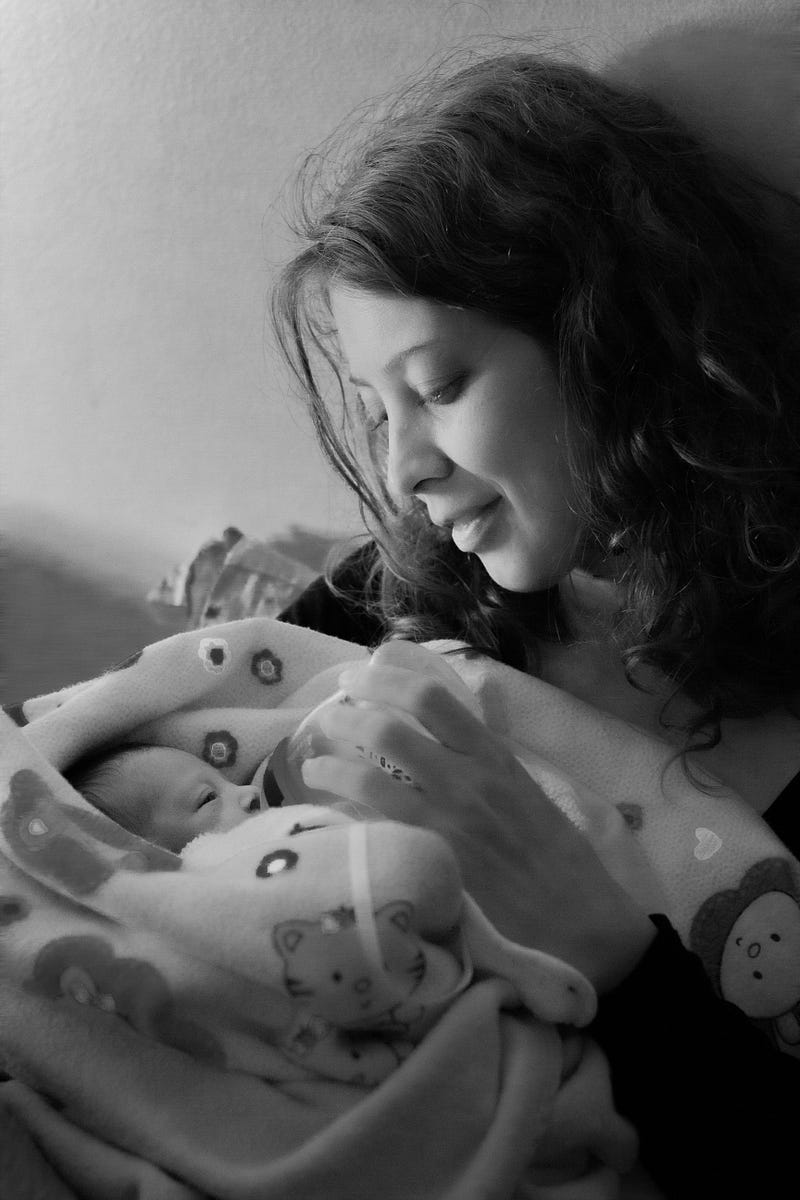
This sharing of emotional spaces is called the attunement process and occurs most strongly between mother and child.
It is one so delicate and so easily prone to negligent interactions that this realization alone has almost made me sigh with relief that I never had children (well; I’m being dramatic, but you get the picture).
The mere existence of emotional stress on the mother’s behalf hampers this attunement. Due to their sensitivity, babies can tell the difference between the parent’s real psychological state and any attempt to soothe it with forced emotional expressions. This means that the parent’s attempt to hide her/his stress or depression from the baby is futile, as the process does not depend on an act of will.
Though not to discredit the father’s role in the infant’s early years, this relationship is biologically wired to be more played out between mother and child, and it is between them that the neurological and synaptic magic occurs.
The child must be allowed to lead such interactions, either establishing the connection or breaking it off (looking away, for example) according to his own rhythms, and it is the mother’s responsibility to read its cues and follow them with appropriate responses.
For example, when the baby breaks the gaze, it is because it feels overstimulated, and if the mother attempts to reengage him, she will not allow it time enough to “cool off.” If this goes on unchecked over time, there is a strong chance the baby will experience problems in the self-regulation of its emotions and impulses. Therefore, this process requires a complete level of emotional and psychological presence on her behalf.
It is fascinating to note that the mere act of a mother gazing into her baby’s eyes is not only the single most important point of contact as it is what triggers the formation of new neural pathways. Forced or deficient interactions have serious consequences for the child.

Maté points out that the lack of presence in the parents’ emotional and psychological availability in infancy is one of the main reasons directly linked to the development of Attention Deficit Disorder in the young child, carrying on into adulthood.
“Infants whose caregivers were too stressed, for whatever reason, to give them the necessary attunement contact will grow up with a chronic tendency to feel alone with their emotions, to have a sense — rightly or wrongly — that no one can share what they feel, that no one can understand. […] The ADD child’s difficulty reading social cues likely originates from her relationship cues not being read by the nurturing adult, who was distracted by stress.”
Gabor Maté “Scattered Minds.”
Maté goes much deeper than this in terms of his in-depth exploration of ADD — the book’s central focus — as a risk factor in adolescent and adult addictions, and readers of this article would do best consulting his book at length for further details.
However fulcral, attunement is only one component of a larger process called attachment. This corresponds to the child’s internalized representations of emotional relationships, based on the quality of interactions with both caregivers.
The need for perceived closeness to another is tantamount to the human condition and extends well beyond childhood into our adult lives, as we transfer our attachment needs from parents to friends, spouses and children.
Eric Maisel reports that developmental psychologists have identified four types of attachment patterns and outcomes.
To Attach or Not to Attach…
1) Secure Attachment Pattern
The first, he outlines, are secure attachments. In these, the parents are fully invested in, and available to the child; they are responsive, tender and attentive to its needs. Again, this is not just about being present, but about how the parents are present and whether their responses are emotionally appropriate.
When the attachment process plays out as intended, the result is that the child experiences the caregiver as a haven from which he may explore the world, and this imbues the child with the healthy notion that its needs may be met through its relationships with people.
Together with the process of emotional attunement described above, secure attachment processes develop the child’s ability to self-regulate arousal, emotion and self-esteem, therefore building a solid foundation of adult resilience. For creative children who eventually develop artistic tendencies, this allows them to do all the creative exploring it is in their heart to do; to be innovative.
2) Avoidant-Dismissive Attachment Pattern
Regarding insecure attachments, there is what is called avoidant-dismissive attachment. Statistics show that of data collected, 30% of children, teens and adults displayed the effects of this style of attachment patterns; but what do avoidant patterns look like in the parent?
For whichever reasons — neglect, exhaustion, depression, single-parenting; in fact, life itself — the parents of children with avoidant attachment are emotionally unavailable or unresponsive to their children. They may ignore — not out of conscious malice — their children’s needs and may be rejecting when the child is hurt or sick, sometimes discouraging crying and promoting the need for independence or to “be strong.”
Jude Cassidy, an attachment researcher and professor of Psychology at the University of Maryland, points out that a result of such frustrated interactions is that children learn that displaying distress often leads to rejection or punishment; that by not crying or expressing their feelings, they can assure at least one of their attachment needs, which is to remain physically close to one of the parents.
Children exposed to this style of parenting disconnect from their bodily needs. Some of them rely on self-soothing, self-nurturing behaviors and maintain the illusion that they can take complete care of themselves, seldom seeking help or support.
They develop defensive strategies, such as never outwardly manifesting a desire for closeness, warmth, affection or love. However, where tests were conducted on different sets of children, the avoidant ones displayed physiological reactions like anxiety just as much as children with secure attachment patterns.
Now, one may risk thinking: “these parents are monsters, how could they do this?”
Well, don’t.
As with most things in life, there are reasons which are not always rooted in pure malice or selfish neglect. Even parents who want the best for their children may often be themselves deficient in the knowledge of how to effectively support others with empathy and compassion, let alone children.
Consider that some mothers, owing to life circumstances, may have less empathy due to high levels of stress. Think, for example, of young and inexperienced mothers, single mothers with economic difficulties, or mothers who were themselves “victims” of insecure attachment patterns.

3) Anxious-Ambivalent Attachment Pattern
This is when parents oscillate between offering security — being responsive, attuned — and at other times being emotionally unavailable, insensitive, unpredictable or distracted. What happens here is that children become mistrustful of their parents, even suspicious; therefore, they develop coping strategies which cause them to be clingy and codependent as a safe way to guarantee closeness and having their needs met.
Studies were conducted on babies with anxious-ambivalent attachment patterns aged 12 to 18 months that show that, after a period of absence, when they were reunited with their mothers, they acted confused or agitated, staring off into space and avoiding eye contact with her. While they remained focused on their mother and, to a degree, clingy, they failed to seem comforted or satisfied. The narrow focus of these children and their limited response prevented any further play or exploratory behavior immediately after.
Sometimes, parents who were themselves “victims” of anxious-ambivalent parenting have difficulty defining to themselves the motives behind their interactions with their children.
It is common, in such instances, that the parents may often mistake actual love and concern for the child’s well being with their own need to be reassured by its affection.
When this occurs —again, often with no conscious malice — they are using the child’s affection and neediness to soothe their own hunger for self-validation. This can cause them to be intrusive in the form of being either over-protective or living vicariously through their child.
4) Disorganized Attachment Pattern
Of all four attachment styles, this is the most extreme one in terms of its negative consequences, and involves psychological, sexual or physical trauma. It occurs when one of the primary caregivers offers both inconsistent emotional support, coupled with recurring abuse.
Maisel outlines ten categories of adverse childhood experiences: parental addiction, separation/divorce, parental mental illness, parental battering, parental criminal behavior, psychological/sexual abuse of the child, emotional neglect and physical neglect.
The statistics are rather alarming. In the Kaiser Permanente-Centers for Disease Control and Prevention, Drs. R.F. Anda and V.J. Felitti conducted a study of over seventeen-thousand middle-class American adults of varying ethnicities in San Diego, California.
33 % of the sample reported no adverse experiences, and the ones that did were divided as such: 26 % reported one instance, 16 % had two, 10% had three and 16 % had four or more.
As a statistical correlation from their study, they inferred that the greater the intensity and number of adverse childhood trauma, the greater the probability of adult drug addiction.
To extrapolate from these numbers, two-thirds of all children are likely to experience at least one, and one in four is likely to experience three or more instances of abuse/neglect.
When these instances do occur, children understand the betrayal of safety, and infer that the formerly beloved parent can become a serious threat to anyone around, especially them. This creates a serious schism in the child who then becomes divided between two pivotal biological drives: the need to attach (love) and the need to survive (separation/fear).

Atone For Misattunement
Maté estimates that parents have “about the first three years to get it right.” While this might seem like a lot of pressure, the fact remains: it should be.
It is not uncommon for life circumstances to “push” parents into having children for the wrong reasons — either because it is expected of them, or to save stale relationships — or at the wrong time in terms of individual emotional stability.
Fortunately, with Maté’s two books referred above, and a wealth of information and comprehensive studies, there is nowadays sufficient information to help both prospective and actual parents along the way. Just don’t wait for it to be recommended to you by your physician or conventional practitioners: use this essay as a springboard and do your own research. Question your readiness.
As a potential parent, really think about the timing in your life, and your own emotional stability as an individual, as well as your emotional availability as a parent before choosing to bring a life into the world.
That said, of course there are unexpected turnarounds — an apparently perfect partner at first may show their true colors and reveal themselves to be less so than perceived; separations do happen. As do wars. As does unexpected unemployment. As does COVID.
Whilst nobody or anything is perfect or permanent, remember that time and forethought have a way of revealing all — don’t wait for hindsight. Don’t rush into having children just because you are in love and it “feels” oh-so-right, right now.
While I benefit in no way nor receive any commission from recommending the following product, I can say that Drs. Dan Siegel and Lisa Firestone’s e-course, “Making Sense of Your Life” helped me understand much about my past.
It offered an insightful, hands-on system for making sense of exactly how my own parents’ attunement and attachment patterns influenced me as an adult, and was paramount in explaining how I might develop more secure attachments, how to integrate and understand my emotions and how to rewrite my childhood narrative so as to make peace with it.
What I mean is: this course worked for me, I merely referred it as an example.
Find what speaks to you.
Research what helps you in your self-exploration, because the moment you become more attuned to yourself, more compassionate with your self, your child will benefit from that too.
Part Two of my investigation will be published on Sunday, November 8th.
If you enjoyed this essay, please click the clap button on the bottom left and hit the follow button to recieve future notifications.