How to Live on the Edge of Chaos
Life is not linear or orderly — and we can’t do anything about it
There once was a time, when your life flowed through a predictable pattern (at least for most people).
You were born.
You usually went to school for a period of time.
If you were lucky, you went to work for a family business — often farming or looking after the house if you were female.
If you weren’t so lucky, you went to work in factories, mines, or other industries.
At some point, you got married, mated, and the system started all over again.
We are living with one foot inside chaos every day of our lives.
For the longest time, humans saw life as a series of systems — predictable, stable, and while they may cross over occasionally, they were mostly discrete. We figured we could put the right things into life, and we would get the right things out of life. It wasn’t any different than the local blacksmith, or down at the factory.
This way of thinking about life and other things as linear systems has persisted, despite not showing us the whole story of life. I heard it when I was younger, and continue to hear it when other people are talking to younger people around me.
“If you get good grades, and then go to College or University, then you can get a good job, buy a house, and settle down.”
Sounds like a great system, doesn’t it?
Except that it doesn’t work like that.
You can go to College or University without getting good grades.
You can rent a house or apartment, you can co-live without being married, or you can choose your own preferred accommodations of almost any type.
Not to mention that the days of a single employer for life are long-gone.
And more and more people are choosing to not settle down, finding satisfaction and happiness in being self partnered, as Emma Watson put it.
Lots of people, particularly those who find themselves on the conservative end of the social and political spectrum, would like to say it’s because the system is broken. They use phrases like “drain the swamp” to make us think that it’s as easy as making removing excess water to make the system work again.
It’s easy to see where they are coming from. The “system” worked for them, so they believe it should work for everyone.
The problem is that a system that works for one person won’t work for another person. In fact, many of our systems have historically required the active oppression of other people.
When we look at life as a system, we miss major parts of how our world works.
We change events and other things from major influences to mere inputs without fully understanding that not only do these events add to the final product, they also influence what it looks like.
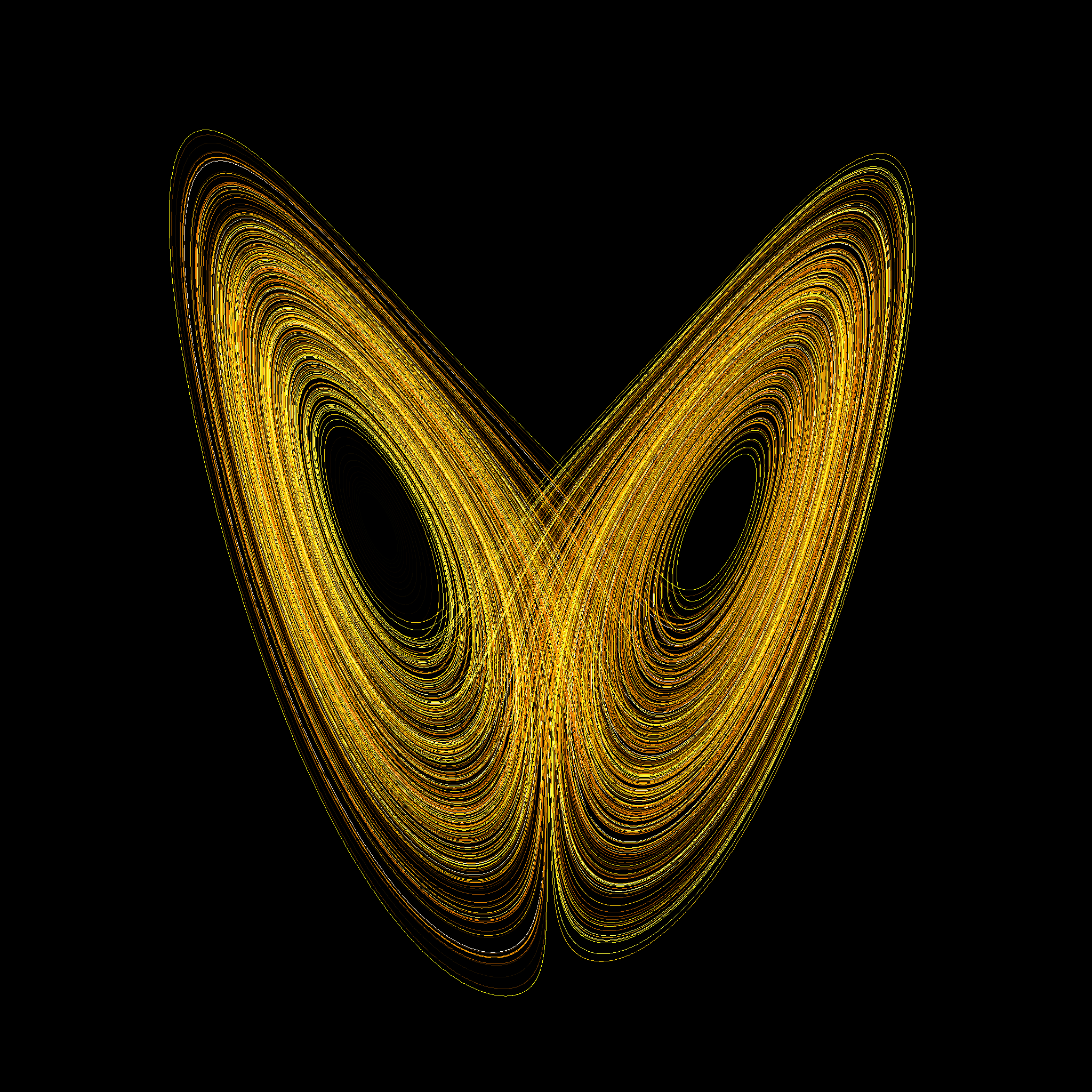
Life is not a single system, it is a system of systems that constantly borders the line between complicated and chaotic. This may sound scary and intimidating at first, but the reality is that this concept is incredibly liberating.
The whole is greater than the sum of its parts. - Aristotle
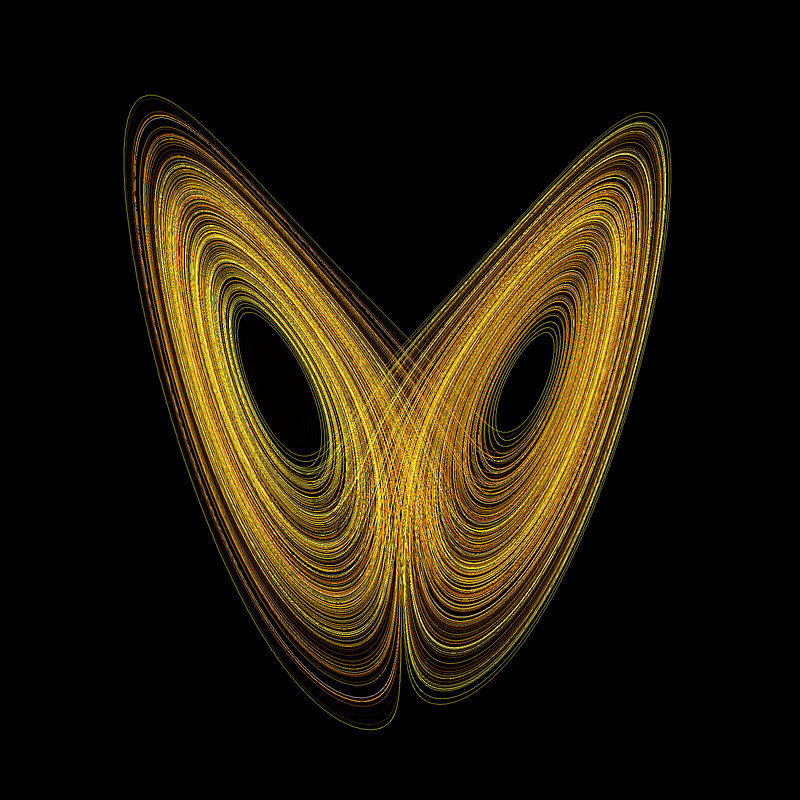
Humans live in a complex system composed of multiple complex systems. Each of these systems not only supports the others, but is also dependent on them for survival. If you take away one of the systems, the others will careen into chaos until they find a new steady state, or balance.
This means weare living with one foot inside chaos every day of our lives.
We have to learn how to live on the edge of chaos without submitting to it.
Recognizing that life is not lived in a systematic way, but is actually lived on the edge of chaos helps us to make sense of why things behave in chaotic ways.
All it takes is a little thing to tip the balance, and things go from complicated to chaotic until a new balancing point is reached.
This a scary thought, and one that many people are unprepared for.
It’s also one that is key to understanding, surviving, and thriving in the 21st century.
It’s scary to think that chaos is only one wrong move away. This means that suddenly, through no fault of their own, someone’s life can change in an instant.
It happens every day.
Ask anyone who works on the front lines of health care or public safety. All it takes is a simple disruption in the balance of the systems around them. It doesn’t have to even be to the balance in their own systems, and life can be irrevocably changed.
When you come of age in a system that rewards you for doing the right things, it becomes much more difficult when chaos intervenes in your life. When the system that you have lived your life by no longer works, what do you do?
This is where much of the generational misunderstandings come from. My parents followed the system (they both have Masters Degrees) and landed good solid jobs that they have stuck with for decades.
It is utterly confounding to my mother that she could have no less than three post-secondary degrees and be making significantly less than I do.
I don’t even have my Bachelors, and I’ll likely make six figures in 2020.
There is a fantastic line from Star Trek: The Next Generation’s episode called Peak Performance that sums up the reality of living with one foot inside chaos.
It is possible to commit no mistakes and still lose. That is not a weakness, that is life. - Jean-Luc Picard
There is also a corollary to this statement
“It is possible to commit every mistake and still win. That is not success (or strength), that is life.”
This doesn’t mean that life is a meaningless system in which people have no control. Instead, it means that people’s control looks less like a conveyor belt that move things in a straight line and more like a series of magnets that influence each other.
We can influence the direction in which we go, but both the path and the waypoints along the way are subject to the whims of the systems in which we live every day.
We aren’t islands in the stream, we’re the stream itself — subject to forces outside our control but still working to make our way to our ultimate destination.
All of a sudden life becomes very different when it becomes the result of interconnected and interdependent systems instead of a rote progression through a linear path.
It also becomes much more interesting when you realize that the whims of another system may send you in entirely unexpected directions.
Truthfully, humans don’t have control over their own destiny. We never have. The most we have been able to do is to influence our paths a little bit in one direction or another.
The destination, death, is a fixed point for all of us.
The key to living life to the fullest is to realize there is no path to begin with, and the most we can do is take the next step.
It may be just another step along the journey.
It may be the last step, and we’ve reached the destination.
It may be the step we’re expecting.
It may not.
That’s what makes life living, and that’s why we need to learn to live in the chaos.