
How to Live A Wholesome Life (According to Carl Jung)
It starts with a question. It ends with an epiphany
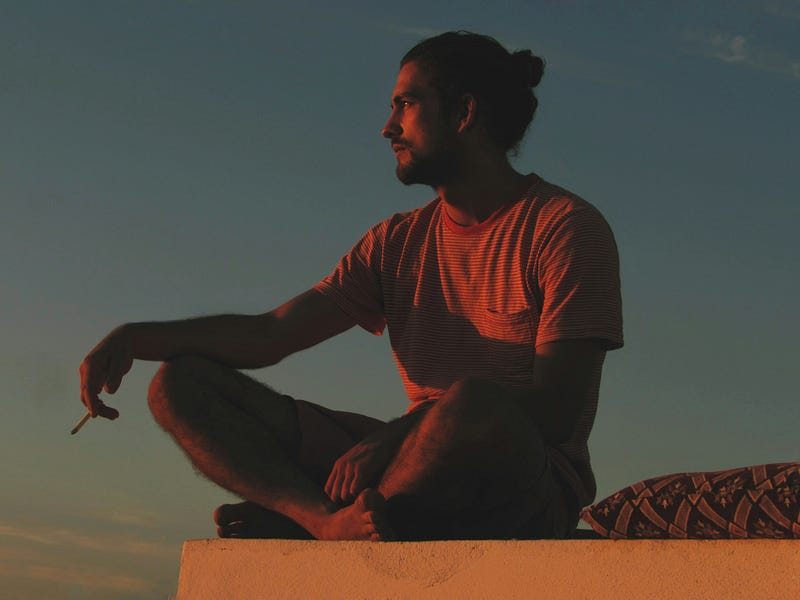
Carl Jung once said, “I’d rather be whole, than good.”
And I agree.
However, this implies that I must accept myself fully and that’s easier said than done.
The saving grace here is that the alternative — suppressing or denying parts of ourselves — is hard to live with. So even though it’s scary and confronting to love all the ugly and dark bits, it gives space for the beautiful and light bits to shine even greater. And that’s worth all the self-doubt that occupies the space between.
“How can I be substantial if I do not cast a shadow?
I must have a dark side also If I am to be whole.”
— Carl Jung
Whole is defined as: in an unbroken or undamaged state.
However, therein lies a problem.
If I think of myself as whole only in an unbroken or undamaged state, I’m going to live my whole life feeling that I’m not. In the past, I have shamed these unwanted parts of myself, tried to hide them away, and even denied their existence.
This caused me to suppress anger, carry body shame, lack confidence, and be afraid to set boundaries and assert myself.
As a result, I lived with anxiety for twenty years and later developed an inflamed gut.
I was acting good but I wasn’t acting whole and that caused a plethora of problems that I’m still trying to unpack today.
Wholesomeness, on the other hand, is defined as: good for one’s health or well-being.
And fortunately, this provides a solution.
Once I learned to accept and love myself more my mental health and well-being increased tenfold. It’s good for one’s health to be more loving, kind, compassionate, and understanding so acknowledging that “I also have a dark side” gives things more space to be seen.
Nothing can stay dark for long if there is sufficient light shining upon it. So over the last 10 years, that has been my mission. Not to convert the dark to light but to embrace the dark as much as the light.
I have worked hard to change the course of my life and although it’s an ongoing journey, there has been some decent progress.
Here are six of the best tools that have helped me along the way.
Daily breathwork
I quickly learned that I could only love myself once I felt loving. It was no good trying to love myself when I felt anxious, fearful, and doubtful because underlying all the effort was a contradictory belief that I am not good enough.
Then I found Soma Breath and have been practising their 20-minute daily routine for 5 years. Every day is different but whatever state I arrive in, I often leave clearer, kinder, and softer. And this allows me to be clearer, kinder, and softer in my days which has had a positive effect on my relationships, work, and mental health.
Meditation
The world is noisy. Meditation makes things quieter. That’s one of the reasons I love it.
It’s not the solution to mental health or healing trauma but I’ve found it just creates space in the mind. And having space in my mind allows me to create a sanctuary within, one that I can return to whenever I need or want to.
Cold Water Immersion
Wim Hof once said, “Cold is a stressor, so if you are able to get into the cold and control your body’s response to it, you will be able to control stress.”
Wholesomeness is both relaxation and stress. However, stress can be overwhelming at times if it takes hold of the mind.
I’ve found having cold showers and submerging myself in cold water helps me stress the body out before it gets stressed. This then prevents stress from occurring down the line when it might otherwise have done so in the past.
Self-Reflection and Contemplation Time
There ain’t no point doing all this work without taking stock and reflecting on what’s working and what’s not. So, I spend time with myself, I look back at past events and try and understand things a little more clearly. This doesn’t always guarantee a better outcome in the future but it does provide valuable insights and those insights generate more compassion.
Get Into My Body
A wholesome life is both mind and body, spirit and matter. When I found myself on a spiritual path it was easy to ignore my body and focus on my mind. But soon I realised I was denying a big part of myself.
So, now I try and get into my body. I jump into cold water, I run, stretch, dance, hike, and go to the gym.
Exercise does many good things on a physical level but it also does many good things on a psychological level too. These benefits help me feel more content and at ease, and more loving and kind.
This adds to my breathwork and meditation practices as well as when I spend time self-reflecting.
Not Take Myself Too Seriously
Doing all this inner work is serious business and it takes a great deal of effort, dedication, and sacrifice. But it’s also silly.
For way too long I took myself seriously and I missed the point completely. As much as there is all this work to be done, all these things to explore, and all these aspects of self to become, there’s also not.
This is the great paradox of life and Carl Jung knew it better than most. That’s why he said:
“The paradox is one of our most valued spiritual possessions.
Only the paradox comes anywhere near to comprehending the fullness of life.” — Carl Jung
Continue reading:


