
How To Lie Without Lying
A Guide To What It Means to Tell A “True Story”
When I was a kid, my entire extended family lived in my house. I was the only child of my mother and father, but I had 5 half-siblings, all much older, all happily under one roof, helping to raise me. Aunts and uncles, cousins, and nephews all around, all the time. When I was 9, my parents got divorced. It was messy, and they still haven’t spoken to one another, 20 years later. None of those people were ever happy in the same room again.
Nostalgia, in the original sense, meant something like homesickness. Now, it seems to denote a sense of fondness for the past. Possibly because we have so much access to relics of the past-video games, TV shows, movies. All can be revisited as if no time has passed.
If I wanted to, I could watch the movies, read the books, and sing the songs I sung back then. Before the fall.
But of course, time has passed. What does it say about us when we can’t seem to get out from under the past?
The Purpose of Memory
What do you think is the reason, in evolutionary terms, we have memories?
People’s intuitions seem to be that we have memories to keep an accurate record of the past. This is wrong.
If you don’t believe me, just look at how unreliable eye-witness reports are, or how badly we tend to remember our own childhoods. (I wonder how much of what I remember about the divorce is wrong.)
Why would this be the case? Wouldn’t it be better for survival if we actually remembered what happened to us?
The purpose of memories is to prepare us for the future. That’s it. They don’t care if the details are right, we simply want to make sure we extracted all the lessons we needed.
That’s why some people will remember an event very differently from another person. They each had different stakes in the situation, different values, different lessons to learn.
In fact, this is the purpose of storytelling. We learn to structure wildly inconsistent and seemingly random events into lessons, satisfying and meaningful stories.
If we are telling stories, what possible relationship to the truth can we have? Are we just liars?
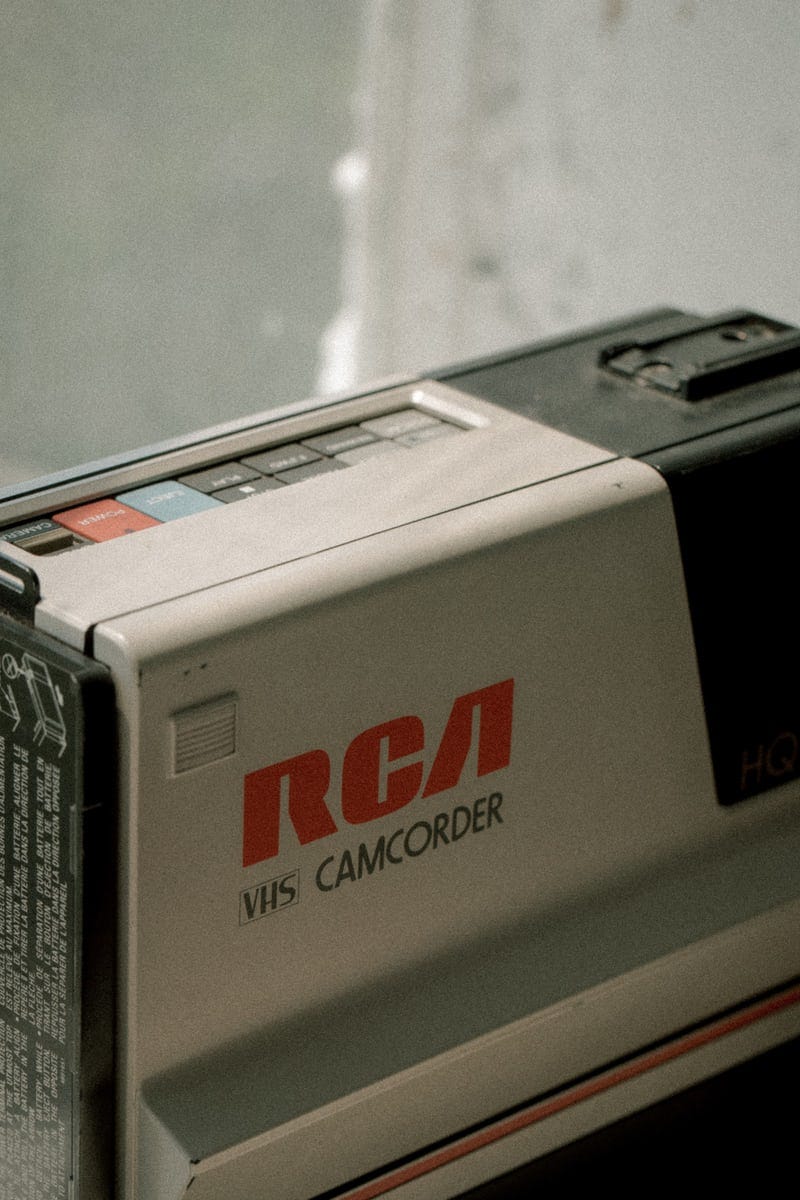
Human Beings Are Not Camcorders
If you are, in fact, a human being, you evolved out of the dirt over millions of years, pulling complexity out of nothing and ramming reality up its own ass.
We are an ape, clawing our way from the mud and given the god-like gift of self-consciousness and language. Who knows how deep this magic trick goes, and those of us who think we are going to flick a switch on a computer and give it the same consciousness as us are deeply naive. Not that I think it’s impossible, but it is certainly more complex than we can imagine. We don’t even know what entire sections of our brains even do.
We do not record reality like Excel spreadsheets, because that’s not how reality works, at its core. And its core is the place from which we sprung! Reality, as we know, is quantum at its base. Human brains are likely interfacing with this level of reality. Unpredictable and reliant on an observer to decide what it wants to be. Huh? Who knows what the hell any of that implies.
The point is, we do not live in a perfectly causal world. And although it seems causal at higher levels; i.e. when a witness to a crime says one thing, then a body-camera shows that something else happened; this doesn’t tell the whole story. This is just a hiccup of an incredibly powerful system.
We are not numbers and figures creatures, we are values creatures. And, despite what number-lovers will tell you, this isn’t a defect. We made this world with a force of energetic will, and we will continue to do so. Let’s stop dissing how “irrational” we are.
“Narrative imagining — story — is the fundamental instrument of thought. Rational capacities depend upon it. It is our chief means of looking into the future, or predicting, of planning, and of explaining.”
— Mark Turner, cognitive scientist, linguist, and author
Still, the question remains: how the hell are we supposed to tell the truth?
The Truth is Deeper Than Facts
The Last Airbender is true.
Mein Kampf is false.
The setting and events of The Last Airbender are clearly fictional, and the setting and events of Mein Kampf are supposedly true. But I still don’t think that you will have trouble with my claims.
I’d say that Hitler knew that he was lying. He was using the energetic power of story to try to bend reality to his will. In fact, this is very much like the behavior of Ozai. They try to use the power of their respective worlds (the word and firebending) to bend reality. It’s the height of arrogance to assume that reality won’t snap back and destroy them, which it does. This is such predictable behavior that it is literally the story of Satan. Human beings have created an archetype and it repeats itself, in life and in fiction, over and over. Subconsciously or consciously, we know what we are doing. That’s why the Nazis wore comically evil colors and symbols. That’s why Trump reportedly had Mein Kampf on his bedside table.
Stories tell truth beyond facts. They also tell lies beyond facts.
To get at the truth then, is beyond the details of actual events. It is a process of alignment with ourselves. It is a leap of faith into the depths of our archetypal and subconscious minds.
Practically, this is therapy, this is honesty with those we love, and it’s living authentically. To those on this path, you know what I mean. It’s a project that’s never finished and never even clearly understood, but it’s incredibly worthwhile.
Once on the path, we have a moral choice to use that power for good or evil.
“You’re never going to kill storytelling, because it’s built in the human plan. We come with it.” — Margaret Atwood, author of The Handmaid’s Tale
The Power Of Nostalgia

Back to the original point.
When we constantly remember the past, when we have nostalgia, our minds are trying to tell us something. The pestering feeling is that there was a lesson to be learned from what happened, and we still haven’t learned it. And like The NeverEnding Story we are stuck there until we learn the damn lesson.
Storytellers understand this on some level. That’s why we have so many remakes of classic movies, like Star Wars. Our collective unconscious is somehow stuck in the past. We have the nagging feeling that we left something unsaid.
Trump is a great storyteller. But he is a liar. He takes that nostalgia and leads us to the wrong lesson for his own benefit. Make America Great Again is a story. A short, powerful story, which has gripped the unconscious mind of our nation.
If someone came along to be when I was 15 and told me that they could take me back to the world before I was 9, before my parents split and everything changed, I would have listened.
Tell The Truth, Don’t Worry About The Facts

The world needs more stories that are true, the way The Last Airbender is true.
The details are entirely unimportant. The important part is going inward to find the power to tell a great story, and choosing truth over lies.
When I help my clients tell their stories, we work on this kind of truth. The truth that heals the past and brings us all the way to the present. When we have unresolved feelings about the past, it is like our soul is stuck there. When it is released into the present moment, it is powerful.
The power of telling our story heals not only ourselves, but the people who hear it and resonate with it as well. Recall the last time you heard a story that rang true to you. How did that make you feel?
“No story lives unless someone wants to listen. The stories we love best do live in us forever. So whether you come back by page or by the big screen, Hogwarts will always be there to welcome you home.” — J.K. Rowling, author
When we tell our story and it comes out wrong, we just know it. There is something in us that we are afraid to face. I was told by a great comedian once, “If you hear a bump in the night, go check it out immediately.” We have to be willing to open every door and go down every staircase, facing any and all monsters that lurk in our minds.
The exciting part of it all is that it’s hard to overstate how much the world is counting on your story.
That’s the art of the truthful lie.
“Fairy tales are more than true: not because they tell us that dragons exist, but because they tell us that dragons can be beaten.” — Neil Gaiman
Originally published at https://www.taylorforeman.com on July 14, 2020.


