avatarNiklas Göke

Summary

The article discusses leveraging the survival instinct in the modern world by using the pause-and-plan response to transform anxiety into better decision-making.

Abstract

The article "How To Leverage Your Survival Instinct In The Modern World" delves into the natural tendency to treat stress as a life-or-death situation, a remnant of our primal survival instinct. It suggests that by recognizing the initial freeze response and consciously taking a deep breath, individuals can activate the pause-and-plan response. This approach allows for a more measured reaction to stress, enabling better decision-making and reducing the impact of anxiety. The author emphasizes that this skill can be practiced and refined, leading to a more thoughtful and less anxious way of life. The article also references experts such as Joe Navarro and Kelly McGonigal to support the concept of using breath as a tool to navigate stressful situations effectively.

Opinions

  • The author posits that our default reaction to stress, even minor, is an evolutionary holdover that can be detrimental in modern life.
  • Joe Navarro's expertise in body language is cited to explain the freeze response as a survival mechanism that allows for situational assessment.
  • Stanford psychologist Kelly McGonigal's concept of the pause-and-plan response is presented as a more adaptive reaction to stress in contemporary settings.
  • The article advocates for the practice of taking a deep breath during moments of anxiety to facilitate better decision-making.
  • Seth Godin's perspective is included, equating anxiety with preemptive experience of failure, which can be mitigated through conscious breathing.
  • The author implies that the act of breathing can help one to overcome fear and make more rational choices, enhancing the quality of life.
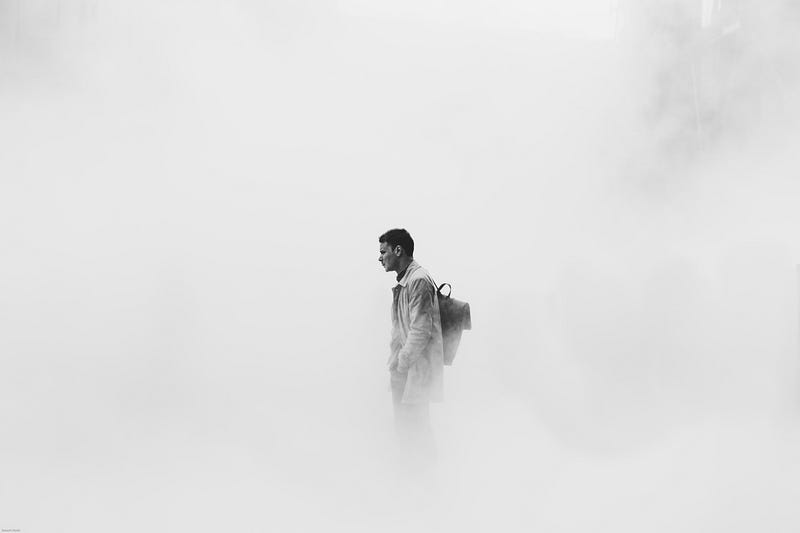
Photo by Brunel Johnson on Unsplash

How To Leverage Your Survival Instinct In The Modern World

When your phone rings and it’s work, your first thought is “what did I do wrong?” Within a split second, your mind races from “I screwed up” to “I’ll be fired” to “I will be homeless” to “I’m going to die.”

We treat even the tiniest of stressors as potential death threats because we always have. It’s the survival instinct that got us here. But today our instant-anxiety-button is ruining our lives. We simulate the worst future we can imagine to then decide whether we take flight or fight.

But there’s something else here. Right when your brain starts processing that it’s your boss’s number on the screen, you freeze. Ex-FBI agent and body language expert Joe Navarro explains:

“One purpose of the freeze response is to avoid detection by dangerous predators or in dangerous situations. A second purpose is to give the threatened individual the opportunity to assess the situation and determine the best course of action to take.”

Stanford psychologist Kelly McGonigal calls this second purpose the pause-and-plan response. It’s a better gut reaction for our modern world. And the best way to trigger it is to do what you always do: breathe.

When the caller ID shows up, our breath is flat. Shallow. Hectic. But it only takes one gulp of air to break the pattern. The big takeaway here is this:

You can leverage your anxiety into making better decisions. All you have to do is pause.

Catch your own freeze response, then shift your attention inward. It’s a skill you can practice. A skill that, according to Seth Godin, comes down to this:

“All anxiety is is experiencing failure in advance.”

Because once you’ve failed, you’ve got nothing left to lose. That’s what the extra breath is for. To let anxiety wash over you, then wash away. That’s real survival. And it’s why every choice you make feels better after a single, deep breath.

Self Improvement
Psychology
Anxiety
Fear
Life
Recommended from ReadMedium