How to Leverage Problems Away
You must learn to stand in the best place

When I pastored, I often was approached by folks with problems. I was a safe harbor, a good listener, a sympathetic ear, and occasionally an answer man. Some of their problems were huge, over-the-top problems that would take years and much more expertise than I had to solve.
Others were much smaller. The answer was clear from the outside, though many people would not accept or act upon my suggested solution.
I am unsure if it was because I was a pastor or a good listener, but many people continued to approach me in this manner. I even had folks who were unfamiliar to me approach, explaining that a mutual acquaintance suggested they needed to talk with me. Random people would stop me in public, at the grocery store, at a concert, or at a sporting event, and pour out their hearts to me.
What? Why?
I am good at this because God has taught me where to stand.
What people need to weather or solve a problem is leverage. You don’t get anywhere if you are buried under your problems. When your problems are too heavy, you need to be extra strong to get any movement toward a solution.
You can solve easy problems by yourself without much help. More significant problems, though, require more leverage.
When people approach me with problems, I must stand in the best spot to apply the best leverage. If I want to teach them to fish, instead of giving them a fish, I need to show them how to stand in their best leverage spot.
Even the hairiest, heaviest problems can be solved by standing in the best leverage spot.
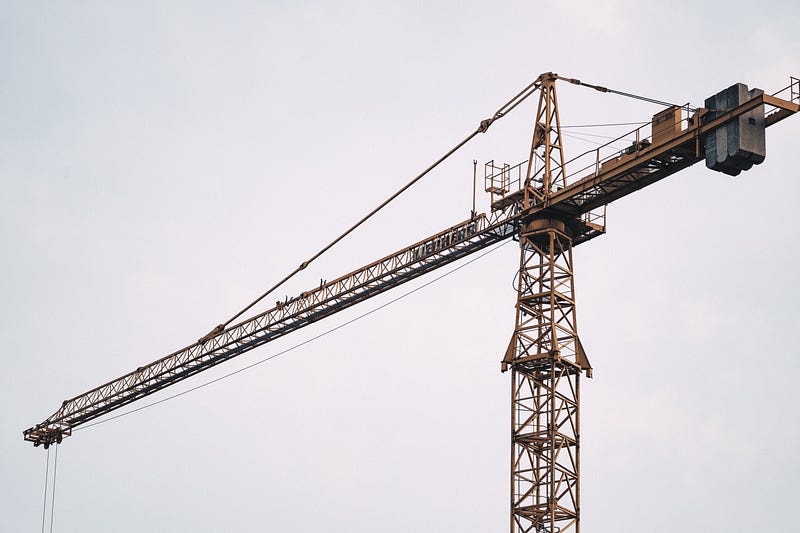
Archimedes, a third-century BCE Greek philosopher and mathematician, noticed that a lever balanced in the correct place, on the correct fulcrum, could move much greater weights than the force applied. He is credited with saying give me a big enough lever, and I can move the earth. The earth, to him, was the biggest thing he knew.
Archimedes, of course, was thinking of the physical world. Using mathematical laws, he is correct. He is also correct in thinking philosophically or spiritually as we address less material and still substantial problems with leverage.
When faced with problems that are shaking or moving our world, we must remember that movement, change, and solutions can be discovered if we stand in the best place of leverage.
If you want to improve your life or continue to live your best life, discovering and standing in your personal best place of leverage is necessary.
While pastoring, I met people whose problems might not have been enormous, at least by usual standards, and yet they were standing in the middle of them. They had no leverage, not because it was too heavy, but because they were standing too close or buried under them. Their perception was off enough that their problems were too heavy. They had no leverage.
We can feel as hopeless as those experiencing problems when we attempt to help them. Instead of offering leverage that can assist, we might wring our hands, commiserate with them, and nothing changes.
We are standing too close. There is no advantage or leverage to our place.
Standing in the best place, we can often help others by throwing our weight behind their efforts. We often do this when such tragedy overwhelms individuals and families.
Tornados, hurricanes, earthquakes, fires, floods, and accidents can cause families and entire communities to suffer. From our vantage point, we leverage what we have to assist them with what they currently don’t have.
Often, that is all they need to return to some sense of normalcy.
I have seen this time after time. Compassionate people seeing suffering want to and do respond with overwhelming generosity. However, sometimes, we are standing too far away. Even as we respond, there are better places to leverage our response.
I have witnessed how an outpouring of compassion has become another problem. Compassionate people who are not standing in the right leveraged place send bottled water, blankets, food, clothes, and other items that become a logistical nightmare because the family or community no longer has the infrastructure to support the volume of supplies.
Toys have been gathered and given to families with children who can’t store them. The real need might be feminine hygiene products or extra funds for an educational program or childcare for a few hours daily.
Standing too far away leads to misunderstanding the problem and what is needed. We might send funds or supplies that are not required and yet pat ourselves on the back because we did a good thing. Such actions only make us feel better without addressing what needs to happen.
Sometimes, we stand so far away that we don’t acknowledge other people’s problems. We ignore the cries of people in need.
An excellent example of both extremes, standing too close and standing too far away, is from my own experience.
I was helping a woman who was struggling to manage her finances. She lived paycheck to paycheck, and when an emergency occurred, which it did about twice a year, she was buried under bills. These were not large bills but ones she could not pay due to her circumstances.
The church I pastored, or I would often swoop in and pay those bills. It was a pittance amount to the church and everything for the woman. Paying her bills, however, was a regular occurrence.
I discovered I had joined her in being too close to the situation. I wasn’t helping her leverage the problem; I was perpetuating it. It began to drain my leverage.
Then, I enlisted another person to help. She was much more versed in this type of social action. She came in and took a step back and a step in. She wasn’t overwhelmed by the problem and asked the woman to be more forthcoming with her financial history.
She stood in the best place.
While having deep conversations with the woman, she discovered the woman had a Life Insurance policy for her son, who had died ten years earlier that she had never claimed.
LEVERAGE!
The influx of funds gave the woman the resources to pay her current bills and a large emergency fund to leverage the problem. The partner I had enlisted to help set up a budget for the woman and encouraged her to make regular check-ins.
Not only was I too close and sucked into the problem, I was also too far away. I was so far removed that I would never have seen the proper solution because I was standing in the wrong place.
To know the best place to stand for the best possible leverage, you need to know the person or people involved. Who are they, and what are their gifts? How do we put those in need who experience problems in the best place to succeed and apply their own leverage?
You need to understand the problem.
When we feel compassion and don’t know what to do about it, our compassion is twisted to manifest as guilt. We don’t like to feel guilty and will do almost anything to make it stop. We hop on the quickest solution, which makes us feel better, without addressing the real problem.
Anxist and guilt lead to people being scammed. People who are amid problems reach for a quick solution and get scammed. People feeling compassionate guilt reach for a quick solution and get scammed.
It is a matter of trust. I have worked with many “experts.” Some even stand too close or far away to leverage the situation. The best are those who have figured out the best place to stand.
To stand in the best place means you need to know yourself. You need to know the source of your power, God, the Universe, your personality, your knowledge, gifts, and blessings.
You need to experiment with your leverage, testing it, stretching it, and failing it. It is a muscle to be trained.
Your best place to stand will be steady, centered, poised, and rooted. To experience that, you have to stand a slight distance from the world.
Allow time to withdraw from business as usual for contemplation. However, you must remain close enough to the world, loving it and feeling its pain and joy as your own. Otherwise, your distance becomes escapism.
Richard Rohr has written, “Unfortunately, many of us don’t have a fixed place to stand, a fulcrum of critical distance, and thus we cannot find our levers or true “delivery systems.” [1] We need to develop our own delivery system in the world to provide the capacity for building bridges and connecting the dots of life.
Richard Rohr again writes,
“Some degree of inner experience is necessary for true spiritual authority, but we need some form of outer validation, too. . . . God offers us quiet, contemplative eyes; God also calls us to prophetic and critical involvement in the pain and sufferings of our world — both at the same time.”
What does it look like to engage with the catastrophic problems that sweep through our world without becoming frenzied or frozen?
We must learn to stand in the best place to leverage the source of your power, God, the Universe, your personality, your knowledge, gifts, and blessings.
[1] Adapted from Richard Rohr, Dancing Standing Still: Healing the World from a Place of Prayer (New York: Paulist Press, 2014), 5–7.