
GARDEN LOVE
How to Keep Your Garden from Eating Your Lunch
Spoiler alert: I don’t have the answer
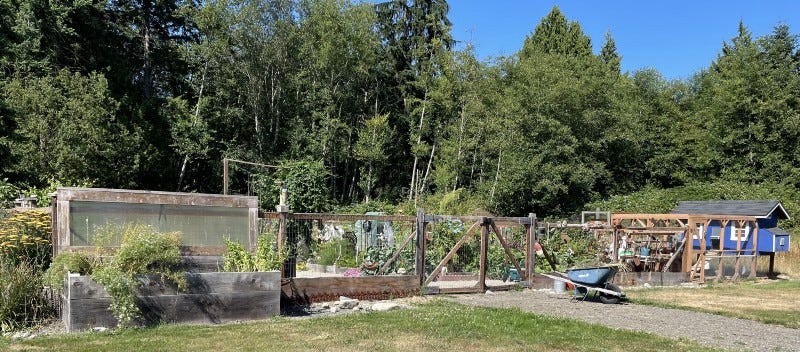
I am obsessed with my garden. It’s the first thing I think about when I awaken and the last thing before I drift off to sleep, when I’ll dream about all the things I didn’t get done today and wondering if my freezer is going to explode in the night from an overabundance of just about everything.
Damn this coronavirus! When it started in February 2020, I freaked out from fear of food scarcity and planted everything I could think of to keep us from starving. Yet we still haven’t eaten all of last year’s pandemic potatoes.
If you’ve been missing me on Medium, my garden gets 100% of the blame for my lack of productivity. You can read about my lame excuse here:
Today I decided that, instead of moaning about the demands that all my bloomin’ greenkids make of me morning, noon, and night, I’ll prepare an explanatory photo essay about my verdant captors, just in case anyone has been looking for me in the last month or two.
All photos were taken by me, earlier today.
Sharing my garden with you, weeds and all
First thing each day, after feeding the dog, a cuppa coffee, and checking Medium stats, I’m out to water the garden, dragging my 150' hose from the impossible-to-reach hose bib behind the rusting barbecue on the back deck of the main house, about 30 paces distant.
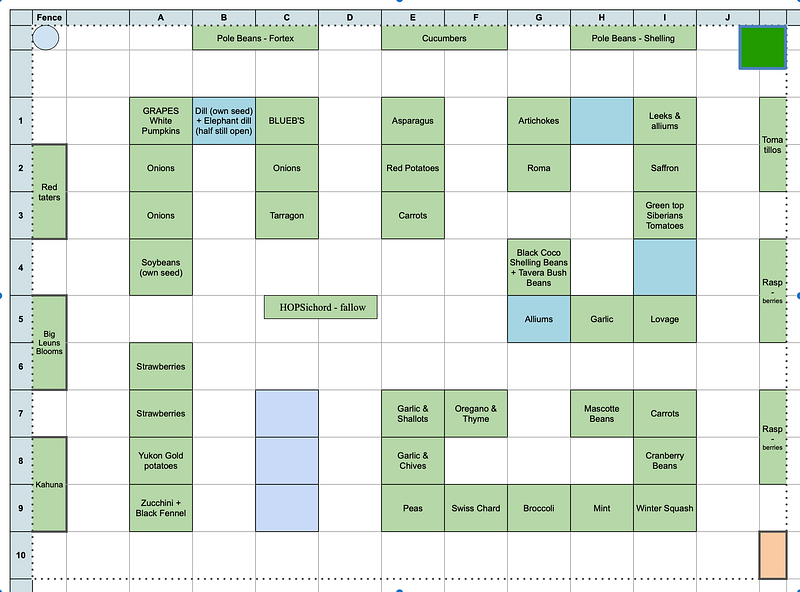
Inside the 50'x50' deer fence is a glorious riot of mostly 4'x4' raised beds—along the fence they’re 1'x8'—filled with a mixture of composted horse manure—cheerfully provided for free by five resident mares— kitchen compost, fish meal, egg shells, vermiculite, and the kitchen sink—arranged in pattern of “rooms and hallways,” for no particular reason I can remember from when I designed the layout years ago.
Including the planting boxes outside the fence, there are 51 total beds to water, weed, feed, trim, pluck, reroute, trellis, or support in some other way.
The basic idea is to have each planting bed accessible from at least two sides for convenient weeding and harvesting, while maximizing the number of beds within the available space. Those three baby-blue boxes in the lower left center of the graphic above haven’t been built yet. After you finish this story, you’ll understand why I’ve been procrastinating.
A friend recently asked me what veggies I’m growing this year. I asked him if he wanted the list alphabetically. “Never mind,” he chuckled.
Artichokes, asparagus, amaranth, Asian raspberries.
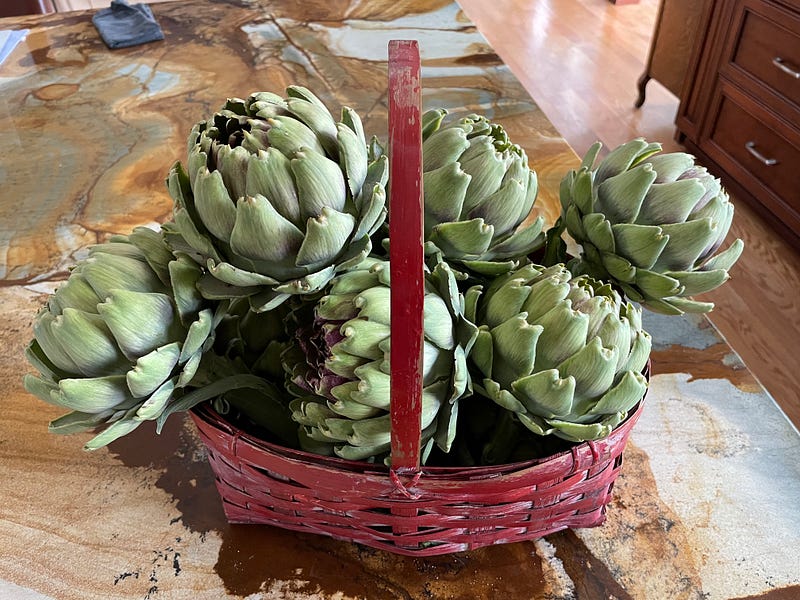
Artichokes and asparagus are very simpatico vegetables that you plant one time and they’re yours forever.
The trouble with artichokes is that they all come at once. This year I learned how to preserve the hearts in vinegar and oil for winter salads. And I learned that this is not a job for tender fingers. I’m still bleeding from those hateful thorns.
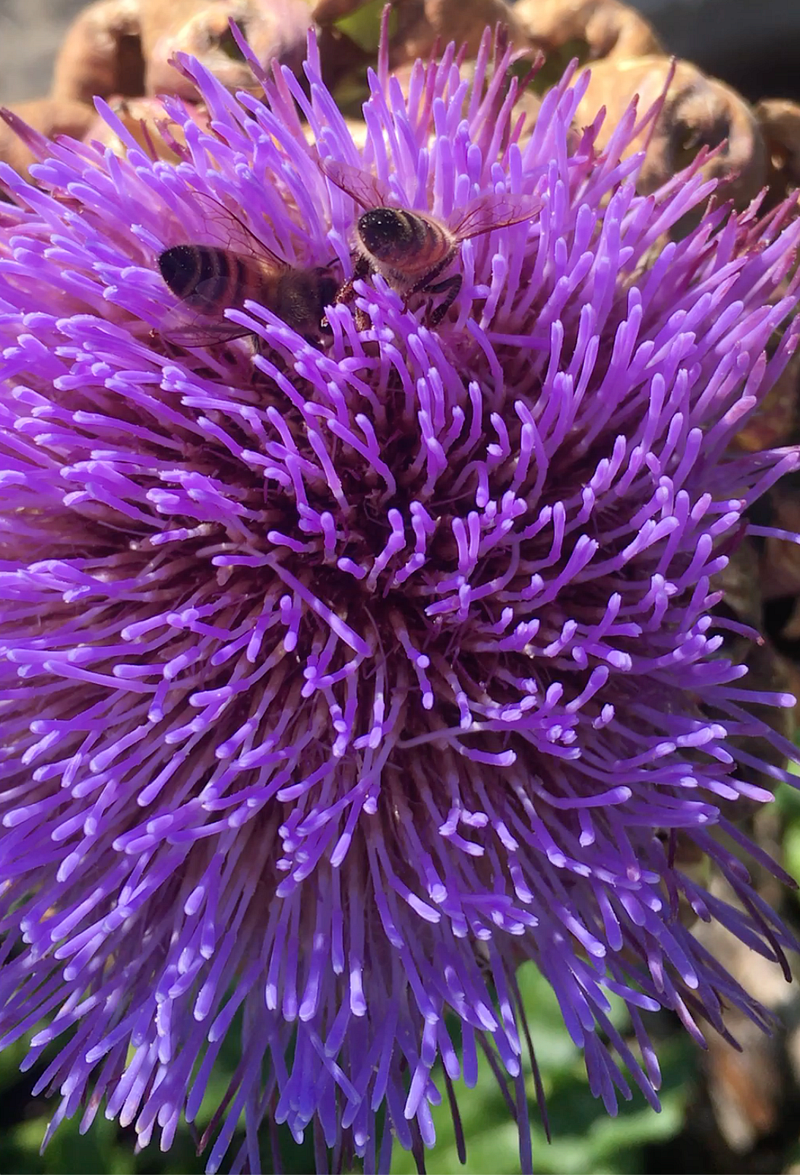
After an emergency transfusion, I decided to let the bees have the rest of them.
When artichokes are left alone to fully express themselves, the transformation is miraculous. Honeybees go crazy for these gorgeous flowers.
The two drunken divers to the left didn’t even notice me sneaking up on them for a close-up.
And now that my fingers are finally healing, it’s time for picking raspberries. More on that story later…
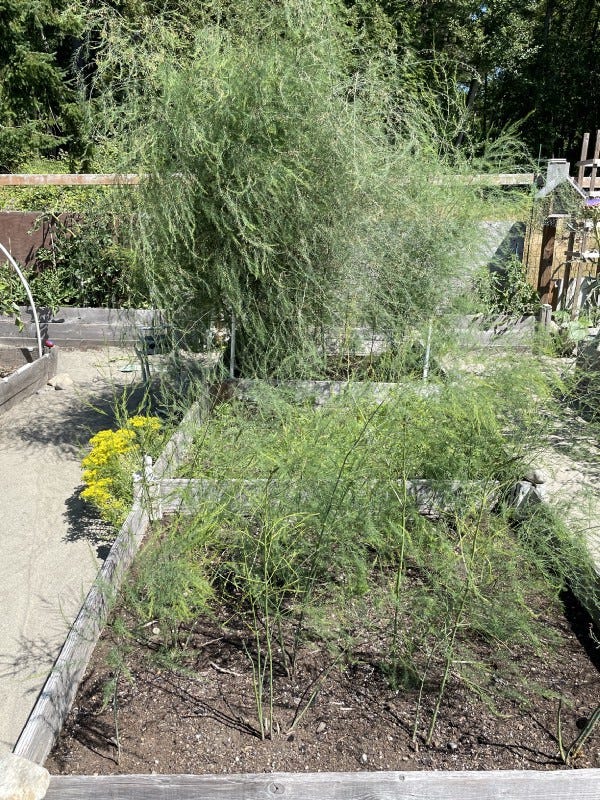
Meanwhile, several years ago I planted four asparagus roots in a single 4x4 bed at the back of the garden, knowing the asparagus ferns would be tall and full and shade everything behind them.
This year I added a bed of a neighbor’s discarded asparagus plants, who said her hubby just didn’t like it all that much. I can’t imagine living with someone who didn’t love asparagus.
Now, spring harvest completed, when I dare to walk by them, leafy softness leans into the pathway, caressing me, brushing my hair, and laughing because they know they won’t be disturbed until next May.
Oh, the quiches, the salads, the roasted and steamed deliciousness. I’ll never have too much asparagus.
The yellow blooming sedum alongside their beds on the left is another stunning volunteer, hard at work feeding bumblebees.
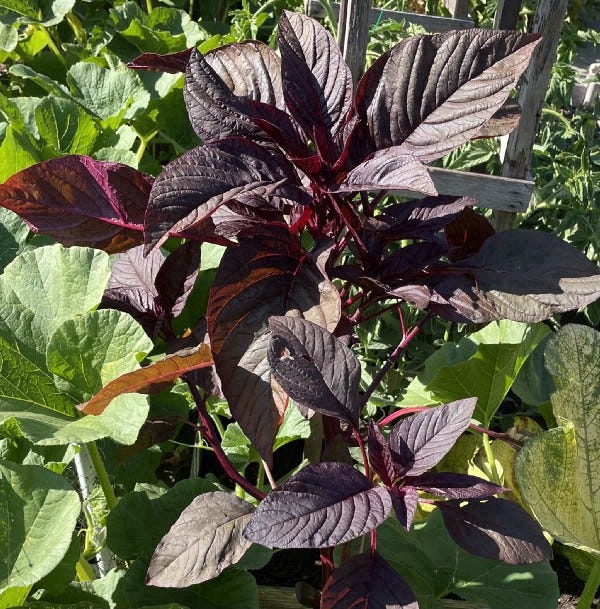
Amaranth is not a well-known plant and is rarely found in vegetable gardens. I planted it one time, five or six years ago, and it continues to volunteer every year.
This year, it popped up next to a mega-pumpkin and manages to hold its own somehow.
Live and let live, I always say.
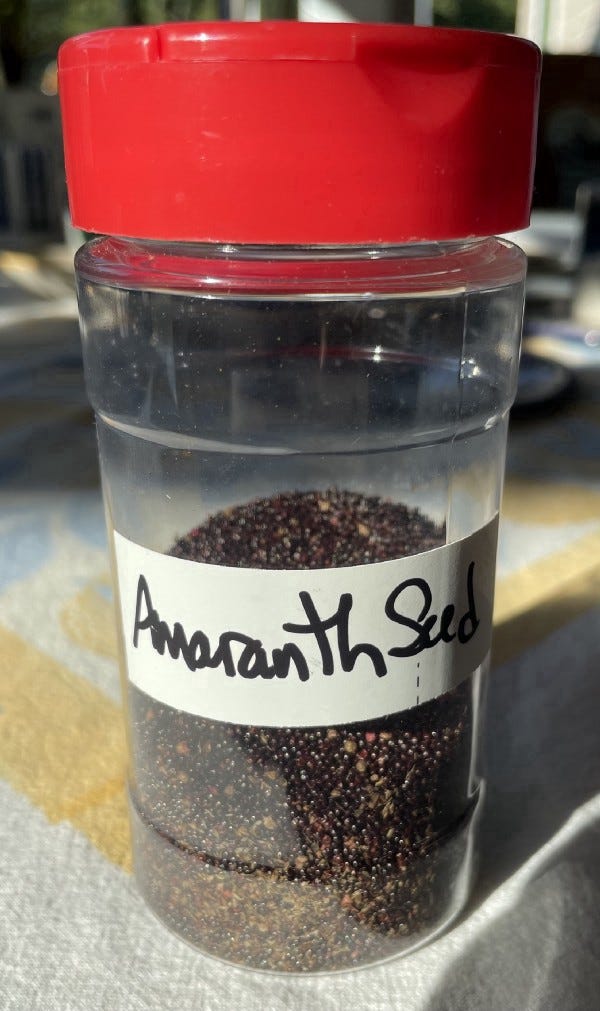
This variety, called “black amaranth,” still cultivated in Central and South America (also known to the Quechua as sangorache), was grown as a dye plant by the southwestern Hopi Nation.
On a motorcycle trip a few years ago across Arizona and New Mexico, we stopped at an old settlement, now a state park, where traditional plantings were still maintained in their original garden beds.
The ranger on duty recounted the origins of this beautiful plant, showed me how to thresh the seeds from the floral plume, and how to use every part of this remarkable plant for food. We left with his gift of a tiny sack of these precious seeds.
Today I use the nutritious young leaves for an extra flavor and color pop in salads. The seeds are loaded with protein and antioxidants and I add them liberally to hot cereals, and as a healthful substitute in any recipe calling for poppy seeds.
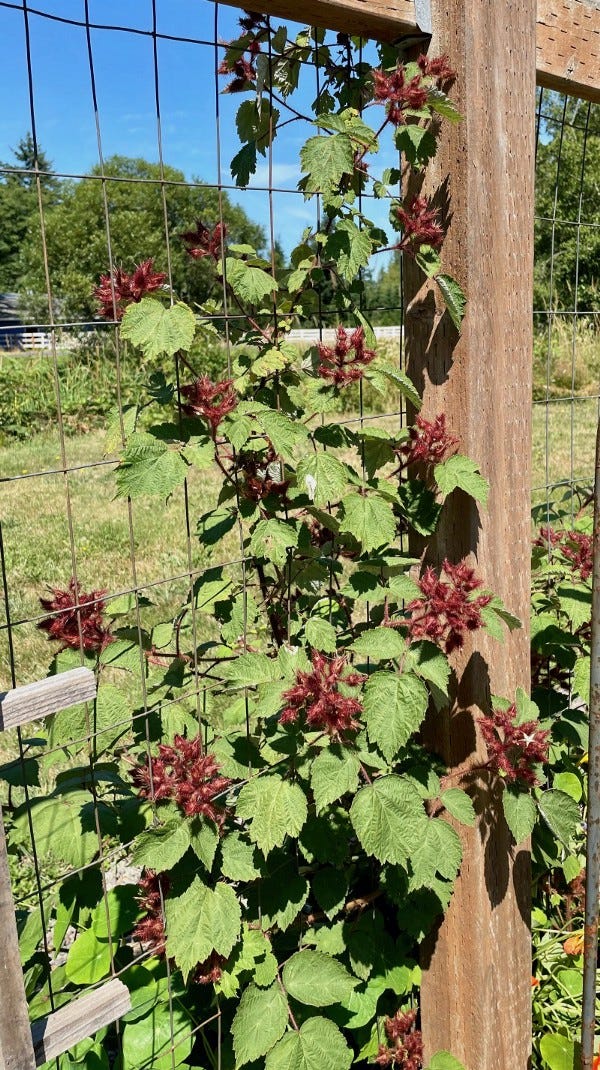
Asian raspberry (Rubus phoenicolasius, also called wineberry) is quite possibly the weirdest plant in my garden. I keep it outside the garden, actually, growing along the fence, where it’s unafraid of and actively taunts deer and other berry-loving varmints.
Almost everything about this plant is dangerous. Fortunately, it waits until late July to bear fruit, long after my “normal” raspberries have retired for the winter, and just before our wild blackberries start putting out.
There’s plenty of time between these crops for my hands and arms to scab over and prepare themselves for the next thorny berry onslaught.
I had kept this plant in a large pot for several years, and finally moved it last fall to a garden box where it can spread out along the fence without endangering its owner.
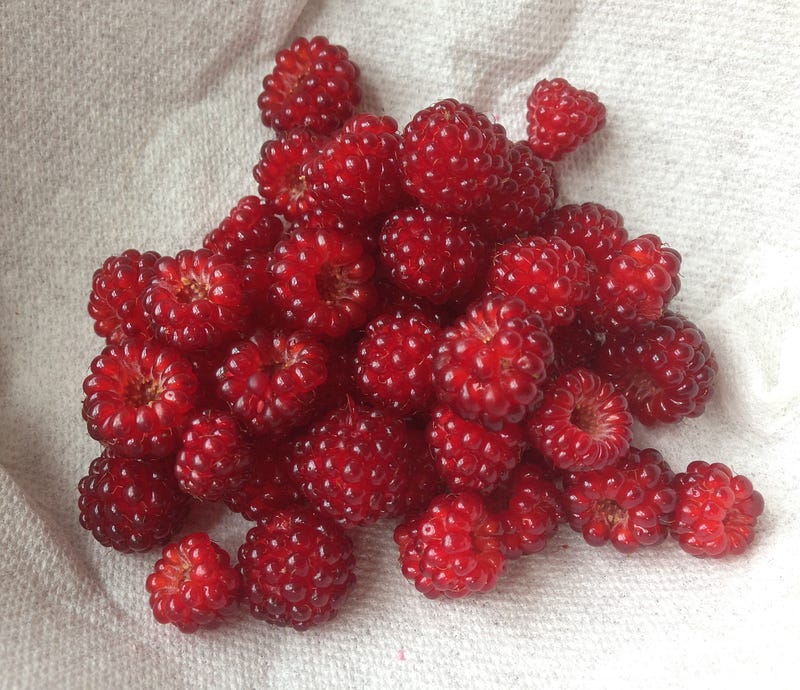
The Asian raspberry produces alien-like clusters of hairy red pods that eventually open to display the most beautiful, delicious, tangy little berries in all of Nature.
That’s the good news. The bad news (aside from its extreme thorniness—pick at your own risk!) is that it’s considered an invasive species and can displace native plants.
But in these parts, there’s no way it can out-compete the invasive Himalayan blackberries that cover the Pacific Northwest, so I keep it contained and hope for the best.
Semi-final thoughts…
When I sat down to write this piece, my idea was to talk a little bit about each thing in my garden. I have failed miserably. In my next piece, I’ll continue with blueberries—yes, we have no bananas—and all the other B-plants out there, and see how far I get.
Meanwhile, here’s a bit about my love/hate affair with the blackberries that surround every fence post in Washington State, its seeds having first passed through a fence-sitting bird to activate them:
And another hint of what’s to come:


