
How to Invest Your Time & Money for Maximum Returns as a Student
Want to learn how to make your time and hard earned money work for you?

If you’re reading this and are already thinking about investing as a student or teenager, chances are, you’re a pretty hard worker with the hopes of a bright future ahead of you.
When people tell me they want to start investing, and in particular the younger people, I always hear the same thing every time.
“Investing seems so hard. I don’t know where to start.”
If you’re thinking something along these lines as well, don’t worry, because in this article I’m going to help you see just how easy and simple investing can be.
It doesn’t have to confuse you, or scare you, or anything like that.
It can be easy, straightforward, and quick to get started with.
Now, before I begin, I am not a financial advisor.
Everything in this article should be taken purely for educational purposes, and you should always do your due diligence and own research before investing any of your own capital.
With that out of the way, let’s begin!
What Even Is Investing and Why Should I Do It?
In case you’re new to all this, I thought I’d start with a bit of a brief overview as to what investing is, and go over some reasons as to why you should be learning about and getting started with it.
In a nutshell, investing is the art of making your money work for you by putting it in places where it’ll hopefully grow over time.
Note the word ‘hopefully’.
The truth is, while it sounds awesome that there are places where we could put our money into and make a financial gain from, it’s equally as likely, if not more likely, that you can lose money if you’re just starting out, especially as an inexperienced teenager or student like yourself.
So, before you do anything, make sure that you understand, investing could lead to a partial or total loss of the capital you decide to invest.
The golden rule of investing that you always follow goes:
Only ever invest money that you could afford to lose.
If losing that money would seriously hurt you financially or cause you to have to make other important sacrifices in order to make up for the loss, don’t invest it.
Now, if you really do want to learn how to invest properly so that you can generate returns for yourself and improve your chances of reaching financial success later in life, you’ll need to be prepared to take on some risk.
There’s no such thing as a risk-free investment, and nothing worth having in life comes without risk.

So, if you’ve got a couple thousand dollars to get started with, or even a few hundred to spare, you’re in a great spot as a student.
Because most other students wouldn’t thinking of doing stuff like in the first place.
The way I see it, there are two main types of investing routes that you can go down.
Note that both of these types of investing pathways can lead to massive returns, but also come with risk that should never be ignored.
You can either invest your money into building businesses for yourself, or you can buy assets and simply wait for the money you put in to do the work for you.
Essentially, think of it like hands-on investing, compared to hands-off investing.
What do I mean by this?
Let me explain.
Hands-On Investing
Hands-on investing is when you put your money into things that would require/allow you to do further work on, in order to leverage the money you put in.
For example, maybe you invest $250 into the creation of an ecommerce website that would then allow you to design your own store, perform product research and eventually run your own ecommerce store/brand.
Or, you invest $40 into an online course that teaches you to code in Python and JavaScript, so that you can start to freelance your coding skills on sites like Fiverr and Upwork, and generate more income that way.
Maybe save your money and invest $20,000 into a comfortable, reliable car so that you can start doing rideshare services with companies like Uber or Lyft as a side hustle, so that you can maximize your weekly income and reach your financial goals faster.
Maybe it’s investing into tools and equipment to start your own lawnmowing or pressure washing business around the local neighborhood.
There’s a myriad of different examples I could give you.
Hand-on investing is all about using your money and leveraging it to open up opportunities for yourself to do more work and explore your options in business or careers.
Of the two types, hands-on investing is generally more difficult to pull off as it requires more direct skills, hard work and experience.
Regardless of the amount of money you have, if you don’t have the necessary skills to be able to leverage the money you put in properly, it’s not going to be very helpful to you.
For example, if you put in $400 to launch an ecommerce website, but don’t have the sales and marketing skills to be able to generate leads and convert them into sales, your investment of $400 will likely fail to generate any significant returns for you.
Or, if you invest your money into a car to open up the opportunity for a ridesharing side hustle, but are too lazy to put in the hours and make it worthwhile, your car will likely end up sitting there collecting dust, and not actually helping you generate more income.
In that case, you may as well have saved your money or spent it on something like a nice dinner that you’d actually enjoy and make use of.
We’ll get into a comparison of the two types of investing in a second, but that’s basically what the hands-on approach is all about.
Investing into creating more opportunities for yourself.
Hands-Off Investing
On the contrary, the hands-off approach of using your money to buy assets and letting your money do the work for you is a simpler, more passive approach to investing.
However, like I said, this doesn’t always mean that it’s the better option.
An example of a hands-off approach to investing would be something buying stocks or shares of a company for $50, and will holding onto them for a year or two in hopes that they would appreciate or increase in value.
Maybe, after two years of owning them, you could potentially sell the stocks for $80 or $100, when you originally bought them for $50.
There are other assets you can buy with your money as well, like index funds, ETFs, gold, cryptocurrencies, and real estate.
This passive approach to investing is all about being smart with the things you buy into, and carefully picking the right things that are either going to go up in value, or generate cashflow (such as rental income or dividends) so that you can make a good return on investment (ROI).
For example, take a look at the long term chart of the S&P 500, which tracks the overall performance of the top 500 companies in the United States by market capitalization, which is one way to calculate the book value of a company.
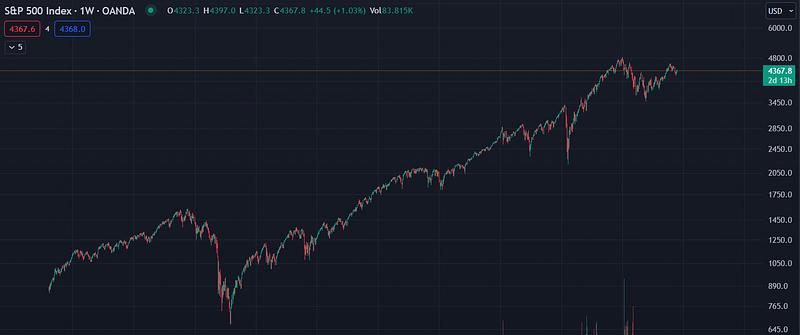
Pretty clear that the stock market has been steadily going up for a while isn’t it?
Now, of course, past performance does not guarantee future outcomes.
However, we can use this knowledge of what the assets have done in the past, to get an idea of what we might be getting ourselves into.
And while the stock price certainly has been going up over time, it’s important to note all the dips and troughs in the market that signal the periods when the assets dropped in value.
Please excuse my horrible drawing capabilities, but just take a moment to analyze this picture and see just how dangerous investing can be.
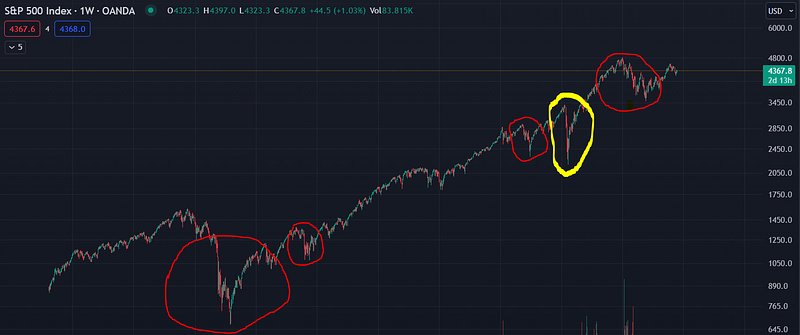
You see the drop in price surrounded by the yellow circle?
Assuming you’d bought into the index fund somewhere near its peak price, you’d be looking at roughly a 35% loss on your investment.
Meaning, if you’d originally put in $100, it would’ve been worth about $65 after the drop and you would’ve lost $35.
Or, if you’d gotten caught up in the hype and invested a larger sum like $10,000, you’d have been down about $3,500.
Now, the smartest thing to do in that situation, provided that you actually believed in the companies you were investing in, would be to hold onto the stocks and wait for the price to come back up.
However, some people may find that they need the cash from their investments, and be forced to sell them at a loss.
Many people who are too busy to be able to micromanage their own investments, or are getting close to retirement and would prefer to relax, are drawn to this type of investing pathway due to its passive nature.
Every week, maybe you put in $50 into a stock of your choice.
Or maybe, you save your money for 3 years and save enough for a deposit on an investment property that you buy for $600k, and rent it out to generate cash flow and wait for the house to go up in value over time.
As with the active investing pathway, there are lots of different ways you can generate returns.
However, you also do have to be wary of the risks involved with this passive investing style as well.
Just because you bought into a stock like Apple ($AAPL) or Tesla ($TSLA) doesn’t mean it’s necessarily going to go up in value.
It’s equally as likely, if not more likely, for you to lose money than gain money when investing.
Especially at the start of your investing journey.
See, even though huge, solid companies like Tesla and Apple will likely be around for a very long time, and it’s expected that they will continue to go up in value, it’s still important to note that the markets (regardless of the types of markets you’re investing in) do have ups and downs, and there is a very real chance that you’ll lose money.
Let’s say that you bought $100 worth of Shopify stock ($SHOP) two years ago. Unfortunately, you got a little bit unlucky and bought right before a global economic downturn like the one caused by the COVID-19 pandemic.
Now, the stock might only be worth $40, and you’d have lost 60% of your investment just like that.

Yes, these are unrealized losses and you’d only actually lose the money if you were to sell the stocks at the current price.
However, if you can imagine, if you had put in more money, maybe closer to $1000 or even $5,000 (as some people do), losing 60% on that investment would be a much tougher loss to deal with.
Oftentimes, the unrealized losses are too large, and people find themselves having no choice but to sell their investments at a loss, or else having to make other sacrifices in their lives like cancelling subscriptions or looking for other ways to reduce expenses in order to keep financially afloat.
That’s why we always follow the golden rule when investing…
Never invest money that you can’t afford to lose.
Comparing Passive and Active Investing
While the two types of investing certainly can both generate returns, they are effectively different styles of investing, and would be more suitable for different types of people depending on their risk appetite and future intentions in their careers.
Depending on who you are, what you’re planning to do in the future and the type of person you are, one of the investing strategies might make more sense for you to follow than the other.
Who Is Passive Investing More Suited For?
Since passive or hands-off investing is more laid back, straightforward and requires less input from the investor, it’s generally more suited for people who are already extremely busy with their schedules, or don’t have much time to dedicate towards getting their hands dirty and putting in lots of work to leverage the money they put in.
For example, this might include busy parents who work full time and already have a lot of their plate, and wouldn’t really be able to find time to start building a business or anything like that.
Or, this could include those who are retired or elderly, and aren’t wanting to be working too hard anymore. Perhaps they’d rather give up some potential gains from their investments for peace of mind and simplicity instead.
Obviously, you do have to do your own due diligence and prior research, but essentially, you just buy an asset and hold onto it, expecting it to go up in value over time and in many ideal cases, generate some cashflow as well.
Especially when you’re retired or want to be basically completely passive with your investments, having assets that can generate you cashflow is a blessing.
It’s making your money work for you so that you don’t have to.
Doesn’t require a lot of time or effort if you really think about it.
Now, as a student or younger person, you certainly can and should still take advantage of this investing style and start building up your investment portfolio while you’re young.
The primary factor that determines a person’s success in their passive investing endeavors would be the time that they have in the market.

The general expectation of these assets that we buy is that they will appreciate.
That’s why we buy them in the first place, because we expect them to go up in value, and for our investments to grow.
And since you’re likely to be a young student if you’re reading this article, you’ll be glad to know that you’ve got a massive advantage over other people in the investing space due to your youth.
Assuming that your investments grow at something reasonable like 7% a year, your youth could very easily lead to you benefiting massively from compounding effects, leading up to your investments eventually growing to be 7 or 8 times your original contribution.
Take this compound interest calculator by Investor.gov.
Let’s say that you were going to invest $250 a month starting age 17, into something like the S&P 500, which historically has averaged 8–10% returns year on year.
Assuming that the rate of growth was 9%, by the time you were 60 years old, you’d have accumulated a total investment of approximately $1,322,536.99, or $1.322m.
Now, we’ll compare that to somebody who started a little investing later than you.
Let’s say this person was having fun partying, spending all their money and enjoying their life to the fullest during their school years, and only started investing at 22.
So a 5 year difference.
Let’s see how much of an impact that would have on the growth of each person’s investments.
In the case of the 22 year old, by age 60, he or she would only have $847,889.35, or $848k.
You see how much of a difference starting just 5 years later can make?
Those 5 years could end up costing you around $500,000, as the effects of compounding mean that every additional year will generate more and more returns over time.
The later years are the ones that generate the bulk of the total returns.
That’s why I, and so many other people will preach for younger people to begin passively investing early.
Time is on your side, and this is an advantage over others that no amount of skill or expertise will be able to overcome.
This is all due to the effect of compounding.
The Compound Effect
Essentially, it means earning a return on both your original investment/contribution, as well as on top of any returns you already made previously.
For example, if you had $1000 in your savings account and were to make 5% interest each year, you’d have $1050 after the first year because as (1000 x 1.05) = 1050.
However, during the second year, you’d make 5% on $1050, instead of $1000.
(1050 x 1.05) = $1102.5.
So a $52.5 gain instead of $50, thanks to the compounding effect.
Then, the year after that, you’d make 5% on $1102.5, and so on.
It might not seem like the gains you make are anything substantial, but remember, this growth is exponential.
By the 15th year, you investment would’ve doubled to reach a value of $2,078.93.
And if you’ve got time on your side (which students do), by the 50th year, you’d have $11,467.40.
Over 10 times your initial investment.
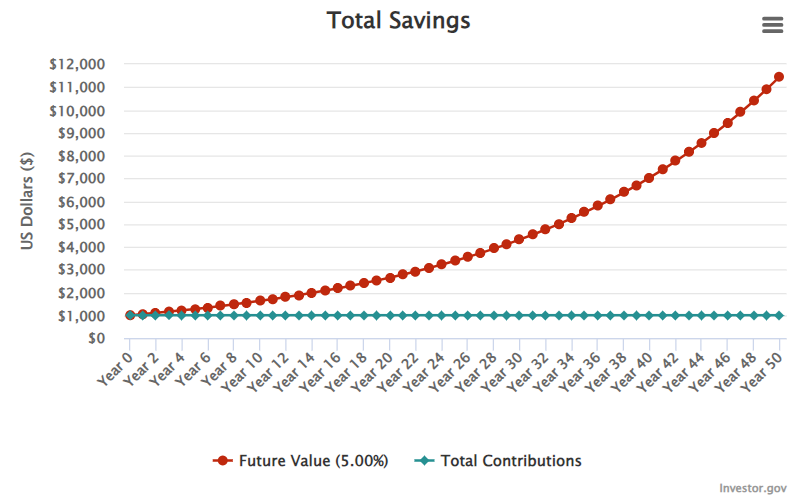
In addition, this is assuming that you have no further contributions to the investment as well.
Most people do put in a little bit more each week or month to help grow their investments, leading to even more returns.
Now, let’s assume you were going to put in $250 a month extra into that account.
Not a huge ask for somebody who’s actually serious about reaching their financial goals.
Guess how much you’d have after 50 years.
I think you’d be very surprised.
Well, if I plug all the numbers into the calculator, you could expect to have $639,511.39!
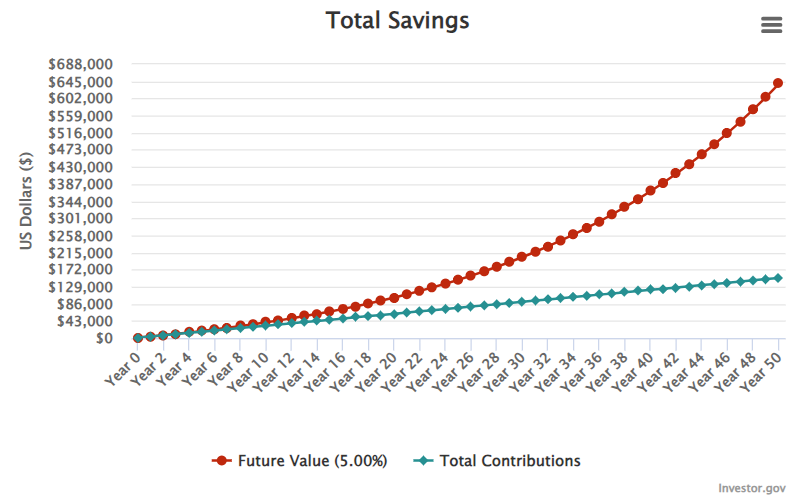
So that’s the power of the compound effect. It’s exactly why as a younger person, you should be taking advantage of the compound effects and regularly investing your money when you can!
These effects can be utilized in all sorts of passive investment assets as well, such as real estate, stocks, savings accounts, etc.
Passive investing is a great way to leverage your youth to help build up a solid foundation for yourself in the future.
Now what about the hands-on approach?
Who is Active Investing Suited For?
Active investing is more suited for the people who have the time, energy and risk tolerance to be able to dedicate towards actually building some type of business.
This could include working professionals who have money to spare, but are still looking to maintain a full time career working on something every day.
Or, this could also include students and teenagers, who have got the extra time and ability to take on risk.
When you’re young, it’s prime time for you to be taking calculated risks.
This is because you’ve still got your entire life ahead of you, and any mistakes or slipups now can be made up for since you’ve got so much time.
When you’re young, you have no responsibilities, no bills to pay, no one else to take care of or that’s dependent on you, and all the time in the world to make up for mistakes.
However, someone who’s older and has more responsibilities, such as a father of two young kids who rely on his income to survive, likely wouldn’t have the risk tolerance to be able to put aside his family’s savings to start a business that might not work out.
So yes, while you’re young, it’s a great idea to be taking on risk, and especially taking up some kind of active investing, like starting a business of some sort.
As long as it’s calculated, of course.
If you’re one of those people who gets genuinely excited about starting businesses and working towards a successful career for yourself, then what I’m telling you now, about taking calculated risks when you’re young, should excite and motivate you to go out and make things happen.
If you just do a quick search online, you’ll find people of all ages talking about all these different side hustles that you can do to earn extra income for yourself.
Many times, it’s the younger people who have the time, effort and risk tolerance to be able to give these things a try, who end up finding success.
You’ll find 20 year old's running 6 figure ecommerce sites, 25 year old stock traders who make thousands of dollars each month, 50 year old CEOs and founders who started their business ventures when they were 30, and lots of other examples of people who are killing it.
I know not everything you see online is true, but I want you to know, that the possibilities are very real, and that they’re endless for young, aspiring winners like you if you’ve got the dedication as a student to be reading this article.

If you’ve got some sort of entrepreneurial ambitions for the future, I would highly recommend that you utilize your time and freedom to invest in yourself in some way.
Trust me, it’s exciting, it’s fun, and it’s going to help you open up a lot of doors for yourself later in life when you’re older and more experienced.
Now, I’ve said this before, but of the two types of investing, this hands-on approach is going to require more time and effort input from you to make something happen.
That also makes it inherently more risky than the passive approach, as all the responsibility to achieve success falls on you, and your ability to work hard and smart.
If you’re not willing, or able to work hard and make something happen, then nothing will happen, regardless of how much money you’re able to invest.
Because the whole idea of investing your money into this pathway revolves around creating opportunities for yourself to capitalize on, the earning potential is actually much higher with this pathway than it is with the hands-off approach.
It’s high risk, high reward.
Exactly the type of investment pathway that attracts smart, young investors who have the freedom to take on risk.
Comparing this to the passive approach, realistically, you could only expect a maximum of a 10% return on your investment each year on average, regardless of the markets you choose to invest in.
In fact, more investments will yield less than 10% each year.
But generally, unless you’re lucky, the maximum you can expect to sensibly make a year would be 10% on your investment.
However, think about the possibilities that could come with you starting your own business.
I’m sure that as a student, you’ll have heard of Quizlet before.
Believe it or not, the website software was starting by a 15 year old in school who wanted to ace his French exam, and built the software for himself.
Now, the website has over 50 million monthly active users, and is now valued at over $1 billion USD.
As for other examples, companies like Apple, Tesla, Amazon and FedEx were all once nothing but a tiny seedling or a startup, with nothing but hopes of becoming the industry giants they all ended up as today.

Or, taking it down to a smaller scale, just a quick Google search will provide you with information about people like Iman Gadzhi, Umar Ashraf, Davie Fogarty, Jordan Welch, and many other young, successful entrepreneurs who started out small, and are now killing it.
Every big company or successful business once started as a dream, and I’m sure now you’re starting to realize, you should always try to chase your dreams and do your best to make them come true.
Because it’s more attainable than you probably think.
I’m not saying drop out of school to pursue this or anything crazy like that, but don’t be afraid to start something on the side and bring those hopes and ideas to life.
So How SHOULD I Invest as a Student for Maximum Returns?
Now that you understand the different types of investing and should have a rough idea of how you want to invest, let’s take a look at how we can devise a strategy to help us get started with investing as younger people.
Remember, never invest money you can’t afford to lose, so always start small.
Now, with that out of the way, one of the biggest limitations that prevents beginner investors from getting started is the fear of losing their money due to them not knowing how everything works and where to start.
However, I’m here to tell you today, it’s really not as complicated as it might seem.
Let’s break this down into steps.
Step 1: Know the Basics
It’s important for you to first get a grasp of the absolute basics, and to understand how everything works.
Here’s a checklist of things I think you need to know/understand prior to making a start with investing.
Each bullet point is linked to an appropriate article that would give you a good overview of what the term means, in case you’re a real beginner.
Regardless of whether you want to
- What is the stock market and how does it work?
- What is a stock brokerage?
- What is an asset?
- What’s the difference between savings and investments?
- What is capital?
- Bull vs. bear markets.
- What is a business?
- What is a side hustle?
- Active vs. passive income (not to be confused with active and passive investing)
I know the list might look pretty long, but some, or most of those terms you should already know if you’re thinking about this stuff as a student or teenager.

The main point of step one is just to familiarize yourself with all the basics when it comes to investing, and make sure that you’ll have a solid understanding of what you’re reading/doing.
However, it’s important not to spend too much time doing this research, as we can often get so caught up in the fear of actually starting whatever we’re doing, that we end up wasting time doing ‘extra research’ that isn’t actually going to benefit us.
This is known as analysis paralysis.
Just get to know the basics, and I’ll help you move on from there.
Step 2: Determine How Much Capital You Have to Invest
As a student or teenager, you likely won’t have a huge amount of money sitting around for you to put aside for investments.
However, don’t forget that you also have little to no financial responsibilities or obligations at the moment, meaning you’ll actually be able to invest quite a large proportion of your total savings, as you likely won’t need to worry about paying all the bills and expenses.
So, depending on the type of person you are and how much money you earn and like to spend, you should have a rough number of amount of money that you wouldn’t mind setting aside into investments, and would be completely okay with losing if your investments were to go south.
Now, the chances of that happening are pretty low, but always prepare for the worst, right?
As a student who likely wants to enjoy a social life and still have a good time in high school or university, it’s understandable if you don’t want to invest all your spare money.
However, I would recommend that as a student, you save/invest at least 40% of your income, but preferably closer to 50 or 60%.
This means if you work a part time job and earn $300 a week, you should be saving at least $120 a week, but preferably more.

Or if you’ve got extra money left over because you didn’t spend it, it’s also a good idea for you to put that aside as well.
Just because you didn’t spend the money last week or last month doesn’t mean you have to spend it this week!
Practice financial responsibility guys, it’s a good habit.
But at this stage, anything over 40% of your income is a good place to start.
Step 3: Decide Where You’re Going to Invest
Hopefully you’ve got a decent understanding of active and passive approaches to investing now.
Now it’s time to decide where you’re going to put your money when you do invest it.
Are you busy and leaning more towards a passive approach?
Are you prepared to work hard, take on more risk and build something for yourself?
Or would you prefer to do a combination of the two?
It’s your decision, but I personally think there is merit in starting to make contributions to your passive investment portfolio to take advantage of your youth and time abundance, whilst putting forth some money to invest actively, whether that’s in teaching yourself a high income skill, or investing it into a business to open up more doors for yourself.
That way, you keep the possibility of becoming a young, successful entrepreneur open.
Otherwise, if you were to only go down one of the investing routes and completely forego the other, you’d be potentially incurring huge opportunity costs in what you could have achieved.
Do you want to take more advantage of the time you’ve got?
Or would you rather give yourself a better shot at really building something for yourself by giving yourself more money to work with?
Remember, the odds and statistics stack up against everyone.
It’s up to you to work hard and find the success you want.
If you are going to go down this route of utilizing both investment pathways to start building up your investment portfolio, then the way you split your capital up between active and passive investments will be completely subjective to you.
Depending on how much money you have and your confidence in your own abilities to work hard, you could do something like a 50/50 split, or 70/30, or 90/10 in favor of either investing style.
Your passive investments will build long term wealth, while active investments that require more work from you might generate more returns faster (although low probability), and open up more opportunities while you’re still young.
For example, if you’re extremely motivated to retire early and you desperately want to achieve financial success/freedom at a young age, then the idea of taking on more risk and starting a business of some sort for yourself is likely going to appeal to you more.
However, if you care more about safety and stability in the long run, then placing an emphasis on building your passive investment portfolio now could be the better option.
There is no one-size-fits-all approach, and no right or wrong answers either.
It’s all up to you to make the necessary decisions.
Step 4: Decide Where Exactly You’ll Invest Your Money
Now that you roughly know how you’re going to allocate your capital towards your investments, it’s time to get a little more technical and detailed as to where exactly you’re going to invest your money.

Passive Investing Approach
If you’re going to go down the passive investing route at all, this is going to involve you doing your own due diligence and research so that you can pick the right stocks to buy into.
It’s going to mean that you need to be able to know the difference between stocks, ETFs, cryptocurrencies, and a whole lot of other assets that you could potentially put your money into.
To help you out with this, I’ve curated a list of the asset classes that you should be looking to invest into if you’re a student or teenager, due to having beginner-friendly natures or easy accessibility.
Remember, to only ever put your hard earned money into assets or places that you have a good understanding of.
If you don’t understand what cryptocurrencies are or how they work, don’t put all your money into them!
The same goes for stocks, ETFs, forex, real estate, etc.
Always do your research first, and know what you’re getting into.
Active Investing Approach
Now, what if you’re looking to also go down the active investing approach as well?
If you’re looking to also directly invest into yourself or a business of your own as well, then the decision of where you put your money is likely bigger and more important to get right than it is with the passive investing approach.
This is because at the end of the day, all assets that you’ll invest in have some sort of market, and most of them do have a general tendency to go up in value over time.
However, the success from the way you choose to actively invest your money will all depend on how well you can capitalize on your investment.

It depends on:
- How hard you’re able and willing to work.
- How much money you can invest.
- Your particular skills, experience and passions.
- Your network.
Chances are, your active investing endeavors are going to lead to you starting and running some sort of business for yourself.
Or, even if you’re investing into yourself through something like buying an online course so you can get into a good university or anything like that, the return on your investment is still going to depend on how hard you're willing to work.
So, when it comes time to choose where you’re going to actively invest your money, you need to be smart and strategic about this.
Analyze How Hard of a Worker You Really Are
First of all, you need to carefully and truthfully audit yourself and your own life, and decide how hard working you really are.
You need to be honest with yourself, and genuinely gauge your ability to work hard and make things happen.
Because starting your own business, or getting that internship you’ve always wanted, requires significant amounts of hard work that frankly, most people aren’t cut out to do.
There’s an exercise that I like to get people to do that allows them to truly see how well and productively they’re spending their time, which you can read about here:
But there’s a whole lot more in that article that’s going to help you become the most efficient and productive student you can be, so I’d highly recommend reading through it if you’re serious about reaching your financial goals in life.
If you’ve done a thorough analysis of how you spend your time and you’re confident that you’ve actually got a strong work ethic, then great.
You can move onto the next step.
However, if you’ve come to realize that you might not be as hard of a worker as you had previously thought, then it might be time for you to work on yourself first to make sure you’ve got what it takes to capitalize on your investments.
How do you do this?
Hint: read the article I linked to above.
Be Realistic About the Amount of Money You Have to Invest Into a Business
The next step for you is to be realistic about the amount of money you have ready to invest.
If you’ve got $5,000 saved up from your part time job, don’t just dump all of that into an ecommerce website by buying social media ads and courses.
You obviously will want to hold onto or retain some of the cash you’ve saved up, and investing all of it certainly isn’t how you’re going to achieve that.

Instead, be realistic about what you’re able and willing to invest.
Is it 30% of your savings?
50%?
70%?
I would say that generally, it’s always best to start as small as possible, and ease your way into things once you get the hang of it, and understand how everything in your chosen business or industry works.
I say this because depending on the amount of money you’re willing or able to put forwards, this is going to influence the range of options you have available to you in terms of where you put your money.
If you’ve only got a few hundred dollars to invest, you’re probably better off investing it directly into yourself (through actions like buying an online course or getting a mentor) so that you can open up more opportunities to generate more active income (like freelancing, getting a good job, etc.).
Or, you could look to invest your time and money into something that doesn’t require as much upfront capital, like learning how to day trade and then trying for funded accounts, or starting a blog or affiliate marketing.
However, regardless of the amount of money you’ve got, there are a wide range of choices you could pick from…
This includes, but is not limited to:
- Day trading
- Dropshipping
- Amazon FBA
- Content creation (YouTube, TikTok, writing books, etc.)
- Ridesharing
- Buying online courses
- Hiring mentors
- Buying books to educate yourself
- Food delivery
- Tutoring
- Freelancing
- Blogging
- Affiliate marketing
- Starting a podcast
- Print on demand
- And more.
I would recommend that you set aside some money to start building up your passive investment portfolio with things like stocks and ETFs, and then pick (preferably) one, or possibly two side hustles or active investment vehicles (like ones in the list right above) and really hone in.
For example, let’s say you’re putting aside $40 a week consistently into stocks and ETFs that you’ve carefully picked out.
Then, on the side, you’ve bought a $100 online course to teach you how to do online programming with Python and JavaScript, so that hopefully one day you can start freelancing your software development skills on Fiverr or Upwork.

Maybe you’ve also started to learn to day trade on the side by watching free content on YouTube, and are getting ready to try your first funded account challenge after 6 months of learning and demo-trading.
I’d say that’s a pretty good setup, and certainly would be a good spot for any student or teenager to be in, provided they’re keeping on top of schoolwork, extracurriculars and their health and fitness as well.
Don’t think that’s all possible?
Check out this article.
So what’s the takeaway from this?
It’s a good idea to start building your investment portfolio with things like stocks and ETFs.
However, it’s also a good idea to pick one or two active investment vehicles that you think would benefit you, and really focus your time and energy on them.
Who knows?
Business could be booming for you before you know it.
Step 5: Keep Working Hard, and Never Stop Learning
I’d like to quickly remind you to always keep on working hard and staying open minded to learning new information.
If you’re a student or teenager reading this, chances are, you don’t know a whole lot, and you’re pretty inexperienced.
I’m not saying that you’re dumb, or that you suck.
I’m saying you’re young, and that you haven’t necessarily had the time to build up a good history of experience for yourself.
Trust me, I was once the ambitious, optimistic teenager who thought he was smarter than the world too.
Always keep working hard, and never lose sight of your goals.
If you’d told me 10 years ago that I’d be where I am now, I’d have laughed in your face and never believed you for a second.
Trust me, some pretty amazing things can happen in life if you work hard and make the most of your time while you’re young.
Being a young entrepreneur or investor is an extremely exciting prospect, and I’d love for anyone to be able to experience that feeling.
Always keep working hard and keep an open mind to improve your chances of success!
To Wrap Things Up
Well, there you have it!
A complete guide to investing as a student or teenager, using your two most valuable assets: your time and money.
It’s important to take advantage of the fact that you’ve got freedom and lots of time ahead of you, and I’d say that now is the prime time for you to begin investing and working on yourself if you haven’t already.
In general, it’s a good idea to keep a diversified portfolio that’s going to offer the opportunities for both your passive and active investments to take off, and lead to serious gains in your personal wealth from a young age!
Wishing you all the best with your investing endeavors.
The best time to start was yesterday. The second best time? Today.
Disclaimer
The content in this article is intended for informational and entertainment purposes only. It shouldn’t be considered financial or legal advice. Not all information will be accurate, and you should always consult with a financial professional prior to making any financial decisions. Always do your own due diligence.


