
MY CRYPTOCURRENCY JOURNEY:
How to Invest Your Side Hustle Earnings Into Cryptocurrency
Can you really turn $5 into 5 million with crypto?
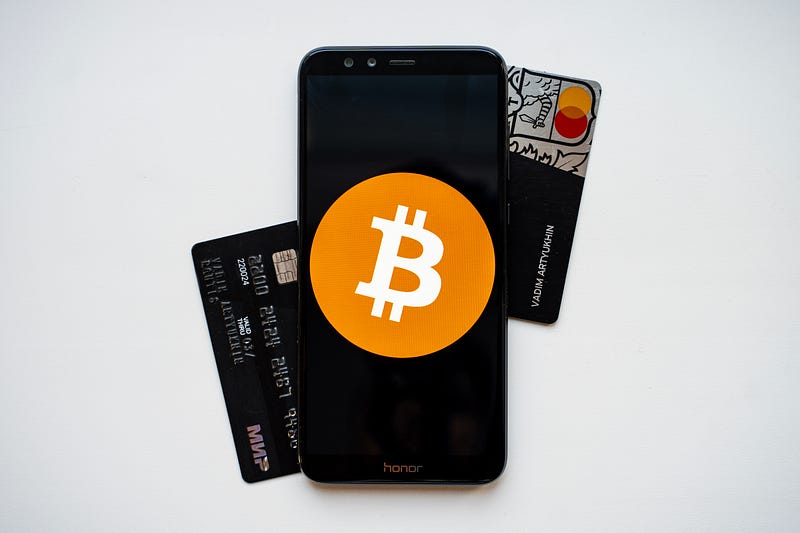
I never in a million years thought I’d be writing about cryptocurrency.
I’m a twenty-seven year-old History teacher at my “day job”, so I am probably the opposite demographic you’d normally hear this from.
As a teacher, I’m no stranger to side hustles in order to keep my finances afloat — but I’m just starting to make them work for me.
I think also it makes investing in cryptocurrency slightly less intimidating when it comes from a person who was a total amateur at any type of investments six months ago.
Cryptocurrency is just not for me.
Or — so I thought.
I now have an entire desktop on my Mac dedicated to tracking my cryptocurrency investments, and friends who are shocked with reactions ranging from “wait, can you teach me about it? It seems crazy!” to “…You’re into that?!”
Yes, I’m talking about Bitcoin.
When I first heard that word almost ten years ago, I laughed.
Really? You’re going to create another currency? How dumb. Just make more money and invest in the “real” stock market.
By comparison, it’s probably how most people currently feel about Dogecoin. It feels like a joke (and was created to be lighthearted), yet somehow people are becoming millionaires all because they made the right investment choices at the right time.
As it turns out, Bitcoin is no joke.
If you got in at the right time — and depending on how much you bought — you could be set for life.
The fundamental difference between cryptocurrency and fiat currency is that cryptocurrency is decentralized and holds value as determined by the people who own it, rather than that value being determined by the banks, big businesses — or the government.
Yes, the crypto market is definitely a rollercoaster, but it’s one I’ve learned to sit back and watch rather than watching too carefully — unless I’m just in it for the entertainment value.
Why is cryptocurrency so attractive right now?
Inflation is at an all-time high.
Uncertainty in the market is at an all-time low.
Is that a dramatic statement? Yes.
But it’s why a lot of people are turning to a non-government backed or funded currencies (many of which are soon going to be accepted worldwide instead of just in the country of origin — cutting out foreign-transaction fees or currency exchanges) instead of “traditional” options.
Whether or not we all laughed at Bitcoin years ago — or even if you’re laughing now — there will soon be Bitcoin ATM’s, and it’s being accepted as a currency by many large banks and companies — like Tesla.
Like it or not — it’s here to stay.
When everything is uncertain, you’re more likely to accept a non-traditional option because there’s nothing to fall back on — anywhere.
Am I investing in cryptocurrency?
Absolutely.
Do some of my friends and family think I’m certifiably crazy for doing so?
Absolutely.
Can you turn a few extra dollars a month into another stream of income?
Absolutely. By using money from a side-hustle, it becomes a little bit less scary to invest it in a new place.
Just because it’s not a massive amount of money to begin with doesn’t mean it couldn’t turn into enough to retire on someday.
Here’s how I’m using the cryptocurrency investment market (which sometimes feels like a Wild West rollercoaster lottery) to grow my portfolio with a few dollars a month.

Step 1: Decide how much money you’d like to invest into cryptocurrency each month
It could be $5, or it could be $500.
To start out, look at your monthly expenses, take any extra — or part of what you might usually put in your savings account — and use that.
My monthly investment amount varies, and I tend to use money from side hustles so that I keep my “real” fiat (traditional, government-issued currency) paycheck in my “real” bank account for now.
Do not expect that you’ll get this money back right away — or in some cases, ever.
If you do your research and you’re smart about your cryptocurrency investments, you’ll almost certainly see returns.
You could “HODL” it, which means that it stays in the cryptocurrency market for a long time and hopefully gains value along the way.
With that being said, cryptocurrency is currently like the Wild West, so assume you’re taking some risk.
Step 2: Decide which platform(s) you’d like to use to buy cryptocurrency
There are many exchanges from which you can buy, sell, and trade cryptocurrency. Popular exchanges include:
And many more.
Just search “cryptocurrency exchange” and you’ll see a tremendous list — some exchanges are country based and some are global.
For most — if not all — exchanges, you’ll need to provide proof of identification and add a crypto-approved source of money to fund your buying and trading.
This could be a bank account in most cases, but in others it may be a debit card that will then be used to convert funds.
No matter which one you choose, your exchange will walk you through the process since they want your business.
It may serve you to have a couple of different exchange accounts as some currencies are only offered on certain exchanges.
You may also decide to buy a cryptocurrency wallet at some point so that you can hold your investments offline and combine what you have purchased/traded from different exchanges.
However, there are “staking” rewards for certain currencies that essentially reward you a certain percentage for holding (HODL-ing) your crypto on these exchanges instead of keeping it in your private wallet.
Step 3: Decide which cryptocurrencies are for you
Each cryptocurrency has a different value even though they are all part of a larger, decentralized system.
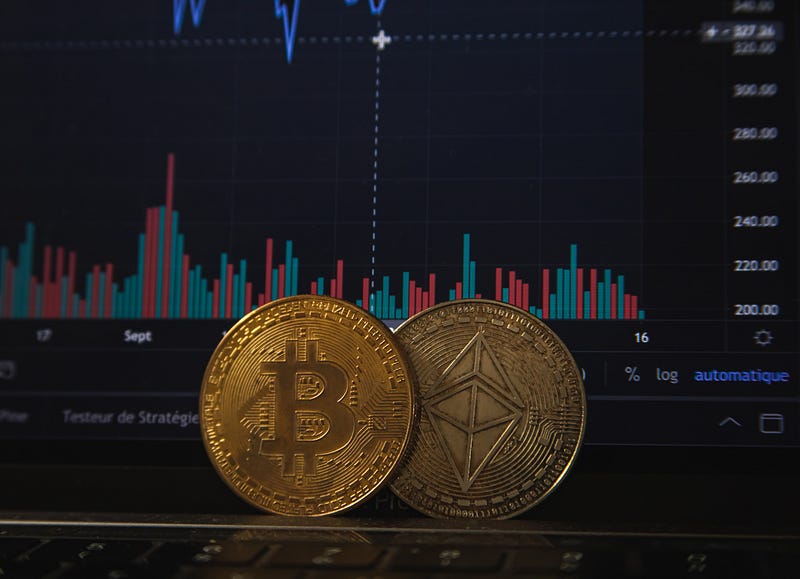
Bitcoin (BTC) is currently known as the “gold” of cryptocurrencies because there is a finite amount that will ever exist. Bitcoin is projected to continue to exponentially rise in value — even if it has a few dips along the way.
Ethereum (ETH) is often referenced as the “silver” to Bitcoin’s gold due to its popularity and the ability to have other currencies and apps run on the already established Ethereum network. It is also projected to continually rise in value.
There are thousands of “alt-coins” to choose from, some under a penny to buy a full share. You can see the “top ten” highest performing cryptocurrencies at the moment just by searching at any point — or check it out on one of the exchanges.
I picked my favorite five coins and now and then invest in another, but I don’t buy anything without understanding how it works first.
Step 4: Continue to do your research as you go
Read.
The.
Whitepapers.
Each cryptocurrency has something called a whitepaper which explains the creation and purpose.
For example, Ethereum’s whitepaper explains why it was created, how it is “mined”, and the overall philosophy of how it will be used as a cryptocurrency. The Ethereum network is now a larger parent network upon which many other cryptocurrencies and apps run.
DOGE (Dogecoin) has an explanation of why it was created in its whitepaper that literally says it was created as a lighthearted cryptocurrency based on the popular dog meme.
Some cryptocurrencies have a decentralized system with a mission, purpose, and project behind them, and some are just… there.
Penny currencies might be tempting — if you buy $500 worth and it goes “to the moon” then you might end up with $5 million if you play your cards right and know when to trade/sell.

Step 5: As your learn more, decide if you’re a HODLER, a trader, or a bit of both
Traders trade and sell cryptocurrencies fairly regularly. Some even day trade based on the market and interest.
Some HODL or hold onto cryptocurrencies for a long time and watch as they gain value.
It’s all about whether you’re trying to create a long-term investment/savings option, generate some quick income, or a combination of both.
Step 6: Increase your investments, continue to learn, and this itself may become your side hustle or full-time income
Over time, your investments will grow if you pick the right currencies.
You might start to freak out at how much they grow, actually.
You might be tempted to sell, and that could be the right thing to do.
You might find yourself with a new hobby — and a weird new addiction to watching people react to the current market on YouTube.
I know I have — and I would have laughed at myself if I knew I’d be doing this years ago.
Other things you can do to grow your cryptocurrency portfolio and gain overall DeFi knowledge:
- Take quizzes if they’re offered to grow your portfolio. For example, Coinbase offers “free” cryptocurrency to investors in exchange for taking short quizzes to learn about that currency. You need to learn about it anyway before you buy — so you might as well learn a bit about what you’re about to receive in the process. Plus, this helps your portfolio grow. You may later earn money off of something you didn’t even buy in the first place!
- Check out some cryptocurrency slang to get yourself up on the vocabulary of the times
- Keep reading whitepapers so you know what each cryptocurrency is about if they suddenly start trending on the market
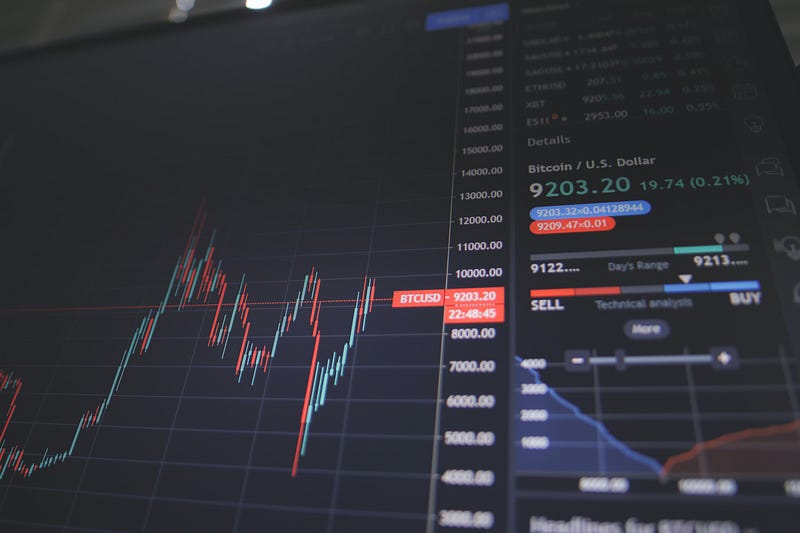
- Track the progress of your favorite cryptocurrencies to see how they perform over time
- Do not watch your accounts like a hawk if you’re a HODLER unless it’s entertaining to you. If you’re planning on shorter term trading, you’ll need to know what’s going on. But if you’re in it for the long-haul, the inevitable rollercoaster could just cause you stress. I’ve watched friends and colleagues freak out when it hits a low and sell — only to realize they could have made more money if they would have stuck it out through the dip.
Disclaimer: This article is based off of my own personal experience with cryptocurrency, is for entertainment purposes only, and should not be considered financial advice in any way.
Click here to get full access to all of my articles, plus thousands more on Medium.