
How to Invest in Life Science
A quick guide for the aspiring life science investor
The pandemic has shifted the global awareness towards Life Science. Before March 2020, the pharmaceutical industry was relatively uninteresting to many investors compared to the digital world. The reasons were the high complexity in the pharmaceutical industry, especially in early-stage projects. The time to a potential return is usually long.
Then came a small virus, and everything changed. The novel coronavirus name is SARS-CoV-2. Suddenly, the entire world followed the scientific community. As I am working in the life science industry since 2006, this event was something I have dreamed of for years. Every single person now gets herself familiar with the basics of developing therapeutics, vaccines, and medical devices.
Everybody is getting more and more interested in life science. However, life science investments are a complicated process still, as it takes years and millions of euros for basic research on the level of research organizations like universities. An invention is rarely strong enough to file a new patent, and amongst those that make it to patent level are only a few ideas that qualify for development into a useful product.
To make a long story short, it usually takes over 10 years and almost 2 billion Euros to bring a novel therapy or vaccine to the patient. The average private investor or a business angel has almost no realistic chance to participate in the early stage game.
Why?

Private investors
It usually takes several million euros to bring a project from the university-level to a point where it becomes interesting for institutional investors. The risk of failure at this stage is 98%. Only 2% of the projects make it to the next stage — clinical development.
My usual asset allocation advice is: Only to bet 2–5% on one asset. Given the risk of failure, I recommend putting only 1% of all funds into one asset. Given an amount of 5–10 million euros needed at least to move towards clinical development, the fund size should be 100 million at a minimum to qualify for direct investments into non-listed companies. Three to four funds usually share the risk of failure of one company.
To the private investor, I advise investing in listed companies with a sound pipeline only. It is possible to place minor amounts at the company. In any other company — do not invest in early-stage deep tech life science.
Experienced business angels
Pharma development needs in-depth industry expertise, as well as a strong life science network. It is nothing for people outside the industry. But, if you are already working for 10–20 years in this area, you might consider picking up a piece of technology from universities, build a team, invest a few 100,000 Euros and get some public funds to get going.
Eventually, a business angel can join the executive board and get a 1–2 time multiple on the initial pre-seed investment via salaries or consultancy fees. On top of that, a stake in the equity, which will be diluted to a minor stake over time, but still can be a nice option for the business angel to make some bucks in the long run.
Easy said, but it takes a lot of time, effort, and expertise to bring the right ingredients together to create a Gilead company.
Institutional investors
They are at the right spot for the fun game in developing life science companies. Qualified Business Angels have taken all the risks and moved a few companies towards clinical development. Out of 100 potential projects, most likely 2–3 end up as a pitch deck on Series A investors' table. The team is structured, has started to create a track record of performing as a team, have the first solid data packages in, and a clear plan towards an MVP — a minimal viable product—usually clinical-stage efficacy data.
The valuation is not really challenging to calculate as it usually is an agreement between the parties. Enough to give a significant stake away to the investors and not to annoy the founders.
Both sides move happily forward through Series A to C. More investors join, and the founders get diluted below 20–30%. They usually get higher salaries and stock options plus a decent valuation on their remaining stake.
I love telling potential founders: it is better to have 1% in a company like Apple in 2020 than 100% in a company that nobody notices. 100% of 0 is still 0, but 1% of 1,4 trillion Euros is still 14 billion.
And let´s face it, from these 2–3 companies that make it, only one will be eligible for an exit via a trade sale to pharma.
Trade sale to pharma
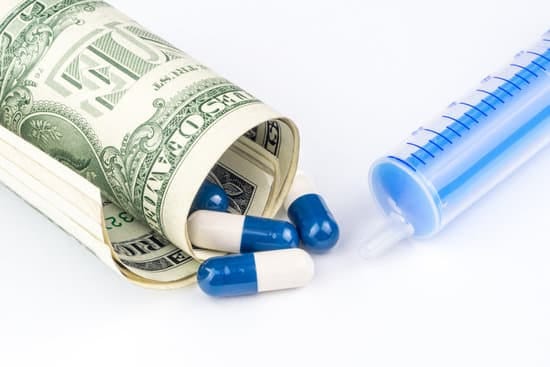
Eventually, after years of hard work, one or the other company created sound efficacy data, and the big players on the field are starting to take notice of the company. Pharma is traditionally interested in products that already have proven efficacy in clinical trials.
Sometimes, when someone has found the holy grail in the form of game-changing technology, they might engage earlier with big deals, but this is the exception rather than the norm. The sweet spot is solid clinical data packages.
It takes years to get the companies' attention and negotiate a deal for founders and investors' exit. The posted numbers are nice — an 800 million euro deal here, a 1,2 billion deal there. The reality is, those numbers are calculated on the entire deal size when the novel therapeutic, drug, or medical device hits the market and includes sales figures up to 20 years in the future.
The short term realities are small milestone payments and an option on later royalties.
The bottom line is…
When you love science and research and get satisfaction from creating something meaningful for our society that eventually improves billions' lives, you are in the right spot. It won’t make you rich but gives you a lot of satisfaction. It will take you one to two decades until you have built both strong expertise and network. Then, you are in the position of putting the right A-Team on the right A technology.
If you are after the money, get into trading stock, real estate, or blackjack. The stakes are better. And the learning curve is steeper and shorter.
Since 1999 I am an executive, advisor, and coach for companies in various industries. I specialized in Corporate Development and Finance. From seed rounds to IPO level. I am focused on life science since 2006.


