avatarCarter Tinsley

Free AI web copilot to create summaries, insights and extended knowledge, download it at here

3655

Abstract

resh</b> by alternating with other focus or mindfulness techniques</li></ul><p id="a275"><b>So what’s the point? Here’s a clue.</b></p><p id="4038" type="7">“Everyone can draw. Far from being a rare gift, only possessed by the ‘artists’ among us, drawing can be as natural and intuitive to us as breathing — if we let it. When practised mindfully, drawing has the power to effortlessly lead us into a deeper relationship with ourselves and the world, turning a simple act of creativity into play, into a dance of movement, a way of seeing deeply and connecting profoundly with life.” — Wendy Ann Greenhalgh</p><h1 id="fb7e">Benefits of Mindful Drawing</h1><p id="0628">Sit-down with a paper and pencil, any paper and pencil, and draw. It doesn’t matter if your lines are random or form the body of a masterpiece. <b>Soon you’ll find your mind clear and engrossed in the rhythmic movements of the pencil in your hand.</b></p><p id="7834">The benefits of mindful drawing are almost identical to those of meditation. In meditation, the object of focus is the breath, in mindful drawing, you use the movement of the pencil across the paper as your anchor. You’ll experience:</p><ul><li><b>More in-depth focus and a longer attention span</b>: We need focus and attention for almost everything in life. At work, you need to focus for long periods or to make engaging conversation with your date. Focus and concentration are like a muscle. They grow as you exercise them or wither when neglected.</li><li><b>Relaxation</b>: Mindful drawing reduces anxiety and general stress levels. This is important for both your physical and mental health.</li><li><b>Willpower</b>: Your willpower will increase with time. You’ll be more confident in both your relationships and taking on more substantial challenges in your professional life.</li><li><b>Flow</b>: Being immersed in a state of energized focus. When you’re finished your drawing session mind will be much better prepared to enter flow for your next task</li><li><b>Equanimity</b>: The mental-state of deep inner peace, of being, with no particular reference to the past or future. I’ve only achieved this state occasionally from either drawing or meditation. The prize is worth the effort. The state of equanimity can last for minutes or hours after a session if you can reach it.</li></ul><p id="951c" type="7">“I sometimes think there is nothing so delightful as drawing.” — Vincent Van Gogh</p><h1 id="4a43">Starting-out Drawing</h1><p id="fd88">Mindful drawing is easy, you only need to sit down and give it a go. Don’t worry about the quality, it’s the process that counts. Sometimes I doodle or form abstract shapes, then throw it away afterward. The goal is to unwind not draw the Notre Dame.</p><p id="8bbf">You can take two different approaches. The first is unguided mindful drawing, and the second is guided. I mostly take the unguided approach, but I do the occasional guided session. I’ve provided some great resources for both at the end of the article.</p><h2 id="a5ea">Unguided</h2><ul><li>Put on some <a href="https://mynoise.net/NoiseMachines/intergalacticSoundscapeGenerator.php">relaxing sounds</a> or music</li><li>Sit down with paper and a pen, or whatever you have on hand</li><li>Draw whatever comes to mind, or you could start with basic geometric shapes</li><li>Draw for at least 15 minutes</li></ul><h2 id="e0ea">Guided</h2><ul><li>Use guided audio or video recordings</li><li>Take a drawing class</li><li>Follow a book on mindful drawing</li></ul><h1 id="bae1">Resources</h1><ol><li>This guided mindful drawing exercise is simple, enjoyable, and relaxing and can be used as a daily

Options

mindfulness practice. This exercise is suitable for beginners</li></ol> <figure id="0cef"> <div> <div> <img class="ratio" src="http://placehold.it/16x9"> <iframe class="" src="https://cdn.embedly.com/widgets/media.html?src=https%3A%2F%2Fw.soundcloud.com%2Fplayer%2F%3Furl%3Dhttps%253A%252F%252Fapi.soundcloud.com%252Ftracks%252F300182959%26show_artwork%3Dtrue&amp;url=https%3A%2F%2Fsoundcloud.com%2Fartofmindfulness%2Fguided-mindful-drawing-meditation-15-minutes&amp;image=https%3A%2F%2Fi1.sndcdn.com%2Fartworks-000200582655-ngzkcy-t500x500.jpg&amp;key=a19fcc184b9711e1b4764040d3dc5c07&amp;type=text%2Fhtml&amp;schema=soundcloud" allowfullscreen="" frameborder="0" height="166" width="800"> </div> </div> </figure></iframe></div></div></figure><p id="73c7">2. I like this mindful drawing tutorial because it’s short, and you can follow Catherine as she draws with you. If you’re struggling to get started, this is an excellent video to watch.</p> <figure id="6cbc"> <div> <div> <img class="ratio" src="http://placehold.it/16x9"> <iframe class="" src="https://cdn.embedly.com/widgets/media.html?src=https%3A%2F%2Fwww.youtube.com%2Fembed%2F0kcAFq7C_CA%3Ffeature%3Doembed&amp;url=https%3A%2F%2Fwww.youtube.com%2Fwatch%3Fv%3D0kcAFq7C_CA&amp;image=https%3A%2F%2Fi.ytimg.com%2Fvi%2F0kcAFq7C_CA%2Fhqdefault.jpg&amp;key=a19fcc184b9711e1b4764040d3dc5c07&amp;type=text%2Fhtml&amp;schema=youtube" allowfullscreen="" frameborder="0" height="480" width="854"> </div> </div> </figure></iframe></div></div></figure><p id="d639">3. <a href="https://www.amazon.com/Mindfulness-Art-Drawing-creative-awareness-ebook/dp/B015CKNXD8">Mindfulness & the Art of Drawing: A creative path to awareness</a> (not an affiliate link) on Kindle, by Wendy Ann Greenhalgh, is the definitive book on mindful drawing. I’ve just finished reading it — 5 stars. It has the right balance of drawing techniques and mindfulness.</p><figure id="095b"><img src="https://cdn-images-1.readmedium.com/v2/resize:fit:800/1*Fn_RNbyd9wYmUfMllgfMjg.jpeg"><figcaption>Mindfulness & the Art of Drawing: A creative path to awareness Kindle Edition, by Wendy Ann Greenhalgh</figcaption></figure><p id="6f85">4. ‘How to Draw’ is an excellent free beginner drawing course. It includes easy to follow tutorials and lots of practical advice. It’s not geared towards mindful drawing per se, but all drawing is mindful by nature ,so that doesn’t matter.</p><div id="1a4c" class="link-block"> <a href="http://rapidfireart.com/how-to-draw-for-beginners/"> <div> <div> <h2>How to Draw: Free Beginner's Course</h2> <div><h3>However, I have been skimming through all your free course material and would like to say that you have captured…</h3></div> <div><p>rapidfireart.com</p></div> </div> <div> <div style="background-image: url(https://miro.readmedium.com/v2/resize:fit:320/0*zhhXKCPlSOdK4ykC)"></div> </div> </div> </a> </div><h1 id="7af3">The Takeaway</h1><ol><li>Drawing is an excellent alternative to mediation and will increase the intensity of your focus, length of attention span, relax you, and make you more productive</li><li>All you need is paper, a pencil, and some headphones</li><li>It’s easy and cheap to get started</li></ol><h2 id="b64c">Please try it and let me know what you think in the comments.</h2></article></body>

Photo by MESSALA CIULLA from Pexels

How to Increase Your Focus and Productivity With Mindful Drawing

Mindful Drawing is an Effortless Alternative to Meditation

Do you have trouble meditating? Or do you want to try a different technique?

“Being in the flow is something that all creative people — every person who has ever engaged in a creativity activity — will recognize. It’s that moment when the hand holding the pen seems to move across the page of its own volition; eyes move between paper and object, drawing instinctively; there’s no sense of effort, only of enjoyment.”- Wendy Ann Greenhalgh

Meditation is great for achieving focus because it reduces your stress levels and anxiety while lengthening your attention span. People meditate for a variety of reasons. Many people use it to de-stress, while others use it as a method to still the mind and focus before starting an important task. Keep reading, it gets better.

I’ve been meditating on and off for seven years, and I’ve benefited from it. But, I’ve run into many hurdles.

During the early stages of building up a new FinTech company, I was only getting 4–5 hours of sleep a night for months on end. Work was causing me a considerable amount of stress, and I needed to let off steam and free my mind.

But do you think I could meditate? Even after years of practice? Hell no. I would fall asleep within minutes of starting a session. So I needed a new solution. Here it is my friend.

Mindful drawing is a fantastic alternative to meditation because it stills your mind, improves your focus and attention span, to make you happier and more productive. I’ll show you how.
Photo by Nika Akin from Pexels

Meditation Challenges

Despite meditations many benefits, many beginners stop meditating when they hit obstacles, or cannot realize the benefits of a regular practice. This isn’t surprising because meditation can look simple at first.

We can meet many challenges during meditation. We can overcome the hurdles given enough time and the right conditions. But life is busy, and we rarely have the luxury of free time. The obstacles include:

  • Falling asleep because of tiredness
  • The wrong place or time. You might be in a busy office or stuck on a crowded train
  • Have trouble with the breathing technique because you have hay-fever or a cold!
  • You don’t enjoy meditating because of personal or religious beliefs
  • It just doesn’t do it for you…
  • A desire to keep your practice fresh by alternating with other focus or mindfulness techniques

So what’s the point? Here’s a clue.

“Everyone can draw. Far from being a rare gift, only possessed by the ‘artists’ among us, drawing can be as natural and intuitive to us as breathing — if we let it. When practised mindfully, drawing has the power to effortlessly lead us into a deeper relationship with ourselves and the world, turning a simple act of creativity into play, into a dance of movement, a way of seeing deeply and connecting profoundly with life.” — Wendy Ann Greenhalgh

Benefits of Mindful Drawing

Sit-down with a paper and pencil, any paper and pencil, and draw. It doesn’t matter if your lines are random or form the body of a masterpiece. Soon you’ll find your mind clear and engrossed in the rhythmic movements of the pencil in your hand.

The benefits of mindful drawing are almost identical to those of meditation. In meditation, the object of focus is the breath, in mindful drawing, you use the movement of the pencil across the paper as your anchor. You’ll experience:

  • More in-depth focus and a longer attention span: We need focus and attention for almost everything in life. At work, you need to focus for long periods or to make engaging conversation with your date. Focus and concentration are like a muscle. They grow as you exercise them or wither when neglected.
  • Relaxation: Mindful drawing reduces anxiety and general stress levels. This is important for both your physical and mental health.
  • Willpower: Your willpower will increase with time. You’ll be more confident in both your relationships and taking on more substantial challenges in your professional life.
  • Flow: Being immersed in a state of energized focus. When you’re finished your drawing session mind will be much better prepared to enter flow for your next task
  • Equanimity: The mental-state of deep inner peace, of being, with no particular reference to the past or future. I’ve only achieved this state occasionally from either drawing or meditation. The prize is worth the effort. The state of equanimity can last for minutes or hours after a session if you can reach it.

“I sometimes think there is nothing so delightful as drawing.” — Vincent Van Gogh

Starting-out Drawing

Mindful drawing is easy, you only need to sit down and give it a go. Don’t worry about the quality, it’s the process that counts. Sometimes I doodle or form abstract shapes, then throw it away afterward. The goal is to unwind not draw the Notre Dame.

You can take two different approaches. The first is unguided mindful drawing, and the second is guided. I mostly take the unguided approach, but I do the occasional guided session. I’ve provided some great resources for both at the end of the article.

Unguided

  • Put on some relaxing sounds or music
  • Sit down with paper and a pen, or whatever you have on hand
  • Draw whatever comes to mind, or you could start with basic geometric shapes
  • Draw for at least 15 minutes

Guided

  • Use guided audio or video recordings
  • Take a drawing class
  • Follow a book on mindful drawing

Resources

  1. This guided mindful drawing exercise is simple, enjoyable, and relaxing and can be used as a daily mindfulness practice. This exercise is suitable for beginners

2. I like this mindful drawing tutorial because it’s short, and you can follow Catherine as she draws with you. If you’re struggling to get started, this is an excellent video to watch.

3. Mindfulness & the Art of Drawing: A creative path to awareness (not an affiliate link) on Kindle, by Wendy Ann Greenhalgh, is the definitive book on mindful drawing. I’ve just finished reading it — 5 stars. It has the right balance of drawing techniques and mindfulness.
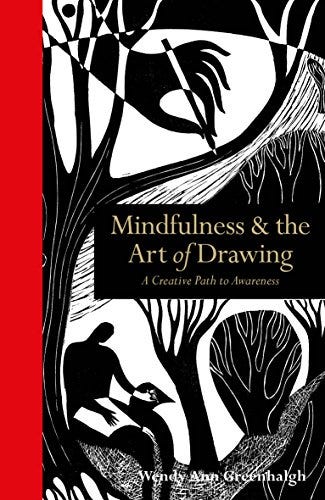
Mindfulness & the Art of Drawing: A creative path to awareness Kindle Edition, by Wendy Ann Greenhalgh

4. ‘How to Draw’ is an excellent free beginner drawing course. It includes easy to follow tutorials and lots of practical advice. It’s not geared towards mindful drawing per se, but all drawing is mindful by nature ,so that doesn’t matter.

The Takeaway

  1. Drawing is an excellent alternative to mediation and will increase the intensity of your focus, length of attention span, relax you, and make you more productive
  2. All you need is paper, a pencil, and some headphones
  3. It’s easy and cheap to get started

Please try it and let me know what you think in the comments.

Mindfulness
Startup
Life
Self Improvement
Productivity
Recommended from ReadMedium