
How to Improve Communication and Benefit Communities
Understanding Speech Codes in Cross-Cultural Communication
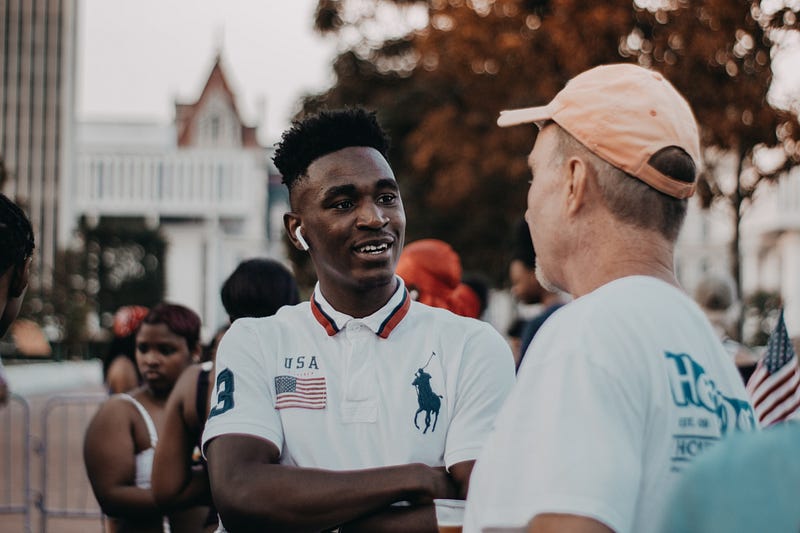
Cross-cultural communication is, in a word, complex. In case you’ve never come across this expression, ‘cross-cultural communication’ means a verbal exchange by members of different cultures.
The type of culture that I’m talking about includes vastly different cultures like Japanese and North American. But also cultures that have more similarities - including English language - like African American and Caucasian.
In the same vein, we might even say speakers from different genders (male and female) are akin to being from different cultures for the purpose of understanding speech codes.
Beneath the Surface of Meaning
Every time two speakers from different cultures engage in conversation they are entering an ambiguous zone. These are full of sub-zones of possible misinterpretation. In this murky sub-zone, miscommunication follows — often with one or both speakers unaware. This disconnect can go on for a long time, because on the surface it looks like the conversation is progressing.
In that scenario, the speech is grammatical and the vocabulary seems appropriate, as the listener (both speakers at different times are listeners) nods or displays other nonverbal signs of understanding.
But linguistic understanding alone doesn’t equal true communication. Beneath that linguistic veneer lies the mystery zone that is highly cognitive and rich in properties crucial to understanding the true meaning of what’s being said.

How Speech Codes Take Shape
Interrelated properties such as speech codes (speech variety), values, and appropriateness function continually in speakers. And they function differently from speaker to speaker cross-culturally. For example, when one speaker is Japanese and the other is Canadian.
But why would speech codes conflict when the two speakers are from the same culture? The reason is simple. Codes are properties that, besides being shaped by culture, are also shaped by factors like age, gender, education, and social background.
They even shape our individual perceptions
Two speakers from the same culture (‘community’ in the linguistic and social sense, though, at least share a general environment) The benefit being that it shapes certain general patterns of behaviour. But two speakers from different cultures don’t even share that general framework.
So those two must fight to overcome their sociolingusitic constraints (non-shared backgrounds) if they want to have communicative competence. This embodies true understanding.
Speech Codes and Social Class
Speech code has been under scrutiny since the early 1960s when Bernstein, a sociologist, drew attention to it. He hypothesized that code was based on social background. His work on “restricted” code and “elaborate” code refers to “lower class” and “middle” and “upper” class respectively. *
The code of the “lower” class is restricted to their use because it’s based on their shared experiences and assumptions. The more objective codes of the “middle” and “upper” classes is more universal and is thus used to communicate with speakers beyond their group.
Speaker-1, then, expects to hear a particular code that identifies the social class of Speaker-2. So they know how to respond appropriately.**
Gumperz elaborated on Bernstein’s 1968 writings, stating the “restricted code” emphasized communal values at the expense of individual expression and initiative. The restricted code often limits the introduction of new information by verbal means and replaces it with ritualised exchanges.
This formulaic code, Gumperz said, reinforces preexisting social relationships rather than exchanging new information.
The “elaborate code”, on the other hand, used by “person-oriented role systems”, emphasizes individual freedom and adaptability. It expresses information about the social and physical environment. What’s more is that it creatively manipulates the language in order to do so.***
Subconscious Symphony of Speech Codes
It gets really interesting here though. Gumperz states that our use of speech codes is based on a subconscious choice. He found evidence for “compelling patterns of speech behaviour which may not be realized by the speaker at all.”
According to this theory, then, an individual speaking in dialect makes the subconscious choice to do so, based on his or her social background.
It’s not difficult to see the danger in projecting our cultural codes onto a speaker from a different cultural group. The second speaker has a whole different set of cultural codes.
As an example, take a Canadian English speaker (L-1) and a Japanese speaker (L-2). Speaker L-1 might make assumptions of and have expectations for Speaker L-2. The expectations probably won’t be met.
A characteristic in Japanese communication, which we can call a speech code, dictates that Speaker L-2 would subconsciously expect female Japanese speakers to speak in a high octave when they speak to Japanese males. It demontrates respect coming from the female speaker.
Imagine the male L-2 speaker speaks with a female L-1 who speaks Japanese linguistically accurate but in a low octave. Chances are high that he would feel the female speaker is less than respectful.
In a business situation it could cause friction and even cause the loss of a business opportunity.
Miscommunication then ensues, and will occur whether the language spoken is English or Japanese. A host of negative emotions may very well be triggered in this exchange.
Codes are culture-bound. What’s more, a non-native speaker (for example a native English speaker using Japanese) can and often does speak the target language linguistically correct, but without knowledge of the corresponding set of codes.
Speech codes are not taught directly in language classrooms because they are not yet clearly defined. But it’s possible to recognize speech codes unique to other cultures. It can even be vital to learn to use them appropriately.
Final Word on Speech Codes
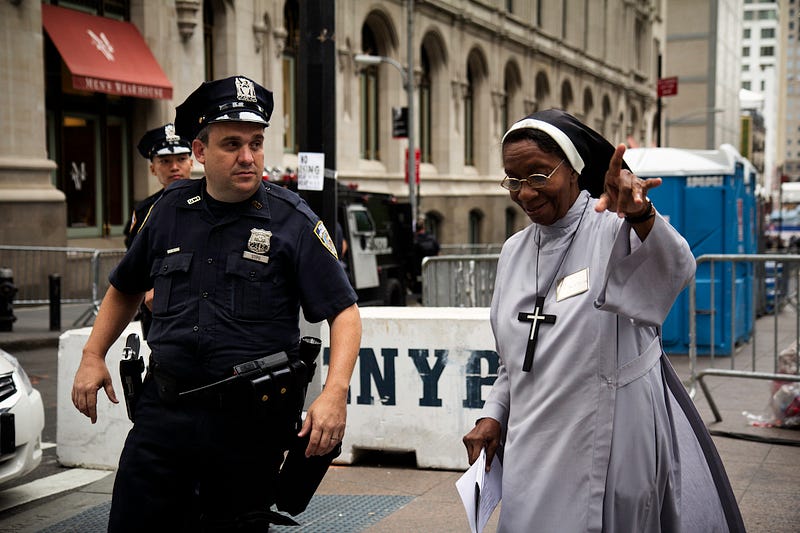
Learning speech codes is vital in terms of cross-cultural communication. In other words, it’s vital if we want to understand each other in our communities or even in our families. It’s also vital for educators, health care workers, and police forces.
Further, it’s critical and urgent that training in police forces and military include teaching speech codes unique to the minority groups that reside in any given community.
This content only skims the surface of the topic of speech codes. The scope here is too limited for an exhaustive discussion of this topic. But stay tuned for Speech Codes Part II.
- *J.B. Pride, The Social Meaning of Language (London: Oxford University Press, 1971), p. 121.
- **Trudy O’brien, “Cross-Cultural Variability in Conversational Interactions,” Carleton Papers in Applied Language Studies, (Ottawa: Carleton University, vol II, 1985), p. 71.
- ***J.J. Gumperz, “Sociolinguistics and Communication in Small Groups,” Sociolinguistics: Selected Readings, (1970), p. 218.