avatarRhiannon James

Free AI web copilot to create summaries, insights and extended knowledge, download it at here

2785

Abstract

he author</figcaption></figure><h2 id="db7c">2. Curiosity</h2><p id="4d9b">I’ve had my fair share of bad conversations, the type where it feels one-sided and I’m left doing all the heavy lifting. You can read about that disaster here:</p><div id="b80f" class="link-block"> <a href="https://readmedium.com/just-make-new-friends-as-an-adult-they-said-a-poem-e0ce190b0c03"> <div> <div> <h2>Just make new friends as an adult, they said — A poem</h2> <div><h3>Fails are fuel for creative content, right?</h3></div> <div><p>medium.com</p></div> </div> <div> <div style="background-image: url(https://miro.readmedium.com/v2/resize:fit:320/1*m_rOUuDeMOt-9Zs5WK61YQ.png)"></div> </div> </div> </a> </div><p id="cc05">We’ll never know everything there is to know about a person, or about anything! And that’s great. It means there’s always something to learn.</p><p id="f150">Somehow we’ve made up this unspoken rule that if you don’t know something (like, the capital of New Zealand is Wellington), but someone else does, then this must mean you’re not as good as them.</p><p id="d2a1">Nothing could be further from the truth!</p><p id="abad">You have insane depths of knowledge within you, that no one else does. Topics that you love, whether that’s ancient greece or The Sims. It’s all relevant.</p><p id="4a5e">The most interesting thing about you, in my opinion, is your passion. I want to know, what drives you? What’s your dream? Why?</p><p id="d42f">Ask people questions.</p><p id="0a43">Be interested. Be present and engaged.</p><ul><li>“Can you tell me more about that?”</li><li>“Why did you get started?”</li><li>“What would you do differently now?”</li></ul><p id="c02a">There’s always more information to pull out.</p><p id="9771">And if all else fails and you can’t think of any questions to ask, simply say — “And you?”, after your answers to theirs.</p><figure id="449a"><img src="https://cdn-images-1.readmedium.com/v2/resize:fit:800/1*Qz-NK9g-N09maXCeqmVMhw.jpeg"><figcaption>Illustration by the author</figcaption></figure><h2 id="4c1b">3. Contribute</h2><p id="fadc">A conversation should be an equal energy exchange. Give people something to be curious about.</p><p id="5365">I’ve talked about how ‘bad conversations’ are the ones that feel hard. Like trying to get blood out of a stone.</p><p id="2aba">Where the other person is giving you yes/no answers and nothing to go on.</p><p id="6def">I must confess, that was me. I used to think nobody would be interested in me, my life, or what I had to say. So I’d say… nothing. What’s the point? I’d already decided for them. I was not of interest.</p><p

Options

id="9b93">But this wasn’t and isn’t true. However, at the time, by shutting people out and not providing them any insight into the inside of my head, they had no where to go with our conversations.</p><p id="4c75">It was a self-fulfilling belief I’d made up — “No one finds me interesting, so I won’t try”. And what was the result? No one found me interesting to talk to, so they wouldn’t! And thus, confirming my belief.</p><p id="9227">Until — I started to contribute parts of myself.</p><ul><li>“I’ve just starting reading this book on conscious leadership”</li><li>“My dog does that, he’s a 10 year old chocolate labrador”</li><li>“I’m a writer, artist, poet and I’m obsessed with zines”</li></ul><p id="20c1">Unless you’re someone who talks about themselves as a result of nerves, you might find it can be uncomfortable to shine the light back onto us.</p><p id="6891">My default is to deflect! Placing the focus back to the person at hand.</p><p id="de17">But I’ve started showing up to conversations now where I give a part of myself. I give, you give. Back and forth, like tennis.</p><h2 id="9cf1">Final Thoughts</h2><p id="f327">A conversation is an equal exchange.</p><ul><li>Show immediate respect for the other person, by checking in on their capacity to engage in the type of conversation you want to have.</li><li>Check in with yourself. What do you need right now? How do want to feel seen and valued in this conversation?</li><li>Be curious. Show interest in the person. People won’t remember what was spoken about, but they will remember how you made them feel. Give them that feeling of being seen, being interesting, being respected.</li><li>Take up space. Contribute your thoughts and things you find interesting. It gives others something to respond to and move the conversation forward.</li></ul><p id="648d">Here’s to new friends!</p><p id="f982"><i>Thank you so much for reading, friend.</i></p><p id="4ee9">© Copyright Rhiannon James, 2022</p><p id="9edd">Like my style and want to support my writing and art? <a href="https://ko-fi.com/goddessorwitch">https://ko-fi.com/goddessorwitch</a></p><div id="fa5d" class="link-block"> <a href="https://medium.com/@Goddessorwitch/membership"> <div> <div> <h2>Join Medium with my referral link - Rhiannon James</h2> <div><h3>As a Medium member, a portion of your membership fee goes to writers you read, and you get full access to every story…</h3></div> <div><p>medium.com</p></div> </div> <div> <div style="background-image: url(https://miro.readmedium.com/v2/resize:fit:320/0*sc2dsRkrwzS_5raM)"></div> </div> </div> </a> </div></article></body>

How to Hold a Respectful Conversation (Especially With a Stranger)

An illustrated guide to the 3 C’s in conversing
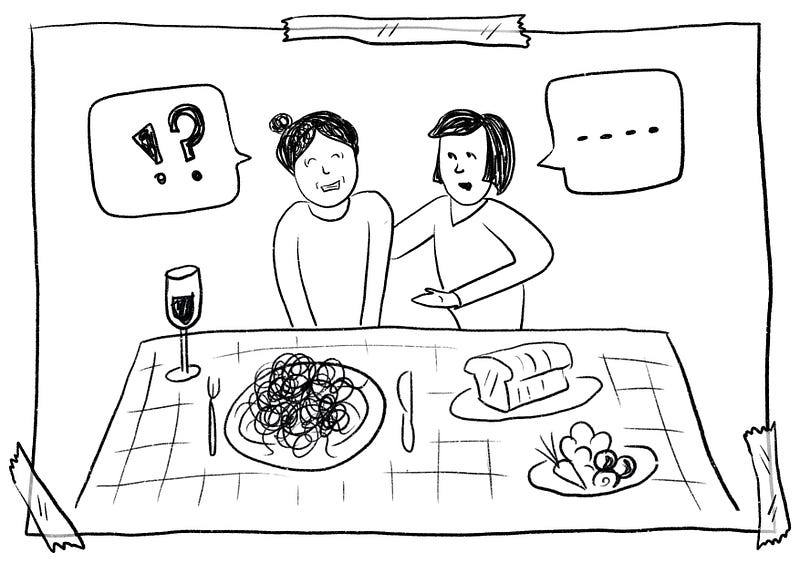
Illustration by the author

I literally had my hands over my ears.

Surely, that’s a sign that someone doesn’t want to hear what you’re saying?!

But she carried on.

She had apparently witnessed something terrible that day, involving a cat and a car. She was outraged and angry, clearly needing someone to rant to.

She was looking for a sympathetic ear to share in her horror. But I didn’t want to know.

I still have scenes, stories and images burned into my brain from when I was younger. Things I can’t unsee and didn’t ask to see. And they can still upset me to this day, if I allow myself to think of them.

And no amount of my suffering will help others to suffer less.

So I block my ears, or remove myself from conversations and situations I can see might bring my mental health down to a level where I can’t impact the world positively.

It’s a new boundary I’m trying on for size, and slowly growing into.
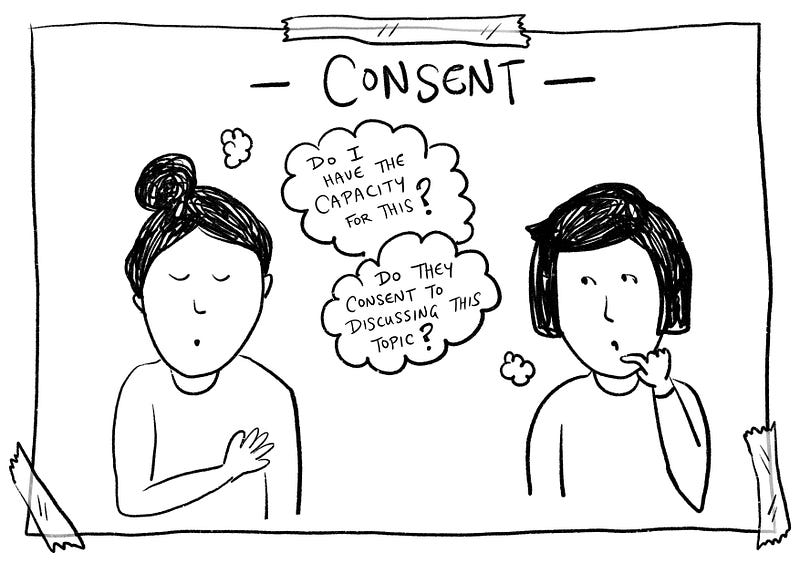
Illustration by the author

Which brings me to our first C, in how to have better conversations:

1. Consent

You probably know by now that we’re all different. We all have unique lives, different things going on for us at any given time. You never really know how or what someone is dealing with internally — unless you ask.

  • “Hey, do you have the capacity for this topic, today?”
  • Do I have the emotional space to be present and listen to someone’s rant?

Maybe you’re feeling pretty good right now and have lot’s of capacity to help, offer support and be a shoulder to cry on.

Or that might actually be something you need instead.

Pause for a moment, identify your own needs (which will fluctuate).

Check to see if you consent to the conversation being thrown out there. If not, that’s ok, state your needs.

Perhaps you’re the one who needs to rant about this cat you saw on the road. That’s ok too — but check in to see if you’ve got the right person, on the right day.
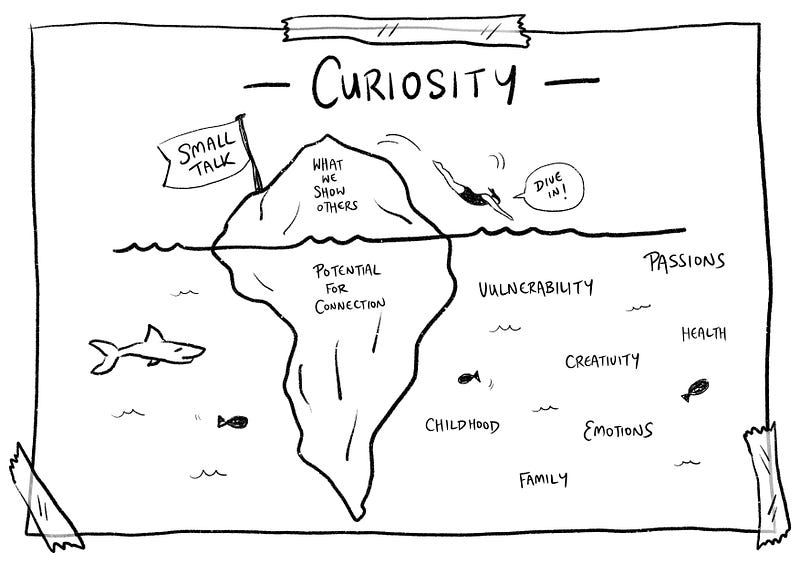
Illustration by the author

2. Curiosity

I’ve had my fair share of bad conversations, the type where it feels one-sided and I’m left doing all the heavy lifting. You can read about that disaster here:

We’ll never know everything there is to know about a person, or about anything! And that’s great. It means there’s always something to learn.

Somehow we’ve made up this unspoken rule that if you don’t know something (like, the capital of New Zealand is Wellington), but someone else does, then this must mean you’re not as good as them.

Nothing could be further from the truth!

You have insane depths of knowledge within you, that no one else does. Topics that you love, whether that’s ancient greece or The Sims. It’s all relevant.

The most interesting thing about you, in my opinion, is your passion. I want to know, what drives you? What’s your dream? Why?

Ask people questions.

Be interested. Be present and engaged.

  • “Can you tell me more about that?”
  • “Why did you get started?”
  • “What would you do differently now?”

There’s always more information to pull out.

And if all else fails and you can’t think of any questions to ask, simply say — “And you?”, after your answers to theirs.
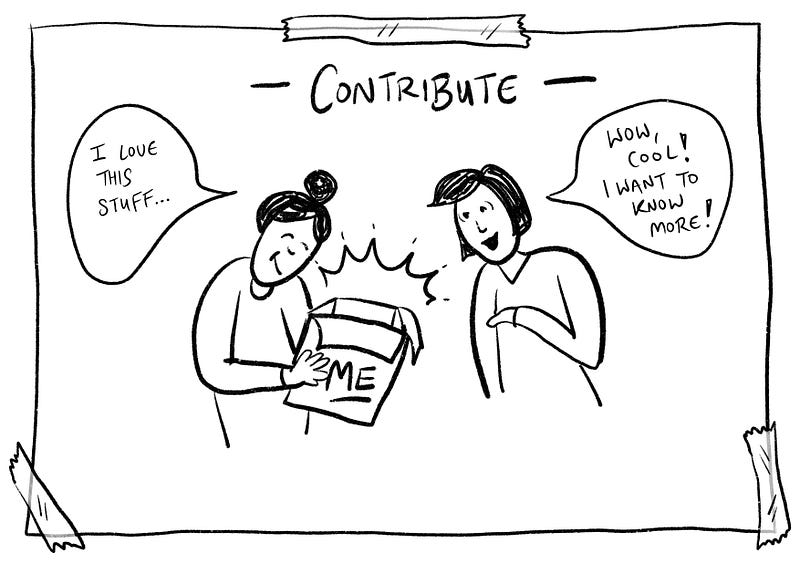
Illustration by the author

3. Contribute

A conversation should be an equal energy exchange. Give people something to be curious about.

I’ve talked about how ‘bad conversations’ are the ones that feel hard. Like trying to get blood out of a stone.

Where the other person is giving you yes/no answers and nothing to go on.

I must confess, that was me. I used to think nobody would be interested in me, my life, or what I had to say. So I’d say… nothing. What’s the point? I’d already decided for them. I was not of interest.

But this wasn’t and isn’t true. However, at the time, by shutting people out and not providing them any insight into the inside of my head, they had no where to go with our conversations.

It was a self-fulfilling belief I’d made up — “No one finds me interesting, so I won’t try”. And what was the result? No one found me interesting to talk to, so they wouldn’t! And thus, confirming my belief.

Until — I started to contribute parts of myself.

  • “I’ve just starting reading this book on conscious leadership”
  • “My dog does that, he’s a 10 year old chocolate labrador”
  • “I’m a writer, artist, poet and I’m obsessed with zines”

Unless you’re someone who talks about themselves as a result of nerves, you might find it can be uncomfortable to shine the light back onto us.

My default is to deflect! Placing the focus back to the person at hand.

But I’ve started showing up to conversations now where I give a part of myself. I give, you give. Back and forth, like tennis.

Final Thoughts

A conversation is an equal exchange.

  • Show immediate respect for the other person, by checking in on their capacity to engage in the type of conversation you want to have.
  • Check in with yourself. What do you need right now? How do want to feel seen and valued in this conversation?
  • Be curious. Show interest in the person. People won’t remember what was spoken about, but they will remember how you made them feel. Give them that feeling of being seen, being interesting, being respected.
  • Take up space. Contribute your thoughts and things you find interesting. It gives others something to respond to and move the conversation forward.

Here’s to new friends!

Thank you so much for reading, friend.

© Copyright Rhiannon James, 2022

Like my style and want to support my writing and art? https://ko-fi.com/goddessorwitch

Self Improvement
Conversations
Consent
Curiosity
Sharing
Recommended from ReadMedium