
Interviews | Gentleness Ambassadors
How to Hold a Gentle Space for You and Your Body
An interview with Karen De Souza — Embodied Movement Coach

This article is part of an interview series, where I ask fellow sensitive healers, coaches, artists, and spiritual teachers how they embody Gentleness in their businesses and personal lives. I call them Gentleness Ambassadors :)
Interviewing Karen De Souza was such a quiet and soothing experience — it’s like having a therapeutic quiet tea time conversation with her.
Through this article, I will be sharing with you some of her profound experiences in restoring Gentleness in herself and others through physical movement.
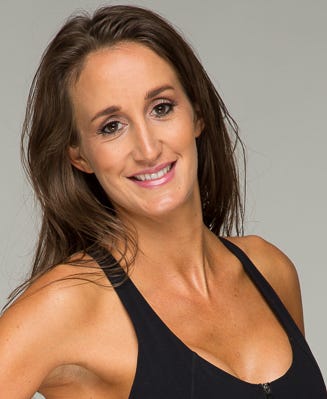
More about Karen De Souza
Karen is an Embodied Movement Coach based in Malta. She offers both in-person and online coaching sessions.
She is uniquely qualified as an experienced Social Worker, Personal Trainer, and Trauma-Informed Practitioner.
The questions I asked Karen are in headings and her answers are within each section.
Can you tell us more about you and your work?
I’m an Embodied Movement Coach.
I coach kids and adults by helping them to tap into the wisdom of their bodies through movement, expression, and play. I bring fluidity into my practice and allow this in my life on all levels. Knowing what we need changes from day to day and even from moment to moment.
The more we are aware of how our needs can shift, and the more we learn to connect with our bodies, we start to feel positive changes in our work, our relationships, and most importantly, ourselves. Our bodies are the only ones we live with!
Embodied movement coaching is not about getting a vigorous physical workout. It depends on what’s showing up for you, assuming you are my client. I would draft a plan for a session but I work with flow and ease, and sessions have fluidity as does life.
I would look at your stress cycles, help you to regulate your stress, and create new resources for you. So when you get stressed, you would have tools to tap into calmness. If you need to pick up your energy, you would know various ways to feel revitalized.
How do you embody Gentleness in your work?
I like yoga, walking, running, and swimming. I like doing some bodybuilding practices, using movement as a metaphor, and I love cooking!
I tap into what I feel called to do at that moment.
This is my philosophy and I do my movement practices with my clients, knowing that they might need something different each time.
For example, when a client books an appointment on Wednesday, she might be full of energy on Tuesday. But on Wednesday she could be saying, “I’m drained”, “I’m exhausted”, or “I’m going through pre-menopause”, etc.”
I need to take all these things into account, knowing that I can’t coach exactly as I planned. So I listen to what their bodies are saying and adjust my plan. I give them space to acknowledge that and tune into the wisdom of their bodies.
I need to be flexible and offer them various choices because what might feel good one day might feel off another day.
That’s perfectly okay because life is not linear.
How do we continue to listen to our bodies’ needs and focus on the goals we want to reach?
Well, that takes practice!
You learn that life changes and you change from day to day so we shouldn’t aim for perfection. But we can feel into what feels right.
Besides learning through my life experiences, I receive support from a very good friend who is also a bodyworker and embodiment coach. We use each other as sounding boards and we hold space for each other really well.
As professionals who work with clients, we need to have others to hold space for us. If you don’t have someone holding space for you then how are you going to hold space for someone else?
Similarly, for everything that I teach to my clients, I practice the techniques myself first, because I need to know what it feels like. You can’t coach someone something without knowing how it feels.
For example, you might do an exercise and realize that was quite challenging. Or you might ask a client to just move freely in your body and just allow the rhythm to move. But if she is not used to dancing and playing freely, then she might not know how to move freely in her body.
As adults, we can have a tendency to be rigid and formal, so it’s great to play with the way we move our bodies. Initially, you might feel strange and think to yourself, “I don’t know how I feel about that.” Just let that be because it’s a gradual process.
What does holding space look like in an embodied movement coaching session?
I create an environment that is appropriate for what we will be doing during each coaching session. I make sure I have the things I need for the exercises, and that we will not be distracted during this time.
I believe it’s vital that when clients come to me they know this time and space is reserved for them.
When I’m having sessions with my clients they might feel called to share certain life situations/challenges. So even before the sessions commence, I start to think about what they need — their goals, what they hope to achieve, and how I plan to help them get there.
So I’m already preparing that space in my mind, in my body, and physically. I practice all the movement exercises I want to share with my clients, so when I feel these exercises in my body, then I know what it’s like to have that space created for me. And when I experience someone else holding space for me, I am much more equipped to hold space more effectively for my clients too.
What kind of Harshness do your clients come to you for processing and releasing?
They usually come to me to process and release these things:
- chronic pain
- harsh self-criticism
- perfectionism
- overworking
- not doing enough of what they want to do
- not feeling safe to completely express themselves
We all have our internal critics and sometimes we can teach our critics to be a little bit quieter. Because if we keep listening to that voice, we might not be able to express ourselves fully.
I think the most significant form of Harshness is the expectations that my clients place on themselves.
You might say to yourself, “I’m not good at running so I’m never gonna run it.” It doesn’t matter whether you’re good at it. It’s about how it makes you feel while you’re running and afterward.
Everything is processed through our bodies — our thoughts, emotions, and experiences. So we need to also allow space for our bodies to process that. The opposite of Harshness is Gentleness and Forgiveness; giving ourselves space to express our thoughts, emotions, and experiences.
My clients come to me for embodied movement coaching because they want to move differently, treat themselves and especially their bodies better, and to express themselves more gently. This is a gradual process so they usually work with me for longer periods of time from six weeks, six months, to a full year.
How are you embodying Gentleness in your own life right now?
I’ve learned that we can’t be perfect for everything, we just need to do our best. So I’m being gentle with myself and my expectations, trusting that things happen in stages.
In my movement practice, I listen to my body and ask:
- What does my body want today?
- What does my body want to express this morning?
- How does it want to move?
- How does it want to feel?
For instance, I’ve only run twice this week and I aim for 3 times a week but I tune into what my body needs and readjust my expectations. My body appreciates having a different movement practice or stillness rather than pushing myself through a run that my body doesn’t want at that moment. So I tune into how my body feels this morning and readjust to my expectation.
So how did you arrive at this phase of being gentler with yourself and your body?
I’ve always been conscious of my movement health, but there was a time when I let my mind take over what my body needed.
Once, I was in this bodybuilding phase and I needed to do this fixed amount of reps and sets to achieve this beautiful figure, and these particular shoulders and thighs, etc.
I realized eventually that it was not a compassionate practice for me. It doesn’t account for what my physical and emotional needs are. I felt it could be very hedonistic — and I didn't like what these expectations made me feel in my mind and body.
I didn’t like what it felt like in my mind and body.
Having this experience helped me to move away from that and start to listen to my body more, instead of letting my mind get too involved.
Now I see my body as a wonderful vessel and I no longer train in a gym. All my fitness apparatus are at home and I swim in the sea.
We use our bodies to process everything and our bodies experience everything. But we can use movement as a metaphor to see how we go through challenges in life.
There might be something you want to keep working at but you keep getting knocked down. So in movement, you can feel what it’s like getting physically knocked back down. The next step is to explore how would your body get back up?
So I would experiment with different ways to get off the floor so I involve both my mind and body. I allow my body to experience various ways of standing up, bouncing, and jumping back up, so I would weave all of these into my movement practice. This inspires me to keep moving towards my life goal in spite of the challenge I face.
I’m not merely moving for the sake of moving.
I use my movements as a metaphor for the challenges I want to resolve in my life and I use my body to feel what it feels like to resolve them.
What final message would you like to share about Gentleness?
Remember that our bodies have a lot of wisdom and are naturally inclined to heal. We need to give ourselves the space to tap into that.
In the same breath acknowledging that being very conscious in our body can be difficult and there may be days or times where the full presence can be difficult. Some days we can tap into it and some days we can’t. It is a gentle process.
The more we practice it, the better we get at it.
Gentleness is not about being completely lazy and not doing anything at all.
Gentleness is so needed, especially at this time. We’re transitioning from this masculine energy where everything has to be formalized, through a beautiful awakening of the feminine energy and to being intuitive and listening to the wisdom of our bodies and allowing more flow into our lives.
There’s also a lot of Gentleness in Mother Nature — so do find the space for that much as you can. By remembering that we are part of nature and take more time to be in nature, we are giving our minds and our bodies a wonderful gift.
Thank you Karen De Souza for this quiet and nurturing conversation.
If you are interested in connecting with Karen De Souza, do contact her through her Patreon Page, Facebook page, and Instagram account.


