avatarClaudia Caraulan

Free AI web copilot to create summaries, insights and extended knowledge, download it at here

1462

Abstract

s-1.readmedium.com/v2/resize:fit:800/1*1PAWn7oor3HcVPJfu2W6AA.png"><figcaption>Image by the author</figcaption></figure><h1 id="60a7">Studies</h1><p id="45f6"><b>Robert Zajanoc</b>, a social psychologist, carried out various studies on the matter.</p><h2 id="7a80">#1 Study</h2><p id="1d0f">People were exposed to Chinese characters for a very short amount of time. Later, they were told that those characters represented adjectives.</p><p id="2659">When asked, <b>subjects labeled the characters they had been shown more frequently as positive adjectives</b>, compared to the ones less familiar.</p><p id="ec24">Similarly, using Chinese characters but not mentioning they were adjectives, subjects reported a nicer feeling from familiar symbols.</p><h2 id="260b">#2 Study</h2><p id="906d">During a study being conducted on men, they were given new tropical fruit juices. Subjects tasted the juices 0, 5, 10, and 20 times.</p><p id="381b">When asked which ones they liked best, subjects chose the ones they had tried the most times.</p><h2 id="d47a">#3 Study</h2><p id="70e5"><b>Charles Goetzinger</b> experimented in a class at the University of Oregon.</p><p id="0b76">He asked one of his students to come to class dressed with a big black bag, only showing his feet, and sit at the back of the classroom.</p><p id="05aa">During the first class, students had hostile behavior towards him, but this hostility eventually turned into curiosity, and finally friend

Options

ship.</p><h1 id="f215">MME in 2022</h1><p id="8768">As many of these studies have proven, <b>unconsciously repeated stimulus</b> resolved in a positive behavior towards them.</p><blockquote id="8ead"><p><i>But why could that be useful to us in the 21st century?</i></p></blockquote><p id="b2ab">Well, think about <b>marketing and subliminal publicity.</b> We are constantly exposed to all sorts of ads, so many we lose count, and think we don’t even pay attention to them.</p><p id="d131">But tell me… when you travel to a foreign country, don’t you always flirt with the idea of <i>Starbuck </i>or <i>McDonalds</i>, instead of trying local cafeterias and restaurants?</p><p id="81d4">Places we already know, make us feel more at home, even if we are 1000 miles away.</p><p id="27ae">Have you ever listened to a song and hated it, but due to constant repetition on the media ended up singing that song for weeks, and eventually dancing to it?</p><p id="2f2c"><i>My money don’t jiggle jiggle, it folds…</i></p><p id="91c0">Give it a thought, because this effect, if done nicely, can even be used to your advantage.</p><p id="1a4b">But be careful with overusing it, we all know <b>excessive repetition leads to boredom.</b></p><figure id="0898"><img src="https://cdn-images-1.readmedium.com/v2/resize:fit:800/1*mhuwyUuiACjF6truq9hmhw.png"><figcaption><a href="https://medium.com/@claudiacaraulan/membership">Keep learning</a></figcaption></figure></article></body>

How to Hack The Brain Into Liking Someone or Something

The psychological phenomenon of familiarization

Image by the author

Have you ever listened to a song but not really liked it until you listened to it at least 10 times?

Well, that is a psychological phenomenon, the mere-exposure effect, and it happens constantly with all sorts of things.

Guideline

  • How does it work
  • Studies
  • Mere-exposure effect in 2022

How does it work

Gustav Fechner, physicist, philosopher, and experimental psychologist, was the first one to conduct studies on the effect.

He stated that we react with fear to new and undiscovered things. However, this fear of the unknown vanishes when we become familiar with the unknown.

Mere repeated exposure of the individual to a stimulus is a sufficient condition for the enhancement of his attitude toward it.

What is more, this effect has nothing to do with consciousness. It works the opposite way, when we are unaware of the familiarization, the mere-exposure effect is much stronger.
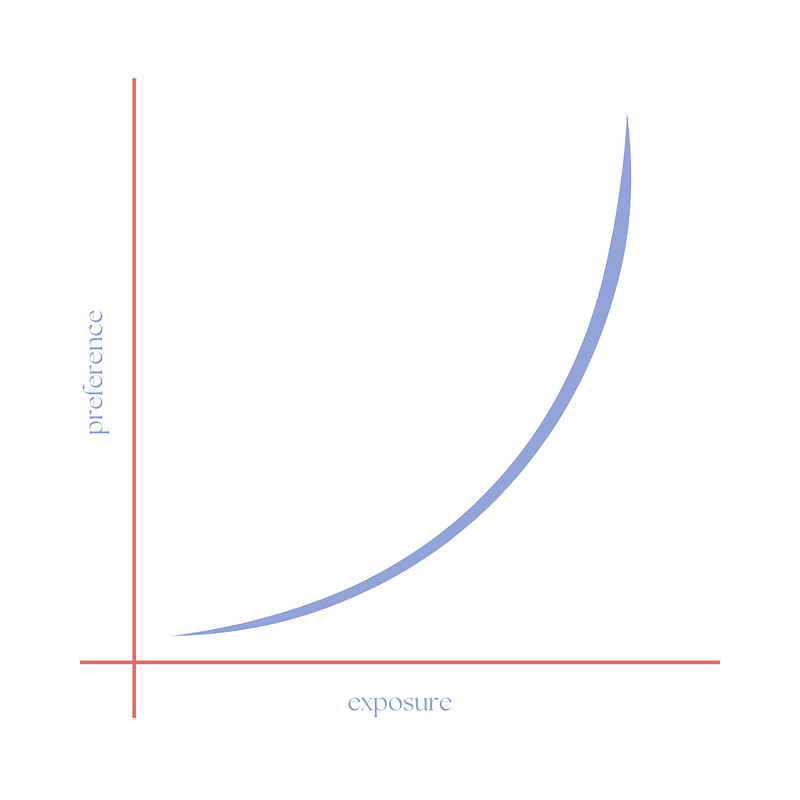
Image by the author

Studies

Robert Zajanoc, a social psychologist, carried out various studies on the matter.

#1 Study

People were exposed to Chinese characters for a very short amount of time. Later, they were told that those characters represented adjectives.

When asked, subjects labeled the characters they had been shown more frequently as positive adjectives, compared to the ones less familiar.

Similarly, using Chinese characters but not mentioning they were adjectives, subjects reported a nicer feeling from familiar symbols.

#2 Study

During a study being conducted on men, they were given new tropical fruit juices. Subjects tasted the juices 0, 5, 10, and 20 times.

When asked which ones they liked best, subjects chose the ones they had tried the most times.

#3 Study

Charles Goetzinger experimented in a class at the University of Oregon.

He asked one of his students to come to class dressed with a big black bag, only showing his feet, and sit at the back of the classroom.

During the first class, students had hostile behavior towards him, but this hostility eventually turned into curiosity, and finally friendship.

MME in 2022

As many of these studies have proven, unconsciously repeated stimulus resolved in a positive behavior towards them.

But why could that be useful to us in the 21st century?

Well, think about marketing and subliminal publicity. We are constantly exposed to all sorts of ads, so many we lose count, and think we don’t even pay attention to them.

But tell me… when you travel to a foreign country, don’t you always flirt with the idea of Starbuck or McDonalds, instead of trying local cafeterias and restaurants?

Places we already know, make us feel more at home, even if we are 1000 miles away.

Have you ever listened to a song and hated it, but due to constant repetition on the media ended up singing that song for weeks, and eventually dancing to it?

My money don’t jiggle jiggle, it folds…

Give it a thought, because this effect, if done nicely, can even be used to your advantage.

But be careful with overusing it, we all know excessive repetition leads to boredom.
Keep learning
Psychology
Self Improvement
Behavior
Marketing
Brain
Recommended from ReadMedium