
How To Grow a Windowsill Garden From Kitchen Vegetable Scraps
You hit pay dirt when you regrow what’s in your fridge.
Several years ago, my husband and I stopped buying over-priced lettuce mixes that came from 3,000 miles away. It always went slimy too fast, it had a smell even when it was supposedly “fresh” and then there was the big-assed plastic clamshell that couldn’t be recycled.
Something had to change.
We turned to a local greenhouse that sold “living lettuces” with their little rootballs attached. They cost about $3.00 which was fine until I could grow my own lettuce during the summer.
But the $3.00 a head bugged me. So I decided to experiment.
Once we used the lettuces and had cut their rootballs off (oh my — that sounds a little vicious, doesn’t it?) — I planted them in yogurt containers, added an inch of water, and placed them in a window with lots of sunlight. I watered them gently every few days and made sure they didn’t get any cold air from the window.
A few weeks later when they grew little greens on top — I put a few inches of soil in their yogurt pot home (I poked a few holes in the bottom of the containers so water could drain.)
Wouldn’t you know it — they happily kept producing luscious lettuce for months. My husband thought I was a genius.
The windowsill scrap garden won’t grow vegetables as large as the originals — you wouldn’t either if you were shoved into a yogurt container. But they do provide more fresh, free greens than you’d think.
And when spring came, I planted my strange leafy menagerie out in the garden and they kept producing lettuce until September — little green troopers that they are. $12 of winter lettuce turned into a few hundred dollars saved by the end of September.
I don’t know about you, but I’d much rather have the cash than give it to my compost pail. And no bloody plastic clamshells either.
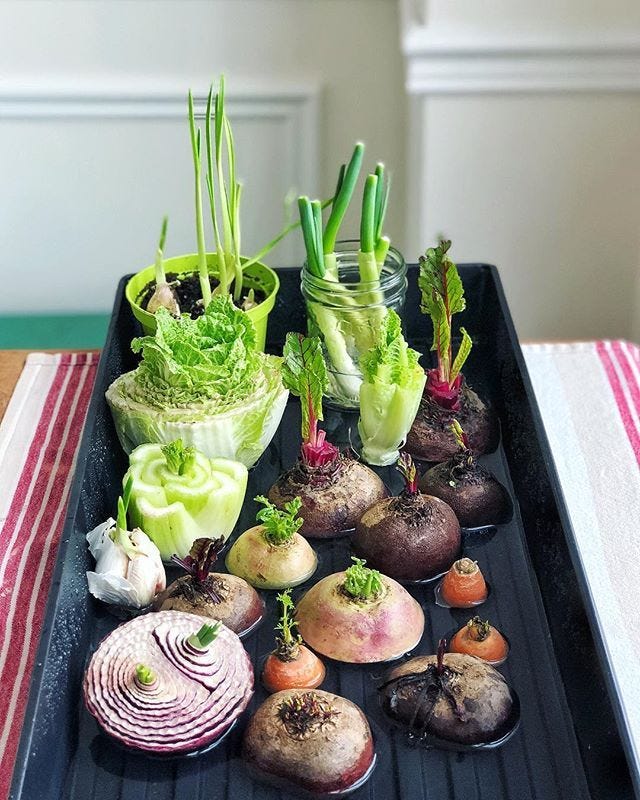
So here we are again and Spring has arrived in Canada. My experiments have expanded on my windowsill. Celery, beets, onion, lettuce, green onion, and sweet potato all vie for my attention.
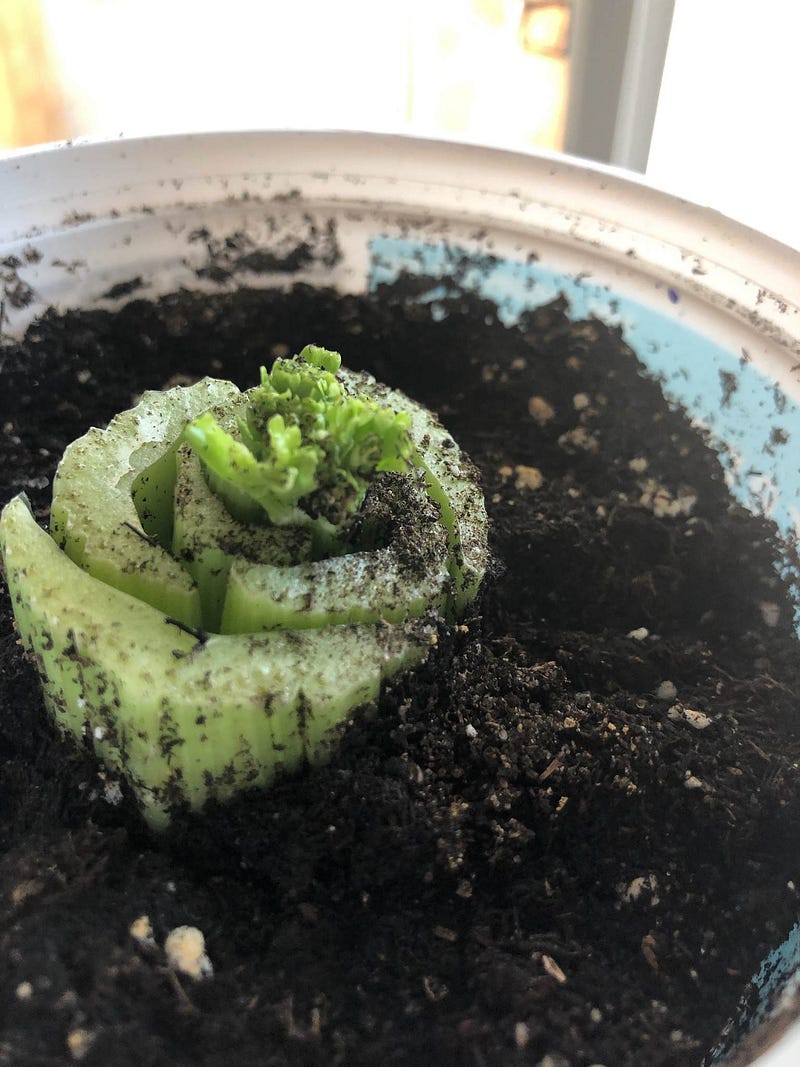
Every single one of them came from vegetable scraps that most people throw out. But you won’t as now you know better.
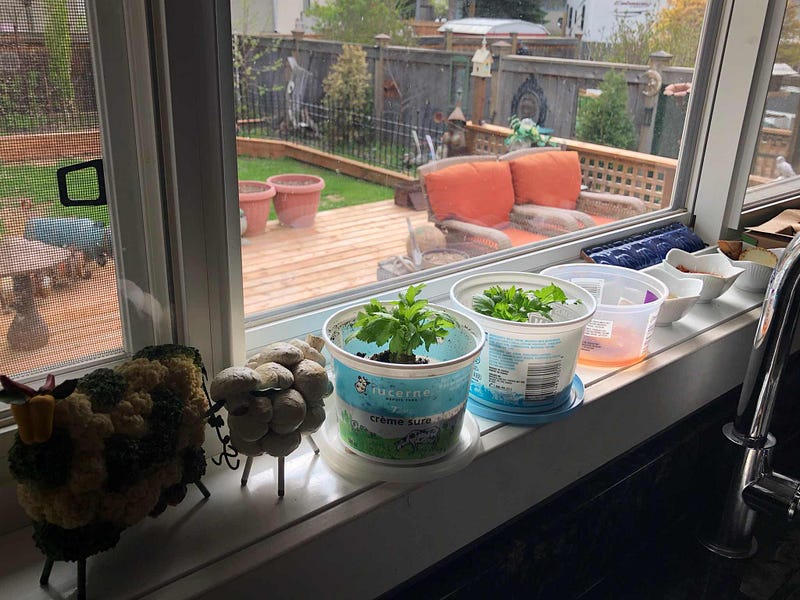
Start simple, please. If you have a little garden or a space for pots outside — lucky you. If you don’t — you just enjoy the greens that come up and use them in a salad, soup, or whatever calls to you. Beets, onions, garlic, lettuce, celery, green onions, turnip, bok choy, kale— almost anything with a root on the bottom, will grow edible greens. But don’t eat potato greens as they are poisonous. And rhubarb greens are toxic too. Stick with the basics.
Most greens in a window sill will keep producing as long as you don’t harvest all of the leaves. Leave a few to catch some sunlight.
If you have a garden, as I do — well then all bets are off. You plant the works and within a month or so (depending on the plant) you are growing larger plants that can handle additional harvesting.
I planted the celery today.
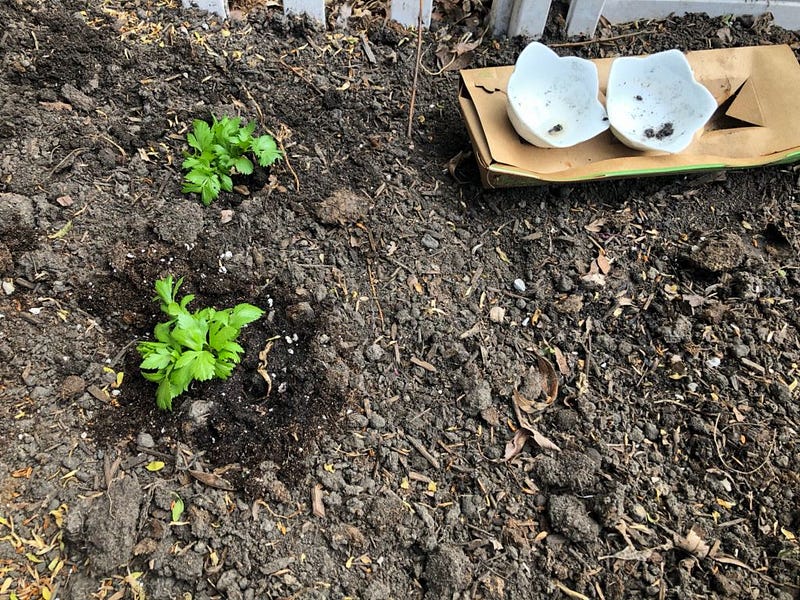
And these green onions were only planted last week. Look at these little guys!
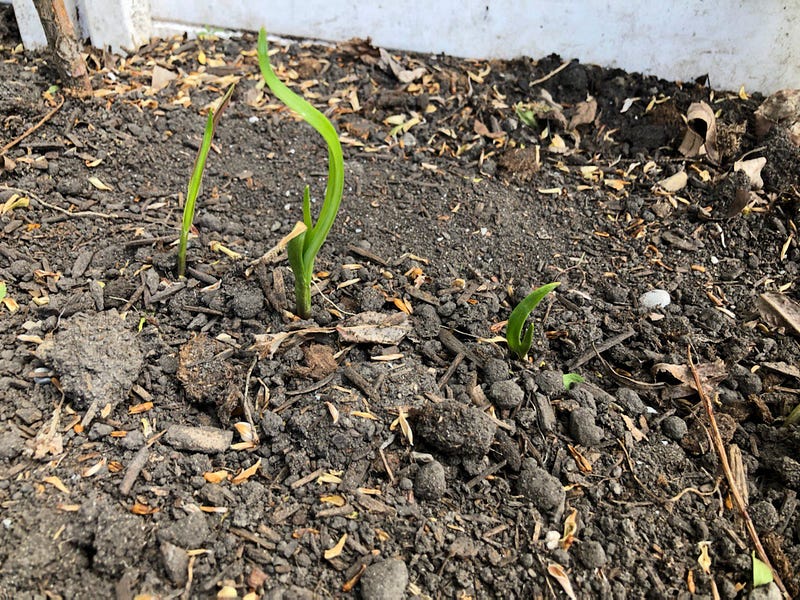
So the next time you cut off the ends of your green onions with their white feathery roots, or you’ve finished the lettuce but the lonely little rootball stares at you forlornly— think twice about throwing them in the composter.
You can breathe new life into these delicious vegetables and herb scraps. You can extend their living goodness and value. Children love to watch them grow and let’s be honest — so will you. Why?
It’s not just because you save money, or help the environment as wonderful and worthy as that is.
It’s really because you’ve just become an accidental gardener. With a little care and attention, you’ve made something delicious grow from what most people throw out.
And there’s something very savory about that, indeed.
Thanks for reading! I have loads of food essays (delicious recipes too) and thoughtful and quirky simpler living essays waiting for you. (Well over 100 of them!) And this story caught the attention of NBC News in New York!


