
How to Get Noticed by a Famous Celebrity on Twitter
An indie game developer got a huge boost to his marketing efforts for free

Shortly after I started word crafting full-time, I came up with several challenges for myself. I was new to writing for an audience that wasn’t wearing a business suit and had the potential to flip the table if I used the wrong wording.
While my stress was at an all-time low in comparison, my writing just didn’t work well at the beginning. It was dry, overly factual, and bereft of feeling.
Hell, it still might be, but at least it’s better than before.
I knew the only way out of my dull writing was to learn and practice as much as possible. One of my favorite ways to combine both of these activities is to run experiments as much as possible.
So I did.
JJ’s Writing Experiment #3: Write a new humorous article focused around one fun fact about a celebrity on Medium every single day until they comment, highlight, or follow me.
56 days later I was 6 hours away from being banned on Medium.
The experiment that didn’t work
I won’t mention the celebrity’s name, but they used to be pretty active on Medium for a while.
Every day, I sat down and found a random fact about this person. I then wrote a light-hearted story about something I experienced in my own life relating to the fun fact.
I finished off every piece with a joke implying the celebrity should comment or reply to my post so I would stop the series. Factual, humorous, and personal — I definitely enjoyed writing all of these stories.
By day #56:
- I had a small group of 25 people following this series who were very active. With their permission, I tagged them in each post so they could see the next fact every day in their notifications.
- Without the celebrity’s permission, I also tagged him several times. Oopsie #1.
- If you googled the celebrity’s name at that time, my articles were all over the search engine, sometimes ranking higher than their own content. Oopsie #2.
- I randomly checked my Gmail promotions folder one night and found an email from the platform saying I was about to be banned for harassment if I didn’t delete every trace of my series.
Of course, I scrambled to get rid of all the stories as quickly as possible, and the platform seemed fine with the ending result.
Did the celebrity report me for this? I’m not sure, but I think there’s a chance.
Either way, I certainly didn’t mean to harass anyone. The pieces were in such a humorous light, always complimenting the celebrity, that this idea of harassment never even occurred to me.
Lesson learned.
But lo and behold this week, I saw someone tried a similar experiment on another platform and didn’t get banned. Because their experiment was incredibly successful.
The experiment that did work
A game developer, Lyubomir Vladimirov, had a similar idea half a year ago. He was working on a new video game based on colonizing Mars with SpaceX vehicles.
His mission? To tweet ‘@ElonMusk’ every day for 1 year or until Elon replied.
This was his message:
Dear Elon,
I’m a game dev. and I am making a game about colonizing Mars with you and SpaceX in it. If you think it’s cool, all I need is the “Go ahead” to use your name and Logos. I will post this every day for a year or until I get a Yes or a No!
1 / 365
He repeated this 156 times, his mission slowly building pace and gathering more supporters as he went along.
For the first 30 days, he barely had any likes on his tweets, if none at all.
The next 10 days slowly built some traction until day 42 when he got over 1,000 likes on his post and 36 retweets.
Why did it pop off that day? I can’t tell. Perhaps it was a culmination of right place, right time, and persistence.
Most tweets after that had hundreds if not thousands of likes and retweets. He was well on his way to getting noticed by Mr. Musk.
On day #126, he upped his game by including a graphic of his proposal:
Then came the fateful day (#154) when Elon responded!
Snarkily, of course.
He did it! Elon gave quasi-permission for the developer to use SpaceX’s logo and name in his game.
Although, knowing Elon’s tendency to be involved in hundreds of lawsuits, Vladimir might want to contact a lawyer at some point.
So what did Vladimirov do?
- He replied to Elon’s posts instead of tweeting ‘@ElonMusk’ out of the blue. This likely helped more people see his message since Elon’s tweets get seen by millions.
- His message had a positive outcome promised. More importantly, the outcome wasn’t perceived as being greedy — he promised 90% of the profits to go towards SpaceX.
- The platform didn’t view this as harassment. Perhaps this is more acceptable on Twitter than in other places.
- He planned this from the beginning. He revealed he had been building the game on the assumption Elon would approve — and had an extra 6 months of work completed on it.
I’m sure Vladimirov is quite pleased with his little experiment. I’d wager he probably used a tweet scheduler to post the replies around the same time every day as well.
This would drastically reduce his effort and it wouldn’t matter if he missed a day, the reply would still go up.
Even better for his game, he now has almost 13,000 followers on Twitter, many of whom are looking forward to seeing the final result of his game.
I wouldn’t be surprised if they try to get it in front of Elon when the beta is released. That would certainly be worth thousands of dollars in free promotion.
Now if you’ll excuse me, I’m off to go tweet John Oliver 365 times about a satirical book I made recently.
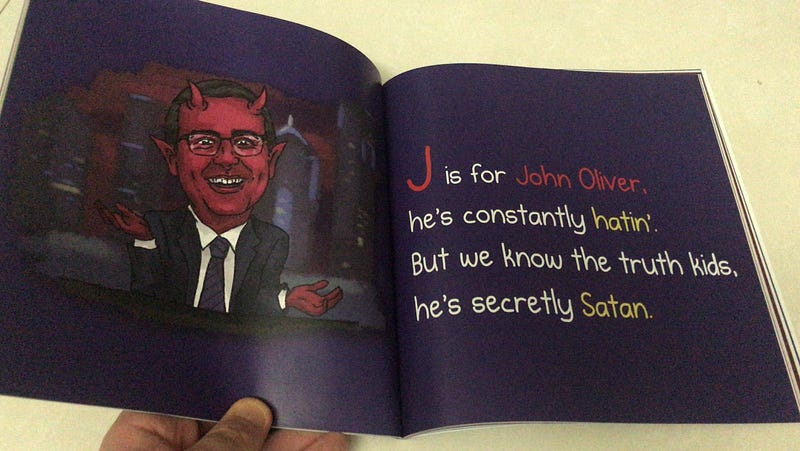
- If you’re curious, here’s the link to my satire book — ABCs for MAGA Kids.
- If you enjoy these stories, come join my free newsletter!


