
How To Get Better Results From Your To-Do List
Change your goalposts. Change your results.

Is your daily to-do list not working out as well as you hoped?
You’re not alone.
People approach the day’s work in different ways. One of the most popular methods relied on the simple, laundry-list style to-do list. It doesn’t matter much what type of work you do or where. Office-based employees, freelancers, work-from-home exiles, and retail managers often begin their day writing or reviewing their to-do list for the day.
And end the day growling at that same list.
The problem with a daily list
Let’s take a look at your to-do list…
Huh.
Not everything got checked off, has it? That’s a bummer.
That happens to me all the time.
As a freelance writer and book designer, I’m often working on several projects at once — many of which require updated information or elements from clients. It’s not surprising I don’t get to check many jobs off as “complete” by the end of the day.
Intellectually, I know I’ll eventually be able to check them off, but emotionally it can be a little disheartening on a day-by-day basis. It gives the impression that I’ve not accomplished much at all by the end of the workday.
So I tried a different approach.
I replaced my daily to-do list and with a weekly to-do list.

My new weekly list
At the start of each week, I list what jobs I have ahead of me — sometimes adding items later as they come in. When each job has been completed, I check it off and only review and gauge my productivity when the week comes to a finish.
Where once I had a bunch of daily lists with, if I was lucky, half the items crossed off by the end of the day, I now have a weekly list with nearly everything checked off.
By shifting my focus from daily productivity to weekly productivity, I’ve greatly improved my attitude about how much work I’m getting done and feeling better about things overall. It’s also easier to get a more comprehensive perspective on how best to plan groups of projects.
Is a monthly list an option?
If a weekly list is better than a daily one, then a monthly list must be better than a weekly one, right?
Let’s not get carried away.
A weekly list is manageable as most people will fit their tasks for a single week on a single notebook page. If you go monthly, you’re just complicating things.
That said, allow me to suggest using a monthly planner to supplement your weekly to-do list. I use a monthly planner to record long-term projects. I also include notes regarding jobs that span more than a single week and projects that may be ongoing for several months.
It’s an excellent way to get a sort of bird’s eye view of everything you’re doing.
Finally, a valuable tip for integrating a monthly planner in your overall scheduling is that you can drop in reminders of non-work-related reminders such as medical appointments or social events.
It helps to remember that not every hour of every day is going to be all about work.
Results may vary, so should your approach
Whenever I write about productivity-related strategies, I try to remind the reader that results will vary. My work experience is going to be different from yours. And vice versa.
With that in mind, if you’re finding your to-do list is causing unwelcome anxiety, try the weekly to-do list, but organize it in whatever way best suits your work and your approach to work. The same would go with the monthly calendar option.
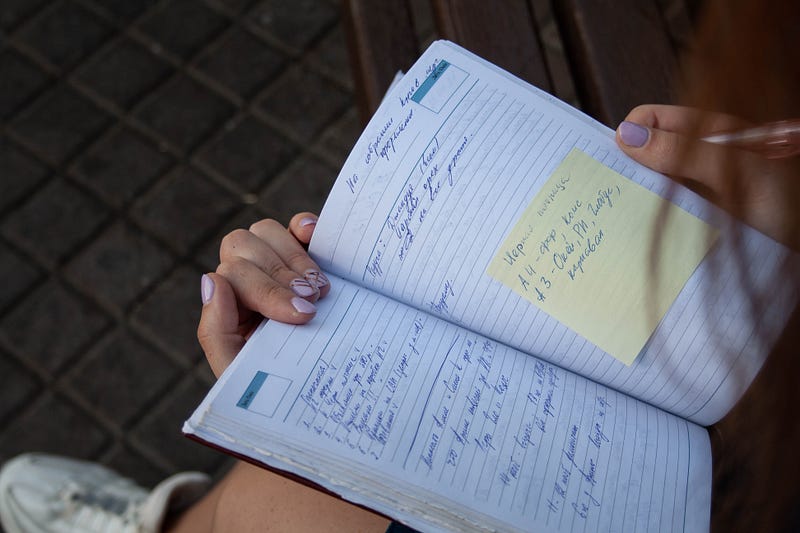
There is a mountain of planning books and guides available, but I’ve found a blank notebook works best for me. I can set it up however I wish, and I can change it whenever I need to.
I also prefer monthly planners with large pages and large spaces to write in.
That’s what works for me.
Be free to explore your options to see what works best for you.
Cheers!
Thank you for reading. I’d love to share more with you via my Bi-Weekly Word Roundup newsletter sent to subscribers every other Sunday. It will feature news, productivity tips, life hacks, and links to top stories making the rounds on the Internet. You can unsubscribe at any time.