
Interviews | Gentleness Ambassadors
How to Gently Allow Yourself to Bloom
Interview with Viknesvari — Confidence Mentor
I’m so happy to finally interview a Gentleness Ambassador in Singapore!
Viknesvari and I got to know each other online through an online authentic business course. My course mates are usually from the USA, United Kingdom, or Australia, so I was thrilled to see another coursemate from Singapore too.
With both of us having a passion for gentle healing, we naturally gravitated towards each other through social media. I asked Viknesvari if she would like to be interviewed as a Gentleness Ambassador.
She said “Yes!”
More about Viknesvari
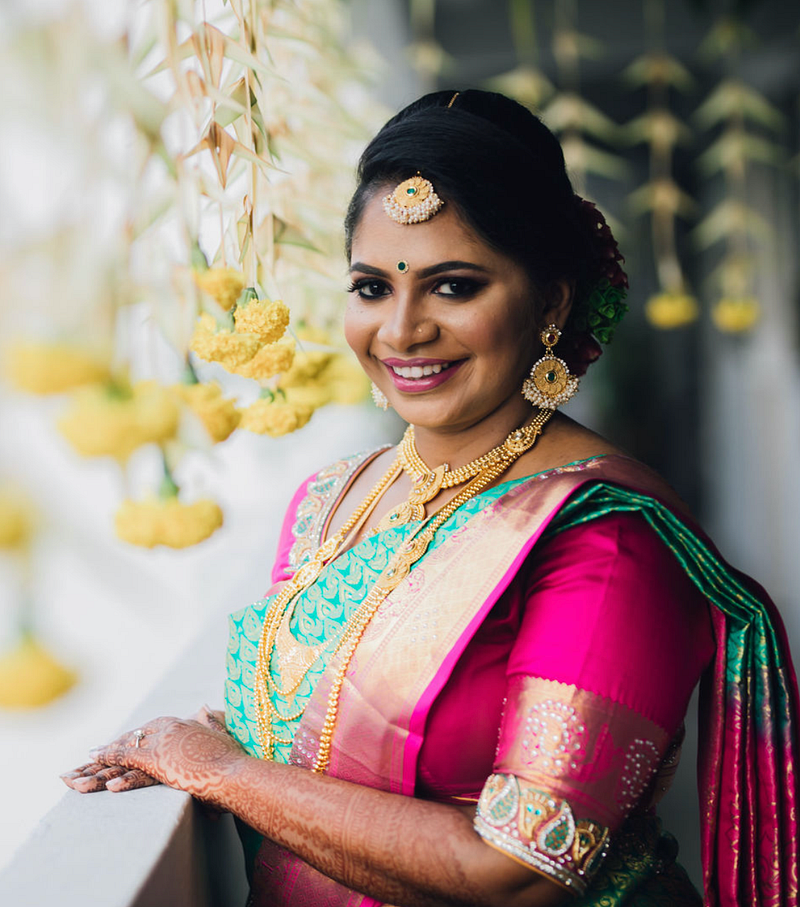
Viknesvari is a Confidence Mentor based in Singapore. She helps women come home to their bodies where they feel calm, rested, and fulfilled so they can show up in their business and relationships without feeling exhausted.
She brings a unique flavor to her clients with her broad experience as a Senior Case Worker in the Child Protection field, a therapist trained in Satir Family Therapy and Trauma-Informed CBT, Vocal and Creativity Coaching with a Diploma as a Quantum Energy Practitioner.
We met one sunny morning in Sep 2020, in the same time zone, in the same country, but virtually over Zoom.
Here are the key highlights of our interview:
Being a Confidence Mentor
Can you share more about the work that you do as a Confidence Mentor?
The work that I do is mostly about increasing our self-confidence through the foundation of building some level of inner stability within ourselves.
I believe that no matter what is happening around in that environment, be it in a relationship, health, or any stressor in our career, we can come back to our center. We can have clarity on what’s really important to us and where we can focus our energy.
My work as a Confidence Mentor reflects my journey in my life. I did not have that confidence and did not believe in myself, and eventually, I learned the tools to be in this space where it’s possible to change that. This is why I want to help others achieve this as well.
You can’t rush Gentleness
What does Gentleness mean to you?
Gentleness feels like Softness to me. The image that comes to my mind is a flower — a soft, pink, and pretty flower.
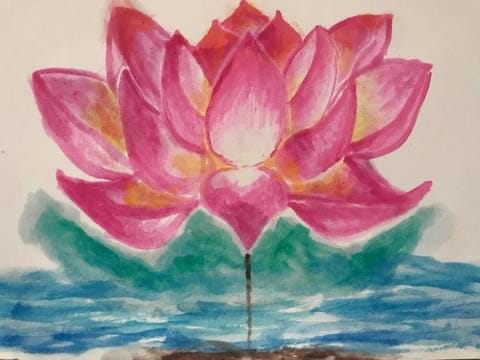
Nature doesn’t rush, it grows in its own time. When flowers bloom, they bloom in divine timing. So for me, with a flower and its petals, you can’t force it to bloom. You need to nurture the soil, water it daily, take good care of it and trust that the seed is still there.
It is the whole process of allowing that flower to slowly open up as a bud to form its beautiful petals.
- Gentleness is the process of allowing. In contrast, the harshness here is in using all my mental energy to force that flower to grow. I end up feeling frustrated, thinking that it’s growing too slowly.
- Gentleness is about being present in each moment. The flower petals are soft and they bloom in the right moment so beautifully.
- Gentleness is about allowing yourself to be delicate. Just like the way you take care of the delicate flowers, you allow yourself to be delicate and treat yourself gently and kindly.
- Gentleness is about clearing space to be still. It’s about being patient and not rushing all the time in this go-go-go culture where we tend to pack our time tightly with so many things to do. It’s about clearing that space, being still, and watching the whole process.
- Gentleness can be felt in your body. I feel it in my body literally, especially in my belly. My belly is not contracted right now. It’s relaxed, gentle, and just being present.
Nurture your inner voice
How do you embody Gentleness in your business?
I practice Gentleness through simple daily practices. One of my favorite ways is journaling because I have a lot of thoughts in my mind. When I journal it’s a lot of stream-of-consciousness writing. It’s like a brain dump. I get whatever’s in my mind out and that allows me to get out of my own way. When I get out of my own way then I can connect with the inner wisdom in that moment of receiving.
That inner knowing is just so beautiful and powerful!
I used to have a lot of beat-up thoughts about things that I didn’t do, didn’t do enough, or could have done better. They still pop into my mind now and then. It’s a very critical voice like a hammer in my mind, hitting me with harsh words like “what are you doing?”
Over the years, I have learned to be more aware of this voice. I can choose a more compassionate, loving, and gentle voice to speak to me in my mind, like a nurturing Inner Mother. I have a card that says “Mother” on my spiritual altar to remind me of this Inner Mother I’m cultivating.
I infuse these practices in my daily life so I can continually be in a soft, calm, and loving space. This helps build more flow and ease in whatever I’m doing, be it to have fun, enjoy myself, or to support my clients.
What does your spiritual altar look like?
I’m a Hindu so I have a Hindu altar where we have our Hindu gods with their pictures and small little statues, and there’s a little oil lamp that I can light up. We place some fresh flowers on it too because we usually buy flowers when we go to the temple for prayers.
So on my spiritual altar, I have an angel painting, some crystals, sage, and singing bowls. I have a little book with this quote:
“There is no place where God is not.” ~May Angelou.
My spiritual altar is a physical space to help me reconnect to myself, to Spirit, and to God.
How did you shift from this inner critic to a more nurturing inner voice?
It was a gradual process, and there was also an epiphany that made me ask why I have been so critical of myself, and I love the answer that came up.
When I was much younger, I felt pressured to excel academically and I was always being compared to my older sister who was doing really well. My parents were always putting pressure on me.
My parents eventually stopped pressurizing me when I became an independent adult. But I’ve internalized their voice in my mind. I inherited that critical voice to push me forward in achieving my life goals.
I don’t need this voice anymore, so I thanked it for keeping me safe and said goodbye to it.
Do your clients come to you wanting help in releasing their harsh inner voices too?
Yes, they do. Before they feel ready to love themselves, they need to acknowledge their feelings of shame and self-doubt.
They tend to give away their time to others, and not have enough time for themselves, so they end up exhausted. There’s a lot of work in helping them give themselves permission to enjoy more me-time.
They feel obligated to do things for other people because these relationships matter so much to them. There is a constant yo-yo within their minds where they know they need more me-time but they worry about how these new boundaries will be perceived by their loved ones.
I help them come to a space of stillness. Then, they can make a choice that feels good to them internally before they express this to someone else.
Bingz: Yes, I feel this deep fear of losing some relationships when I set new boundaries.
Gentleness is about respecting healthy boundaries
Did your clients lose some relationships in the process?
Yes, it is vital to help them be more aware of the relationships that matter most to them.
Listen to Viknesvari share some of her client and personal experiences in upholding personal boundaries.
There is this inner expectation of needing to keep and nurture all relationships, feeling that “I’m a good person, I can’t do this with someone else.” We have to learn not to take responsibility for others’ feelings and actions.
Bingz: Yes! That’s how Gentleness comes about when we respect boundaries. It’s about not forcing yourself to bloom.
Yes, that’s so true. I feel that when you’re saying no to someone else it’s just something you’re always saying yes to yourself. When I say yes to myself, my hands go to my heart because I feel soft and delicate like that flower imagery I described earlier. It’s about loving myself enough to do this for myself. When we come to that space of being more aligned with our decision, it becomes easier for us to express our new personal boundaries as well.
I can feel my body contract when I push myself too hard to do things faster or better. For example, when I do yoga, I might want to do a particular pose and try to bend it a bit more and I can feel my muscles contract too hard, which feels harsh and not loving at all. When I back off a little from the pose and just breathe into the position a bit more, my body feels much more open, and I can slowly ease my way back into the pose. It’s about letting go a little and then coming back to it.
How do you take good care of yourself with your full-time job and business?
My full-time job takes up most of my time, but my working hours are quite flexible, so I do take some time over the weekend or in the evening during weekdays, to connect with my clients.
Sometimes, I will take a half-day or full day’s leave off work just to rest too. Having adequate rest is vital to me. I don’t wait for the weekend to rest. I make sure I rest every single day, so I have various practices to support me.
Physical exercise is a good way to help me rest better. For this year, I started exercising much more frequently on alternate days. I practice journaling, specifically by tracking abundance and expressing appreciation at the end of each day.
It’s not always easy to journal about gratitude because sometimes I get frustrated with my day job, which can be extremely stressful. But I believe that I’m giving myself to this world with my presence. As long as I keep showing up as myself, it feels much easier to take good care of myself. I’m walking my talk when I practice adequate self-care and I’m doing the work that I love.
I had to release the high standards I thought I needed to achieve, and set my own standards instead. This gave me a huge relief and it has been a huge game-changer for me. Right now, my business is more on a part-time basis and I’m hoping to transition towards making it my full-time passion.
I have multiple passions. During the weekends, I teach singing to a student, and I like to paint with my classmates at an art jamming class. So these activities keep me healthy and happy.
Cultivating stillness is essential for me too. I enjoy looking at the trees and flowers and feeling the wind. This puts me into a dreamy state and helps me to soften my focus.
I love this quote by Eckhart Tolle:
“Look at a tree, a flower, a plant. Let your awareness rest upon it. How still they are, how deeply rooted in ‘just being’. Allow nature to teach you stillness. When you look at a tree and perceive its stillness, you become still yourself.”
It’s about Consciousness watching itself, and it’s such a beautiful contrast to mindless busy action. I’m coming back to myself by reconnecting and slowing down through this simple practice.
Any final message about Gentleness that you’d like to share with us?
I’d like to repeat my analogy of relating Gentleness to a beautiful blooming flower.
That imagery can be used for any life struggles we are facing, such as a disagreement with someone or even a health struggle.
Visualize this struggle as a flower. Meet it where it’s at and don’t force it to bloom before it is ready. Be present with it throughout its growth to see it bloom at its perfect time. This flower might bloom or it might not, but when you learn to trust that another flower will grow and bloom and follow the whole process of growth and death, you naturally allow yourself to soften in the process too.
I hope that we can use this flower metaphor, with its softness and its ever-changing petals, to remind us of our innate Gentleness.
Connect with Viknesvari
Thank you, Viknesvari, for sharing with us how we can say Yes to ourselves and be delicate with ourselves.
If you’ve enjoyed learning from Viknesvari through this interview, do connect with her through her Facebook page and website.